
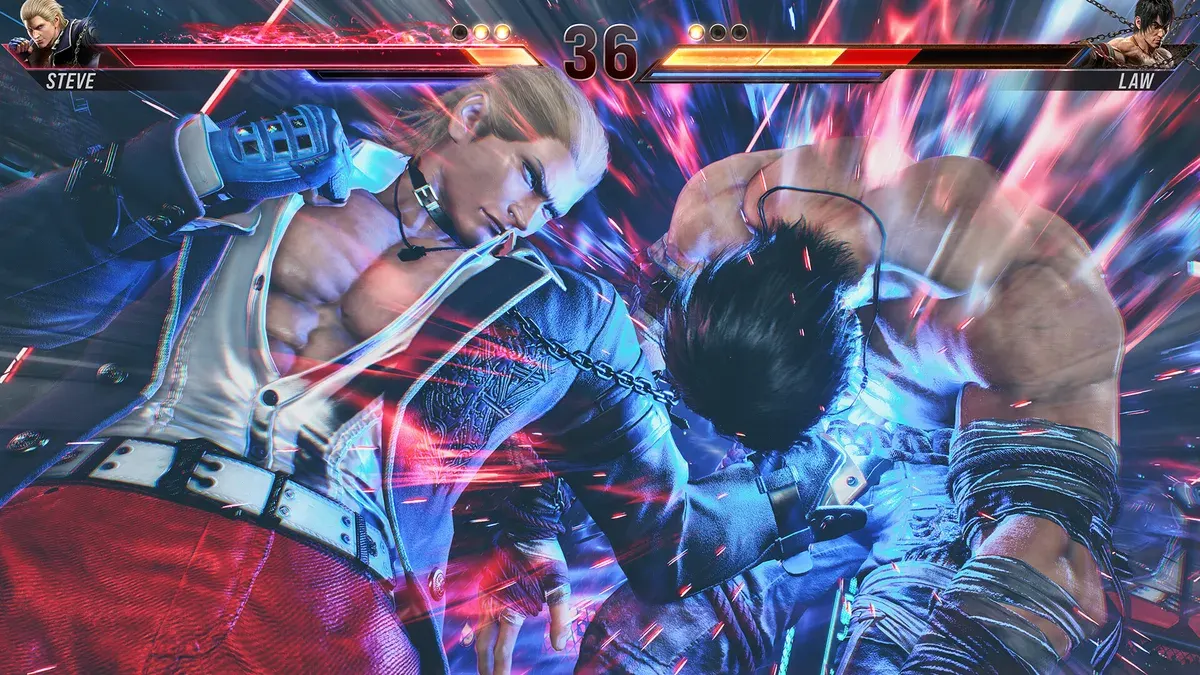
Tekken 8 is Bandai Namco's most ambitious entry in the Mishima saga since Tekken 7 — a fighter that balances decades of legacy mechanics with a bold new tempo layer, polished online infrastructure, and a story mode that finally treats its cast like protagonists rather than backdrop. Released in January 2024 for PC, PlayStation 5, and Xbox Series X|S, it arrived at a moment when fighting games were competing fiercely for attention against live-service shooters and sprawling RPGs. More than a year later, with post-launch balance patches, roster expansions, and a settled ranked meta, this Tekken 8 review evaluates whether it remains the best fighting game purchase in 2025.
If you are a returning Tekken veteran, Tekken 8 rewards your muscle memory while forcing you to rethink neutral game pacing. If you are a newcomer intimidated by 3D movement, juggle notation, and frame data spreadsheets, Bandai Namco has built more onboarding tools than any prior entry — though the ceiling remains sky-high.
What Is Tekken 8?
Tekken 8 is a 3D fighting game developed and published by Bandai Namco Entertainment. It continues the decades-long conflict between the Mishima bloodline — Jin Kazama, Kazuya Mishima, and Heihachi's legacy — while expanding the roster with returning favorites and new fighters tied to the current narrative arc.
Official screenshot — Bandai Namco (Steam)
Unlike 2D fighters where movement is restricted to a flat plane, Tekken 8 allows sidestepping, wall carries, floor breaks, and stage geometry that influences combo routes. Matches are typically best-of-three rounds, with each character possessing hundreds of unique moves, stances, and strings that define their playstyle.
Tekken 8 is not a free-to-play platform fighter or a simplified crossover brawler. It is a technical, execution-heavy fighter with deep systems that reward lab time, match knowledge, and adaptation. The game entered 2024 as a flagship next-gen title and has since received seasonal updates, balance patches, and DLC characters that keep ranked play fresh.
For buyers searching "Tekken 8 review 2025" or "is Tekken 8 worth it," the short answer upfront: it is the most complete Tekken package ever released, with the strongest online experience in franchise history and a Heat system that makes matches more explosive without sacrificing the series identity.
Core Gameplay and Fighting Mechanics
Tekken's fundamental appeal has always been the interplay between movement, spacing, and punishment. Tekken 8 preserves that DNA while refining systems introduced in Tekken 7 and adding new layers that shift match tempo.
Movement, Spacing, and the 3D Arena
Every match begins with a footwork chess game. Characters can walk, dash, sidestep, backdash, and wave dash depending on their movelist. Sidestepping at the right moment avoids linear attacks and opens punish windows. Backdashing too predictably invites wall splat setups. Aggressive forward movement can force panic defense but risks whiff punishment.
Stage design matters more than casual observers realize. Walls enable extended juggle combos. Balcony breaks and floor breaks add dramatic damage spikes. Competitive players memorize stage-specific carry routes because a single wall splat can decide a round.
Juggling, Combos, and Damage Scaling
Launchers start juggle sequences that define Tekken's visual spectacle. Once airborne, opponents can be juggled with strings, bounds, and wall interactions until damage scaling reduces further hits to chip value. Optimal combos require execution, timing, and situational awareness — not every launcher leads to the same route.
Tekken 8 maintains Tekken 7's ** Screw attacks** and ** tornado moves** while adjusting damage values and wall interaction rules across patches. The result is a meta where big moments feel earned but matches do not routinely end in single-touch deaths unless a player makes a critical mistake.
Defense, Throws, and Mind Games
Blocking is hold-back by default, with crouching to duck highs and standing to avoid lows. Throws break the guard of blocking opponents, creating a rock-paper-scissors triangle: strike beats throw, throw beats block, block beats strike. Mix-ups — sequences that force defenders to guess between high, mid, and low — remain central to offensive pressure.
Tekken 8's defensive options include movement evasion, parries on select characters, and the universal ** Heat Dash** burst that can escape pressure in specific situations. Reading your opponent's habits separates intermediate players from advanced competitors.
The Heat System Explained
The Heat System is Tekken 8's signature mechanical addition and the feature most likely to define its legacy alongside online rollback netcode.
Entering Heat and Heat Timer
Each character builds Heat gauge through attacking, taking damage, and certain move interactions. When activated, Heat mode grants a timed window — typically around ten seconds — where special properties apply. Heat is not a super move stock; it is a tempo shift that both players must respect.
During Heat, characters gain access to Heat Smash attacks, enhanced string properties, chip damage on blocked moves, and in some cases improved movement or wall interaction. Defenders can use ** Heat Burst**, a universal escape tool with invincibility frames, to break oppressive pressure — but it consumes your own Heat gauge and carries risk if whiffed.
How Heat Changes Match Strategy
Heat rewards proactive play without making defense irrelevant. Aggressive players can extend pressure and threaten round-ending damage during Heat activation. Defensive players must decide when to burst, when to sidestep, and when to accept chip damage to survive the timer.
At high-level play, Heat management becomes a resource game layered atop health, positioning, and frame advantage. Saving Heat for a wall splat combo differs from burning it mid-neutral to force a defensive crisis. The system adds spectacle for spectators while giving lab-oriented players new optimization paths.
Critics at launch worried Heat would homogenize characters or reduce match length to burst exchanges. Post-launch balance has largely addressed those concerns — Heat enhances identity rather than replacing it, though certain characters benefit more from Heat properties than others.
Roster Depth and Character Variety
Tekken 8 launched with a robust roster spanning legacy icons and newer additions. The cast covers archetypes from rushdown pressure to zoning, from grappler command throws to evasive stance dancers.
Returning Favorites and Legacy Characters
Mishima family members — Jin, Kazuya, Devil Jin — anchor the narrative and meta discussion. Fan favorites like Paul, King, Hwoarang, Lili, Asuka, L Lawliet, and Bryan return with refined movelists and updated balance tuning. Each character retains distinct identity: Bryan's fury pressure, King's chain throws, Hwoarang's flurry kicks, and Lili's elegant evasive strings feel unmistakable.
Newcomers and DLC Expansions
New characters introduced for Tekken 8's story arc integrate into both narrative and competitive contexts. Post-launch DLC fighters expanded the roster further, keeping the game relevant for players who main underrepresented archetypes. Bandai Namco's track record suggests additional seasons will continue adding characters, stages, and cosmetic content.
Character Balance and Patch Cadence
Fighting game longevity depends on balance patches. Tekken 8 has received regular updates adjusting frame data, damage, Heat properties, and move tracking. No fighter maintains perfect equilibrium forever, but Bandai Namco's responsiveness to tournament results and community feedback has been stronger than many competitors in the genre.
For players comparing Tekken 8 to Monster Hunter Wilds in terms of long-term content support, both titles benefit from developers committed to post-launch updates — though Tekken's cadence focuses on competitive tuning rather than new hunting grounds.
Story Mode — The Dark Awakens
Tekken story modes have historically been glorified intro sequences between arcade battles. Tekken 8's The Dark Awakens campaign represents a genuine step forward — not quite a narrative RPG, but far beyond the franchise's previous standards.
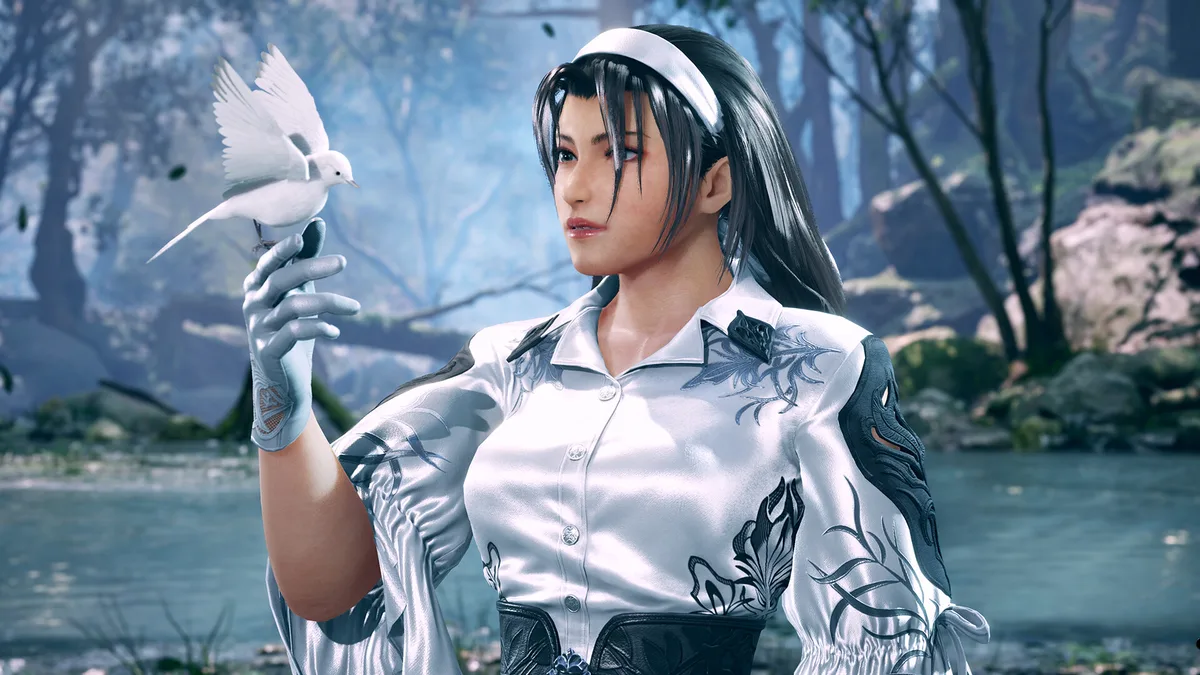
World and exploration — Bandai Namco (Steam)
Cinematic Presentation and Production Value
Story mode uses high-quality cinematics with voice acting, motion capture, and dramatic set pieces that leverage next-gen hardware. Character models during cutscenes showcase the visual leap from Tekken 7, with expressive faces and dynamic lighting that sell emotional beats in the Mishima conflict.
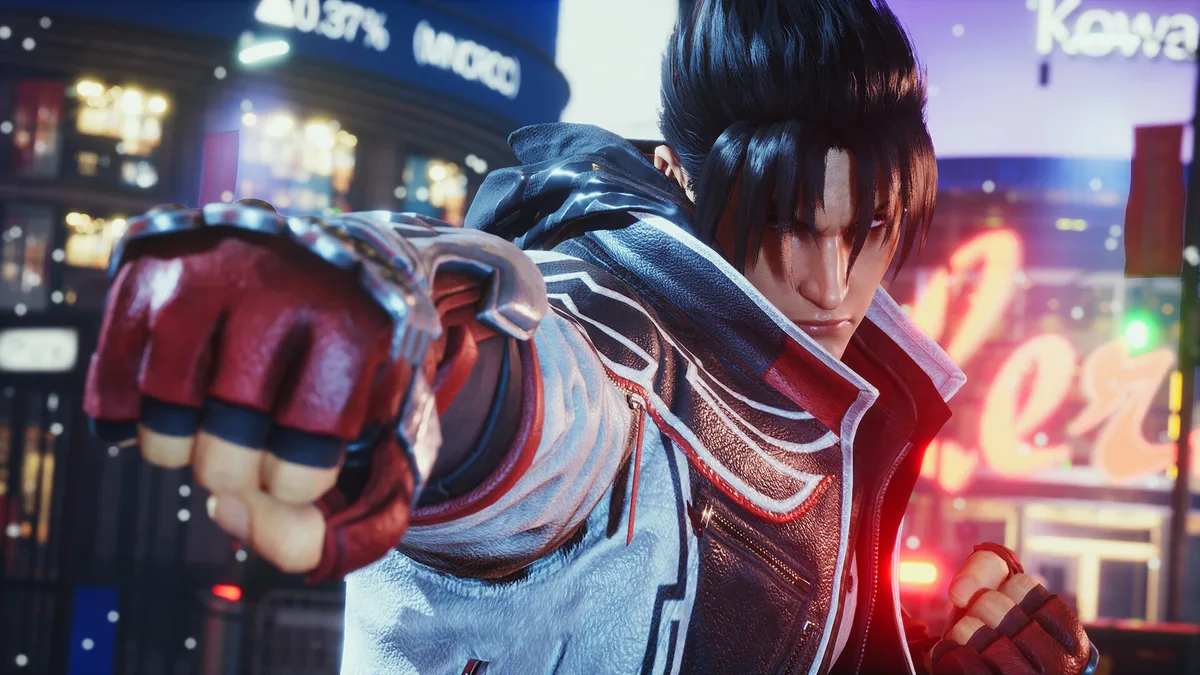
Systems and performance — Bandai Namco (Steam)
Gameplay Integration and Boss Encounters
Between cinematics, players fight structured battles against story opponents with difficulty scaling. Boss encounters introduce unique mechanics and cinematic finishers that would feel unfair in ranked but work as narrative punctuation. The mode serves as an extended tutorial for newcomers learning basic movement and attack properties against AI that behaves more aggressively than practice mode dummies.
Narrative Scope and Fan Service
The plot centers on Jin and Kazuya's ongoing war, with supporting characters receiving meaningful screen time. Longtime fans will appreciate callbacks to franchise history; newcomers may find the Mishima family tree confusing without external lore context. The story is not the primary reason to buy Tekken 8 — online and versus content hold that honor — but it is no longer skippable filler.
Completion time runs roughly 3–5 hours for the main arc, with optional content extending further. Story mode justifies its existence as onboarding and spectacle rather than as a standalone narrative experience comparable to single-player action games.
Online Modes and Ranked Play
Online infrastructure has historically been Tekken's Achilles heel. Tekken 8 represents the franchise's strongest netplay implementation to date.
Rollback Netcode and Connection Quality
Tekken 8 uses rollback netcode on supported platforms, dramatically improving match quality over delay-based solutions. Matches against opponents in reasonable geographic proximity feel responsive, with rollback hiding minor latency spikes that would have ruined Tekken 7 sessions.
Connection quality still depends on individual network conditions. Wi-Fi versus wired Ethernet matters. Cross-region matches can struggle. But the baseline experience in 2025 is competitive with the best fighters in the genre.
Ranked Matchmaking and Tekken Power
Ranked mode pairs players by skill rating, with promotion and demotion mechanics that reward consistency over single-session spikes. Tekken Power (or equivalent rating systems) provides a parallel progression track that encourages continued play across seasons.
Matchmaking times vary by platform, region, and rank bracket. Peak hours on PC and PlayStation generally find matches within seconds to a minute. Lower-population regions or very high ranks may wait longer.
Quick Match, Player Match, and Ghost Battles
Quick Match offers casual online fights without ranked pressure. Player Match lobbies support community gatherings, local scene emulation, and friend groups. Ghost battles let you fight AI replicas of other players' recorded matches — a clever offline-adjacent feature for practice when live opponents are unavailable.
Tournament and Spectator Features
Tekken 8 supports esports visibility with spectator modes, replay systems, and tournament-friendly settings. The game's presence in major fighting game tourneys validates its competitive integrity. For players inspired by Elden Ring Nightreign co-op teamwork, Tekken 8 offers the opposite appeal — pure one-versus-one skill expression with no teammates to blame.
Training, Accessibility, and New Player Onboarding
Fighting games live or die by how effectively they convert curious newcomers into invested players. Tekken 8 makes its strongest accessibility push in franchise history.
Practice Mode and Frame Data Display
Training mode includes frame data overlays, move list references, recording and playback for combo practice, and dummy settings for simulating opponent behavior. Players can drill punishes, anti-airs, and wall carry routes without entering live matches.
Special Style and Control Options
Special Style simplifies inputs for select characters, lowering execution barriers for casual play. Multiple control presets accommodate pad, stick, and hitbox preferences. Button remapping and assist options help players with accessibility needs, though competitive ranked play assumes standard control schemes.
Arcade Quest and Guided Progression
Arcade Quest provides a structured single-player path with RPG-lite progression elements — upgrades, missions, and character interactions that teach fundamentals gradually. It is not a replacement for versus mode mastery, but it gives newcomers a gentler ramp than being thrown directly into ranked matchmaking.
The Learning Curve Reality
Despite improvements, Tekken 8 remains one of the most complex fighting games available. Hundreds of moves per character, 3D movement nuances, and matchup-specific knowledge create a steep climb. Accessibility tools reduce friction; they do not eliminate the dedication required to compete at high ranks. Patience and consistent practice are non-negotiable.
Performance, Visuals, and Audio
Visual Fidelity and Art Direction
Tekken 8 is a showcase title for current-generation hardware. Character models feature detailed costumes, dynamic sweat and damage effects, and expressive facial animation during supers and Heat finishers. Stages range from urban ruins to fantastical arenas, with destructible elements and dramatic lighting.
The visual identity balances realism with anime-influenced flair — appropriate for a franchise that has always straddled both aesthetics. Customization options let players personalize costumes, colors, and accessories, supporting expression without pay-to-win mechanics in ranked play.
PC, PS5, and Xbox Performance
On PlayStation 5 and Xbox Series X, Tekken 8 targets smooth 60 FPS gameplay with high-resolution character rendering. PlayStation 5 Pro and enhanced console modes further improve fidelity where supported.
PC performance scales well across mid-range to high-end hardware. Unlocked frame rates benefit competitive players using high-refresh monitors. Load times are short, and the game avoids the shader compilation stutters that plagued some 2024 PC ports.
Minor frame dips can occur during heavy particle effects in Heat finishers, but nothing that consistently affects competitive play. Tekken 8 is well-optimized relative to open-world AAA titles competing for the same hardware.
Audio Design and Music
Hit sounds carry satisfying impact. Voice lines during intros, wins, and story mode add character personality. The soundtrack blends electronic and orchestral elements, with stage-specific tracks that escalate tension during close rounds. Audio cues for unblockable telegraphs and launcher wind-ups support defensive reactions for experienced players.
Pros and Cons
Pros
- Heat System adds strategic tempo without breaking core Tekken identity
- Rollback netcode delivers the best online experience in franchise history
- Large, diverse roster with legacy favorites and new fighters
- Story mode The Dark Awakens is the strongest narrative effort in series history
- Excellent training mode with frame data and recording tools
- Arcade Quest and Special Style lower barriers for newcomers
- Stunning visuals and character customization depth
- Active balance patches and DLC support extending longevity
- Strong esports and tournament presence validating competitive design
- Cross-platform play on supported systems expands matchmaking pools
Cons
- Steep learning curve remains intimidating despite accessibility features
- Story mode is short relative to single-player action games
- Heat balance still favors certain characters more than others after patches
- Ranked matchmaking can frustrate at extreme skill brackets or low-population regions
- DLC characters require additional purchase beyond base game
- 3D movement and matchup knowledge demand significant time investment
- Casual players may bounce off before reaching competency rewards
- Some cosmetic monetization may feel excessive for completionists
Who Should Buy Tekken 8?
Buy if you:
- Want the definitive 3D fighting game experience on modern hardware
- Enjoy lab time, combo optimization, and match-up study
- Plan to invest in ranked online play with rollback netcode quality
- Are a returning Tekken player ready for Heat System evolution
- Follow fighting game esports and want the current competitive standard
- Appreciate character roster depth and long-term balance support
Skip if you:
- Dislike one-versus-one competitive games entirely
- Want a narrative-first experience with dozens of hours of story content
- Cannot tolerate losing repeatedly while learning complex systems
- Prefer 2D fighters with simpler movement planes
- Need deep co-op or multiplayer team modes — Tekken is strictly versus-focused
- Are satisfied with Tekken 7 and do not play online ranked
If you enjoy action games with high skill ceilings — whether hunting monsters in Monster Hunter Wilds or surviving Nightlords in Elden Ring Nightreign — Tekken 8 offers a different but equally demanding mastery curve in the fighting genre.
FAQ — Tekken 8
Is Tekken 8 worth buying in 2025?
Yes. Post-launch patches, DLC roster additions, and settled online infrastructure make 2025 an excellent time to buy. The Heat System and rollback netcode justify upgrading from Tekken 7 for active players.
Do I need to play Tekken 7 first?
Not required. Tekken 8 stands alone mechanically with onboarding tools for newcomers. Prior Tekken experience helps but is not mandatory.
Is Tekken 8 good for beginners?
Better than any prior Tekken entry, thanks to Arcade Quest, Special Style, and training mode tools. Still one of the genre's steepest learning curves — expect significant practice before ranked success.
Does Tekken 8 have crossplay?
Cross-platform play is supported between select platforms. Verify current crossplay compatibility for your specific system before purchase.
How long does it take to get good at Tekken 8?
Fundamentals may click within 20–40 hours. Competitive ranked competence often requires hundreds of hours plus deliberate practice. Fighting games reward long-term investment.
Is the story mode worth playing?
Worth playing once for cinematics and basic training. Not the primary purchase justification compared to versus and online modes.
Does Tekken 8 have microtransactions?
Cosmetic shop items exist. Core ranked gameplay does not require paid advantages. DLC characters are separate purchases.
Is Tekken 8 better than Street Fighter 6?
Different games for different preferences. Tekken 8 excels at 3D movement, juggle combos, and legacy roster depth. Street Fighter 6 excels at 2D footsies and modern control options. Many fighting game fans own both.
Verdict
Tekken 8 is Bandai Namco firing on all cylinders — a fighter that honors thirty years of legacy while embracing the modern demands of rollback netcode, accessibility onboarding, and spectacle-driven Heat mechanics. It is not the easiest fighting game to learn, and its story mode will not replace your favorite action RPG campaign. But as a complete fighting game package — mechanics, roster, online play, visuals, and post-launch support — it sets the standard for 3D fighters in 2025.
The Heat System successfully injects drama into neutral rounds without reducing matches to single-button exchanges. Online ranked is finally reliable enough to trust. Training tools welcome newcomers who are willing to endure the climb.
NexReview Score: 9/10
If you want the best fighting game to buy in 2025 and are ready to invest in the learning process, Tekken 8 belongs in your library. For related NexReview coverage, read our Monster Hunter Wilds review for action combat depth and our Elden Ring Nightreign review for high-skill cooperative challenges.
Score Breakdown
| Category | Score |
|---|---|
| Fighting mechanics | 9.5/10 |
| Roster depth | 9/10 |
| Online and netcode | 9/10 |
| Story mode | 7.5/10 |
| Accessibility and onboarding | 8/10 |
| Visual and audio polish | 9.5/10 |
| Overall | 9/10 |
Comparison With Tekken 7 and Other Fighters
| Feature | Tekken 7 | Tekken 8 |
|---|---|---|
| Heat System | No | Yes |
| Rollback netcode | Limited | Full support |
| Story mode scope | Minimal | Expanded cinematics |
| Visual fidelity | PS4/XOne era | PS5/XSX/PC native |
| New player onboarding | Basic | Arcade Quest, Special Style |
| Active support in 2025 | Winding down | Ongoing |
Compared to Street Fighter 6, Tekken 8 offers 3D sidestep gameplay and juggle-centric combos rather than 2D footsie focus. Compared to Guilty Gear Strive, Tekken 8 is slower in neutral but deeper in movement and wall interaction. Tekken 8 occupies its own niche — the premier 3D fighter with no direct substitute.
System Requirements Overview
| Component | Minimum (PC) | Recommended (PC) |
|---|---|---|
| GPU | GTX 1660 / RX 5600 XT | RTX 3070 / RX 6700 XT |
| CPU | Intel i5-6600K / Ryzen 5 1600 | Intel i7-7700K / Ryzen 7 1700 |
| RAM | 8 GB | 16 GB |
| Storage | 100 GB SSD | 100 GB SSD |
Console players on PS5 and Xbox Series X|S receive optimized performance out of the box. PC players with mid-range hardware from 2020 onward should expect stable 60 FPS at competitive settings.
Community Reception and DLC Support
Critical reception at launch praised Heat mechanics, visual quality, and online improvements while noting the familiar Tekken learning curve. Player communities remain active on Reddit, Discord, and fighting game forums with character-specific guides, combo libraries, and tournament VOD analysis.
Bandai Namco's seasonal DLC model adds fighters, stages, and cosmetics across months rather than front-loading all content at launch. Balance patches respond to tournament results, keeping high-level meta evolving. For players who want a fighting game that will still receive attention in 2026 and beyond, Tekken 8's live-service approach compares favorably to abandoned launch-and-forget competitors.
Tips for New Players
- Pick one character and commit — spreading practice across the roster slows improvement dramatically.
- Learn movement before combos — sidestepping and spacing win more matches than flashy juggles at low ranks.
- Use training mode daily — record opponent pressure strings and drill punishes.
- Play Player Match before Ranked — reduce anxiety while learning fundamentals against humans.
- Watch replays of your losses — identifying repeat mistakes accelerates growth faster than grinding wins against weaker opponents.
- Do not sleep on throws — opponents who block too much crumble to well-timed grab attempts.
- Manage Heat deliberately — burning Heat at the wrong moment leaves you vulnerable during critical round-ending scenarios.
Final Recommendation
Buy Tekken 8 if you want the definitive 3D fighting game of its generation — a title that combines franchise legacy with modern online reliability and the Heat System's strategic spice. Wait only if you know you will not invest time in learning its systems, or if versus fighters fundamentally are not your genre.
Bottom line: Bandai Namco delivered the Tekken sequel fans waited years to see. Matches are faster, online play finally feels fair, and the roster delivers enough variety to sustain years of competition. Tekken 8 is not just the best Tekken game available in 2025 — it is one of the best fighting games, period. Step into the arena, respect the learning curve, and the Mishima war will reward your dedication round after round.
NexReview recommends Tekken 8 as an essential 2025 purchase for fighting game enthusiasts, returning Tekken veterans, and action-game fans seeking a skill-based competitive hobby with no equal in the 3D space.