Baldur's Gate 3 is Larian Studios' triumphant return to the Forgotten Realms — a CRPG so ambitious in scope, writing, and systemic freedom that it redefined what a modern role-playing game could be. Released in full on August 3, 2023 after years of Early Access refinement, it adapts Dungeons & Dragons Fifth Edition into a turn-based adventure where nearly every door hides a consequence, every companion carries a fully voiced arc, and improvised solutions often outperform the quest designer's checklist. This Baldur's Gate 3 review explains why Larian's masterpiece still belongs at the top of every RPG backlog in 2025: combat depth, co-op camaraderie, romance, mods, and a story that respects player agency without breaking.
If you skipped BG3 during the 2023 hype cycle because of length, price, or turn-based hesitation, the case for playing now is stronger than ever. Console ports are polished, quality-of-life patches landed, mod tools matured on PC, and the game remains the benchmark against which fantasy RPGs are measured — including recent rivals like Obsidian's Avowed and BioWare's Dragon Age: The Veilguard.
What Is Baldur's Gate 3?
Baldur's Gate 3 is a single-player and co-op CRPG developed and published by Larian Studios. Set in the Dungeons & Dragons universe of the Forgotten Realms during the aftermath of the Baldur's Gate series, it follows survivors of a mind flayer nautiloid attack who bear parasitic tadpoles that threaten to transform them into illithids. You create or select an Origin character, assemble a party of companions, and pursue a cure while navigating cult conspiracies, divine politics, and personal redemption across three massive acts.
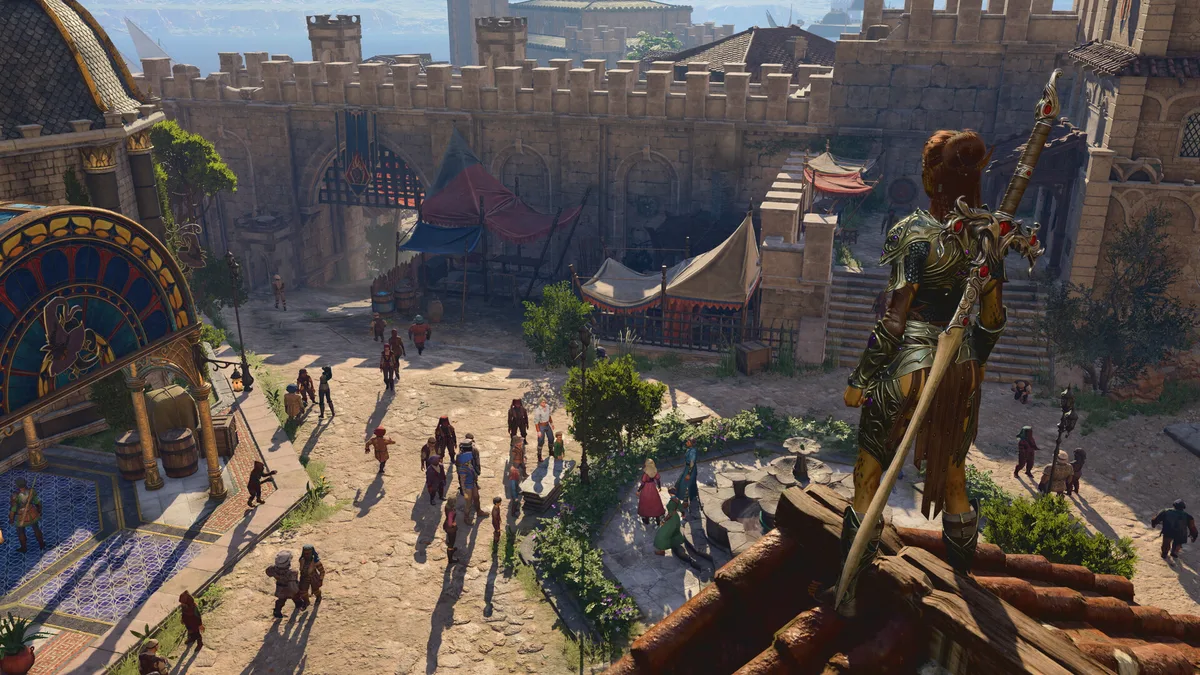
Official screenshot — Larian Studios (Steam)
The game is built on D&D 5e rules translated into video game form: ability checks, advantage and disadvantage, spell slots, short rests, and class features from Fighter to Warlock. Larian does not treat the license as window dressing. Conditions, surfaces, elevation, and action economy matter in every fight.
For search clarity: players looking for a Larian Studios RPG with tabletop fidelity will find BG3 sits at the intersection of classic BioWare companion drama and immersive sim emergent play. It supports solo play, online co-op for up to four players, and local split-screen co-op on console. It is not live-service, not procedural, and not designed around seasonal battle passes. It is a handcrafted epic with endings shaped by hundreds of decisions.
Core Gameplay Loop
The loop in Baldur's Gate 3 rewards curiosity and preparation:
- Explore a region — wilderness, dungeon, or city district — following leads or wandering freely
- Speak with companions, NPCs, and environmental clues to unlock quests and shortcuts
- Resolve encounters through turn-based combat, stealth, persuasion, or creative item use
- Short rest to recover hit points and abilities; long rest to advance companion scenes and story beats
- Level up, loot gear, and push toward the next act's central crisis
Unlike action RPGs that funnel you down golden paths, BG3 trusts you to break quests. Bribe guards, polymorph into a cat, drop a crate on a wizard, or talk your way past a boss entirely. The loop feels less like checking map icons and more like holding a dungeon master's toolkit.
Quality-of-life reflects years of Early Access feedback: robust journal tracking, respec with Withers, camp conversations that trigger after major events, and clear feedback when rolls succeed or fail. Veterans of Divinity: Original Sin 2 will recognize elemental combos and action-point combat, but BG3's D&D identity adds spell diversity, class asymmetry, and dice tension that Larian's earlier work never had.
Turn-Based Combat System
Combat is the mechanical spine of any honest Baldur's Gate 3 review, and Larian delivers one of the finest turn-based systems in gaming history.
Action Economy and D&D Rules
Each turn grants an action, bonus action, movement, and reactions. Spells consume slots; martial classes rely on Extra Attack, maneuvers, and resource pools like Ki or Rage. Saving throws, attack rolls, and critical hits use visible dice — optional but beloved — that communicate tabletop fairness.
Surfaces and elevation define battlefield control. Grease ignites, water conducts lightning, ice makes ground slippery. High ground grants advantage on ranged attacks. Shoving enemies off cliffs is not a gimmick; it is a legitimate strategy supported by the rules.
Class Variety and Party Synergy
Twelve base classes and multiple subclasses cover classic D&D fantasies:
- Fighters and Barbarians anchor front lines with sustained damage and survivability
- Wizards and Sorcerers reshape battlefields with control and burst
- Clerics and Druids heal, buff, and summon allies
- Rogues and Rangers exploit stealth, positioning, and ranged precision
- Bards, Paladins, Warlocks, and Monks fill niche roles with unique resource loops
Multiclassing and respec options let you experiment without starting over. A Warlock dip for Hexblade on a Paladin, or Rogue levels on a Fighter for Action Surge assassinations, are viable and fun. Companion characters arrive with defined classes but can be respecced to fit your party plan.
Boss Encounters and Difficulty
Boss fights combine multi-phase scripting with systemic freedom. Destroying necromancy totems, shutting down ritual channels, or saving NPCs mid-fight changes outcomes. Tactician mode increases enemy health, adds combat incentives, and punishes careless positioning — the intended experience for CRPG veterans.
Explorer and Balanced modes welcome newcomers without gutting tension. Honour mode adds permadeath stakes for masochists chasing bragging rights.
Story, World, and Companions
Narrative ambition matches mechanical depth. Larian treats companions as co-authors of the story, not sidekick stat blocks.

World and exploration — Larian Studios (Steam)
Main Narrative Across Three Acts
Act 1 traps you in the wilderness around the crashed nautiloid — a tutorial region disguised as a sprawling sandbox. Act 2 plunges into the Shadow-Cursed Lands and Moonrise Towers, where horror and moral compromise escalate. Act 3 opens Baldur's Gate city itself, weaving personal quests into an epic about gods, elder brain conspiracies, and who deserves to survive.
Pacing is deliberate. Act 1 alone can consume 20–30 hours for thorough players. The game rewards slow reading: letters, overheard arguments, and companion reactions foreshadow late-game payoffs that feel earned rather than scripted surprises.
Origin Characters and Custom Heroes
You can play as a fully voiced Origin — Astarion, Karlach, Lae'zel, Shadowheart, Gale, Wyll, or The Dark Urge — or create a custom Tav with the same narrative access. Origin characters integrate into cutscenes and dialogue; custom characters still receive full story participation with slightly less bespoke scripting.
The Dark Urge offers a murder-mystery personality path for players who want predetermined impulses to wrestle against. It is optional content with significant moral weight.
Companion Writing and Approval
Companions are industry-leading:
- Shadowheart carries faith versus family in sharp, painful arcs
- Astarion explores trauma, freedom, and vampiric power with wit and vulnerability
- Karlach embodies infernal rage softened by found family
- Lae'zel tests loyalty to creed against loyalty to party
- Gale balances arcane ambition with romantic tenderness
- Wyll interrogates heroism as performance
- Halsin, Minthara, Jaheira, Minsc and others expand the roster with legacy and surprise
Approval systems nudge dialogue options but rarely punish you with betrayal. Disapproval creates drama; it does not sabotage combat. Camp nights unlock layers of backstory, often fully voiced with cinematic direction that rivals premium television.
Romance, Roleplay, and Choice Consequence
Romance in BG3 is mature, inclusive, and integrated into character arcs rather than bolted on as a mini-game. Relationships develop through camp conversations, personal quests, and choices that respect boundaries and consent.
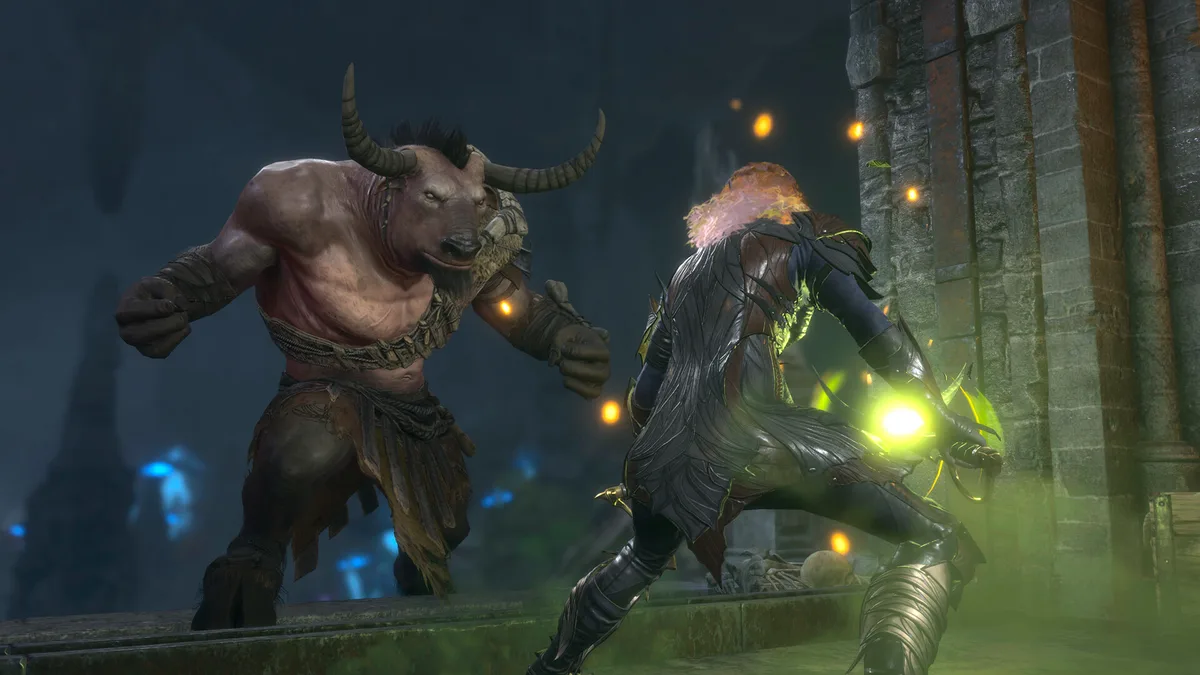
Systems and performance — Larian Studios (Steam)
Beyond romance, roleplay freedom defines the experience. Play as a pacifist diplomat, a ruthless pragmatist, a chaotic trickster, or a devoted hero of a specific deity. The game tracks background tags — Noble, Criminal, Sage — that unlock unique dialogue without hard-locking outcomes.
Consequences ripple visibly. Characters live or die. Factions rise or fall. Endings branch based on who you saved, who you romanced, and whether you embraced or rejected illithid powers. Epilogue slides and in-world state changes make replays feel distinct rather than cosmetic.
Co-op Multiplayer
Online co-op supports up to four players, each controlling a party member in the same campaign. Split-screen co-op on PlayStation 5 and Xbox Series X|S lets couch partners share the adventure locally.
Co-op transforms tone. Negotiations become live debates. Stealth plans collapse into comedy. Combat rewards coordination — buffing allies, combining crowd control, reviving downed partners before permadeath modes apply. Larian designed cutscenes to accommodate multiple protagonists, a technical feat few RPGs attempt.
Cross-play limitations exist depending on platform; verify current support before planning mixed-platform groups. Even solo players benefit from co-op design: companions feel like real party members because the architecture was built for human partners.
Exploration and Emergent Solutions
BG3's levels are dense dioramas rather than empty open-world expanses. Every camp, ruin, and city district hides secrets: hidden caches, alternative quest routes, environmental puzzles, and optional bosses tied to lore.
Emergent solutions define Larian's reputation:
- Use Misty Step to bypass locked doors
- Feed poisoned wine to enemies before combat starts
- Summon owlbears or elementals to tank fights
- Persuade, intimidate, or perform your way past encounters with dice rolls visible and fair
Stealth is fully viable for entire playthroughs on appropriate builds. Non-lethal takedowns, disguise kits, and Silent Image illusions support pacifist runs — though some story beats still demand violence.
The game respects intelligence. If you think a plan should work within D&D logic, it probably does.
Progression, Loot, and Buildcrafting
Character growth follows D&D leveling to level 12, with ASI/feats, subclass selection, and spell learning at class-appropriate tiers.
Gear and Crafting
Loot includes weapons, armor, accessories, and consumables tiered from common to legendary. Many unique items support specific builds — lightning synergy, critical hit fishing, crowd control extension. Crafting is lightweight: alchemy for potions and grenades, camp supplies for resting comfort bonuses.
Encumbrance, equipment sets, and armor types (light, medium, heavy) affect stealth and spellcasting. Reading item descriptions matters.
Replay Value
A single thorough run can exceed 75–100 hours. Speedruns of main story still land near 45–60 hours. Replays with different classes, Origin characters, evil routes, or co-op partners expose content most players never see on first pass.
Mods on PC extend longevity further — quality-of-life tweaks, new classes, cosmetic packs, and full campaign additions from a passionate community.
Visuals, Audio, and Presentation
BG3 targets cinematic fantasy rather than grim photorealism. Character models are expressive; facial animation during dialogue close-ups carries subtle emotion that sells dramatic beats. Environments range from sun-dappled forests to hellish infernos and shadow-cursed wastelands, each with distinct art direction.
Cutscenes blend in-engine and pre-rendered moments seamlessly. Spell effects are readable amid chaos — critical when one Fireball can end a fight or incinerate your allies.
Voice acting is uniformly strong across hundreds of characters. Music by Borislav Slavov shifts from intimate camp themes to orchestral battle crescendos. The narrator — voiced with gravitas — frames ability checks and combat outcomes with tabletop flair.
UI design prioritizes clarity: turn order, condition icons, opportunity attack warnings, and spell tooltips explain D&D terminology for newcomers without dumbing down systems.
Mods and Community Support
PC players access official mod tools through the Baldur's Gate 3 mod hub integrated with Patch 7 and beyond. Curated mods address inventory sorting, UI tweaks, new subclasses, and cosmetic options. Full conversion mods and campaign extensions emerge from a community trained on Larian's Divinity modding heritage.
Console players lack full mod support but receive substantial official patches — including split-screen additions, performance fixes, and quality-of-life improvements — that keep the experience current.
Larian's post-launch support and transparent communication built trust rare among AAA RPG studios. No mandatory DLC required to feel complete; the base game is the full epic.
Performance on PC and Consoles
Technical performance matters for a game this large. This Baldur's Gate 3 review summarizes platform experience qualitatively.
PC Performance
On PC, BG3 scales from modest rigs to high-end hardware. SSD storage is strongly recommended for Act 3 city loading. Mid-range GPUs achieve smooth 1080p with balanced settings; high-end systems handle 1440p and 4K with upscaling.
Strengths:
- Deep graphics options and mod-friendly architecture
- Stable frame rates in most combat scenarios after post-launch patches
- Cross-save support on PC platforms depending on storefront
Weaknesses:
- Act 3 dense city scenes can stress CPUs and GPUs simultaneously
- Very old hardware may require aggressive settings on Tactician-mode large battles
- Mod load order conflicts require community troubleshooting
Console Performance
PlayStation 5 and Xbox Series X|S ports bring the full campaign to living rooms with controller-optimized UI and split-screen co-op.
- PlayStation 5 offers solid performance modes with fast SSD loading
- Xbox Series X delivers comparable fidelity with Game Pass availability boosting access
- Xbox Series S runs at reduced targets but remains playable for patient RPG fans
Console players sacrifice PC mods but gain couch co-op — a fair trade for many households.
Accessibility and Quality of Life
Larian includes options that broaden reach:
- Difficulty modes from Explorer to Honour
- Toggleable dice rolls, blood, and gore
- Subtitle customization and speaker labels
- Rebindable controls on PC and console
- Photo mode for capturing cinematic moments
Camp respec with Withers reduces build anxiety. The journal tracks quest updates clearly. Fast travel unlocks regionally to prevent tedious backtracking without removing spatial discovery.
Pros and Cons
Pros
- Unmatched writing and companion depth across hundreds of hours
- Best-in-class turn-based combat with D&D fidelity and emergent freedom
- Meaningful choices from Act 1 tavern fights to final epilogue states
- Full co-op support including split-screen on console
- Romance and roleplay integrated into narrative rather than gated mini-games
- Mod support on PC extending replay value indefinitely
- Complete game at launch without nickel-and-dime DLC for the core story
- Still the RPG benchmark in 2025 against new fantasy competitors
Cons
- Massive time commitment intimidates casual players
- Act 3 density can overwhelm lower-end hardware and human stamina alike
- Inventory management remains fiddly despite patches
- Turn-based pacing will not convert pure action-RPG devotees
- Some romance scenes sparked discourse about comfort and content warnings — check preferences
- Console mod absence limits customization versus PC
Who Should Buy Baldur's Gate 3?
Buy immediately if you enjoy:
- Story-heavy RPGs with fully voiced companions
- Turn-based tactical combat rooted in D&D
- Co-op campaigns with friends or partners
- Games where dialogue and creativity solve problems
- Replayable narratives with morally complex outcomes
Wait or skip if you dislike:
- 60–100+ hour campaigns
- Slow turn-based pacing versus real-time action
- Dense UI and tabletop terminology
- Mature themes including body horror, cult violence, and romantic content
Players coming from action RPGs like our Avowed review should expect less real-time reflex combat and more planning. Players coming from companion-driven BioWare titles like our Dragon Age The Veilguard review will find similar relationship drama with vastly more systemic combat freedom.
FAQ — Baldur's Gate 3
Is Baldur's Gate 3 connected to earlier Baldur's Gate games?
BG3 is a narrative sequel set roughly a century after Baldur's Gate II. Familiar faces and factions return — including Jaheira and Minsc — but newcomers can start here without playing older titles.
How long is Baldur's Gate 3?
A focused main story run takes roughly 45–60 hours. Thorough exploration with side content commonly reaches 75–100 hours. Completionist and Honour-mode runs can exceed 120 hours.
Is Baldur's Gate 3 multiplayer?
Yes. Online co-op supports up to four players in one campaign. Split-screen co-op is available on PlayStation 5 and Xbox Series X|S.
Do I need D&D knowledge to play?
No. The game teaches rules through tooltips and context. D&D veterans will recognize spells and conditions faster, but newcomers learn quickly.
Is Baldur's Gate 3 on Game Pass?
Baldur's Gate 3 appeared on Xbox Game Pass for console and PC during promotional windows. Verify current Game Pass listings before subscribing solely for BG3.
Can you romance companions in Baldur's Gate 3?
Yes. Multiple companions support romance arcs across orientations and identities, gated by story progress and dialogue choices.
Does Baldur's Gate 3 have mods?
PC supports official mod tools and community content. Consoles do not support full mod ecosystems as of 2025.
Is Baldur's Gate 3 still worth buying in 2025?
Absolutely. Patches polished performance, split-screen arrived on console, and the game remains the defining CRPG of its generation — unmatched in combined writing, combat, and player freedom.
Tips for New Adventurers
- Long rest often — companion scenes and spell slots depend on proper resting.
- Use elevation and surfaces — free damage beats burning spell slots early.
- Talk to everyone in camp after major quests — approval and story branches hide there.
- Keep a thief or scout — locked chests and stealth routes reward exploration.
- Save before major decisions — not from fear, but to explore alternate outcomes guilt-free.
- Try co-op if solo feels daunting — shared responsibility lowers analysis paralysis.
Comparison With Other Fantasy RPGs
| Feature | Baldur's Gate 3 | Avowed | Dragon Age: The Veilguard |
|---|---|---|---|
| Combat | Turn-based D&D | Real-time action | Real-time action |
| Co-op | Yes (online + split-screen) | No | No |
| Companions | Deep, fully voiced | Strong narrative party | BioWare relationship focus |
| World structure | Dense act-based regions | Large handcrafted zones | Hub-and-mission flow |
| Rules basis | D&D 5e | Original fantasy | Original fantasy |
| Scope | 75–100+ hours typical | 30–45 hours typical | 40–60 hours typical |
BG3 leads on systemic combat and co-op. For first-person action fantasy, read our Avowed review. For BioWare-style relationship drama in a tighter action frame, see our Dragon Age The Veilguard review.
Community Reception
Launch reception was overwhelmingly positive. Critics praised writing, companion arcs, combat depth, and production values. Game of the Year wins stacked across ceremonies in 2023 and 2024. Player counts surged on Steam and consoles during major patches.
Criticism targeted Act 3 performance on some hardware, inventory friction, and occasional difficulty spikes. Larian addressed many concerns through patches without compromising creative vision.
Years later, BG3 remains a cultural touchstone — referenced in RPG design discussions, streaming communities, and "what should I play next?" threads whenever a new fantasy RPG launches.
Score Breakdown
| Category | Score |
|---|---|
| Story and choices | 10/10 |
| Companions and romance | 10/10 |
| Turn-based combat | 10/10 |
| Exploration and emergent play | 10/10 |
| Co-op design | 9.5/10 |
| Performance | 8.5/10 |
| Accessibility and QoL | 9/10 |
| Overall | 10/10 |
Verdict
Baldur's Gate 3 is Larian Studios' magnum opus — a CRPG that honors Dungeons & Dragons, respects player intelligence, and delivers companion storytelling at a level few studios will ever match. It is long, demanding, and occasionally messy in the corners where ambition outruns hardware. Those flaws fade against the sheer volume of unforgettable moments: a tiefling refuge defended or abandoned, a vampire confessing vulnerability by moonlight, a city-wide climax where your allies actually show up because you earned their loyalty.
NexReview Score: 10/10
If your 2025 RPG question is whether Baldur's Gate 3 review consensus still holds — whether the game remains essential years after launch — the answer is an emphatic yes. New fantasy RPGs deserve attention, but none have displaced BG3 as the complete package. Pair this playthrough with our Avowed review to compare first-person action fantasy, or our Dragon Age The Veilguard review for BioWare's latest take on companions in combat.
Extended Buyer's Guide for 2025
Consider platform first: PC players gain mods and maximum settings flexibility. Console players gain split-screen co-op and living-room comfort. Game Pass availability on Xbox makes trying BG3 affordable when included.
Consider playstyle second: solo tacticians, co-op friend groups, and roleplay streamers all find tailored joy. Pick an Origin that matches your appetite for voiced protagonist dialogue or create a custom hero for blank-slate immersion.
Consider time third: BG3 is a marathon. Plan multi-week or multi-month engagement rather than a weekend sprint. The game rewards patience — rushing to Act 3 skips some of the best content in Act 1.
Build Recommendations by Playstyle
Frontline Defender
Paladin or Fighter with high Armor Class, shield or two-handed weapon, and control spells or maneuvers from party casters. Reliable on all difficulties.
Battlefield Controller
Wizard or Druid focusing on crowd control — Hold Person, Entangle, Spike Growth — combined with surface manipulation. Devastating on Tactician.
Stealth Skirmisher
Rogue or Ranger with high Dexterity, stealth proficiency, and ranged damage. Excellent for players who want to scout and avoid unnecessary fights.
Charisma Diplomat
Bard or Warlock with high Charisma for dialogue checks, supplemented by enough combat utility to survive when talk fails. The most "BG3" experience for players who want words to matter.
Co-op Specialist
Coordinate with friends: one tank, one healer, two damage dealers. Assign one player as face for dialogue while others handle combat roles — mirrors tabletop nights faithfully.
Why NexReview Recommends Baldur's Gate 3 in 2025
Among CRPGs and fantasy RPGs released in the last decade, Baldur's Gate 3 stands alone for combining:
- Tabletop-authentic combat without sacrificing video game spectacle
- Companion writing that rivals prestige television
- Emergent solutions that reward creativity over walkthrough obedience
- Co-op architecture that respects shared storytelling
Obsidian's Avowed and BioWare's Veilguard push the genre forward in action-first directions. Larian's achievement remains the reference point — the game new RPGs get compared against, fairly or not.
Larian Studios and Legacy
Larian earned this victory through decades of CRPG craft. Divinity: Original Sin 2 proved the studio could handle deep systems and co-op. BG3 proved Larian could operate at AAA scale without losing soul. The Forgotten Realms license could have constrained creativity; instead, Larian embraced D&D's identity and elevated it.
For players who missed the 2023 moment, 2025 is an ideal entry point: patches landed, ports matured, guides abound, and the community remains active. You are not late to a fad; you are arriving at a permanent library staple.
Final Recommendation
Baldur's Gate 3 is not merely a great RPG. It is the RPG against which others are measured — a game that makes you laugh, agonize, strategize, and remember specific dialogue lines years later. Larian Studios delivered what CRPG fans dreamed of for decades: a faithful, sprawling, beautifully acted adventure where your choices matter and your friends can sit beside you for every dice roll.
NexReview recommends Baldur's Gate 3 without reservation to CRPG veterans, D&D curious newcomers, co-op partners seeking a shared epic, and anyone searching for the best Baldur's Gate 3 review conclusion available in 2025: this is a rare 10/10 — a game that earns its length, its hype, and its place in your backlog's top slot.
Start in Act 1 with patience. Talk to your companions. Save before bold choices. And when you finally reach Baldur's Gate city, you will understand why this adventure still has no equal.