
Pros
- Spies and a redesigned board refresh worker-placement routes veterans thought were solved
- Sandworms finally make Arrakis combat feel like Dune, not just spice accounting
- Fully playable standalone with improved solo Rivals and a real six-player team mode
- Compatible with base-game leaders and most cards plus Rise of Ix and Immortality
- CHOAM contracts reward planning without replacing the deck-building heart
Cons
- More systems than the original — spies, Shield Wall, hooks, contracts stack cognitive load
- Sandworm swings can feel swingy when one player chains hooks early
- Six-player team mode is a novelty, not a weekly driver, with real downtime
- Mixing all legacy expansions with Uprising requires card culling and rules care
- Not a budget pick if you already own base Dune Imperium and only play it occasionally
Dune: Imperium – Uprising is Paul Dennen’s standalone sequel to 2020’s smash hit — a deck-building worker-placement game set on Arrakis after the fall of House Atreides, where Fremen rebellion, Harkonnen brutality, and Imperial scheming collide across a redesigned board. This Dune Imperium Uprising review (updated September 2026) covers how spies, contracts, and sandworms change the loop, whether newcomers should buy Uprising instead of the original box, how the six-player team mode actually plays, and where the sequel earns its place on a crowded hobby shelf.
If you searched for a dune imperium uprising review because Dune: Part Two sent you down a rabbit hole of spice and sandworms, you are in the right place. This is Dune: Imperium – Uprising (2023) from Dire Wolf Digital — not the 2021 video game Dune: Spice Wars, not Gale Force Nine’s older Dune (1979) area-control classic, and not a random “Dune board game” reskin. Same universe, different product line.
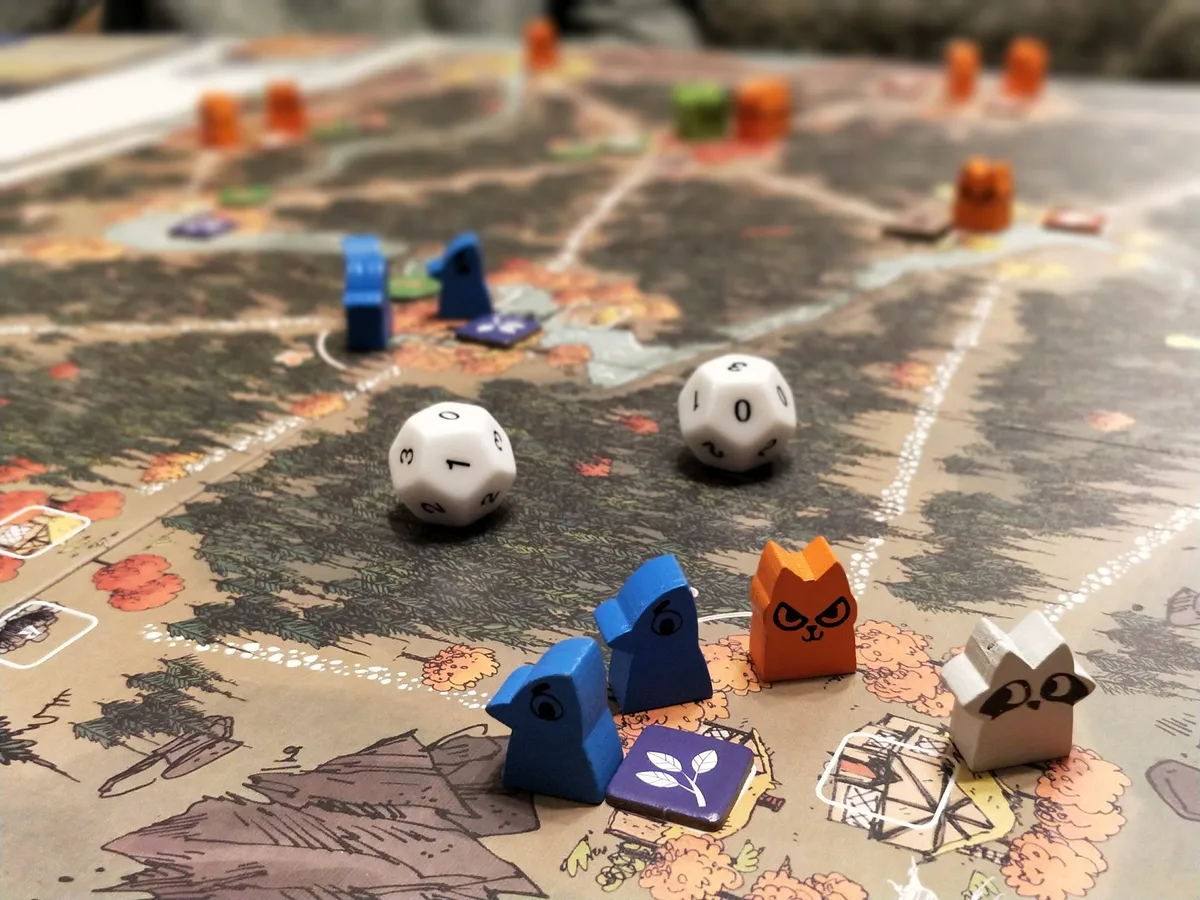
Tabletop strategy atmosphere — photo via Wikimedia Commons
Quick Verdict (For Skimmers)
| Field | Detail |
|---|---|
| Designer | Paul Dennen |
| Publisher | Dire Wolf Digital (Gale Force Nine / Legendary license) |
| Players | 1–6 (solo Rivals; 3v3 team mode at six) |
| Play time | ~60–120 minutes (teach games and six-player runs can stretch longer) |
| Age | 13+ |
| Type | Deck-building + worker placement + conflict resolution |
| Standout feature | Spies, sandworms, CHOAM contracts on a new Arrakis board |
| MSRP | $60 USD (street prices often $50–65 depending on region) |
| NexReview score | 8.6/10 |
Buy it if you want the Dune Imperium formula with fresher routes, stronger Fremen fantasy, and a box that stands alone for new groups. Skip it if you dislike rules overhead, never liked the original’s conflict math, or already own base Dune: Imperium and only play twice a year — in that case, Rise of Ix or Immortality may satisfy you more cheaply.
What Is Dune: Imperium – Uprising?
Uprising is best understood as a parallel sequel, not a thin expansion. Paul Dennen and Dire Wolf replaced the main board rather than stacking another map on top of the original — the same design philosophy they used for Clank! map swaps. You still send agents to board spaces, play cards from a personal deck for persuasion and combat strength, bid influence with the Great Houses, and resolve conflicts for rewards. The skeleton is unmistakably Dune: Imperium.
The story frame jumps to the post-Atreides Arrakis of Dune: Part Two: the Emperor restored Harkonnen control, Muad’Dib rises among the Fremen, and every faction scrambles as spice flow and open war threaten the Imperium. That narrative shift is not cosmetic. Fremen spaces matter more, sandworms sit on the table as chunky miniatures, and the political map rewards spreading influence instead of locking one alliance on turn two.
The box is generous for a $60 standalone: double-sided board, twelve wooden agents, ninety-five-plus wooden pieces, four sandworm figures, two hundred fifty-plus cards, nine leaders, spy tubes in player colors, Maker Hook tokens, Shield Wall marker, and components for six-player commander boards. Production matches Dire Wolf’s usual standard — readable iconography, movie-adjacent art direction, and a rulebook that clearly marks what changed versus the base game.

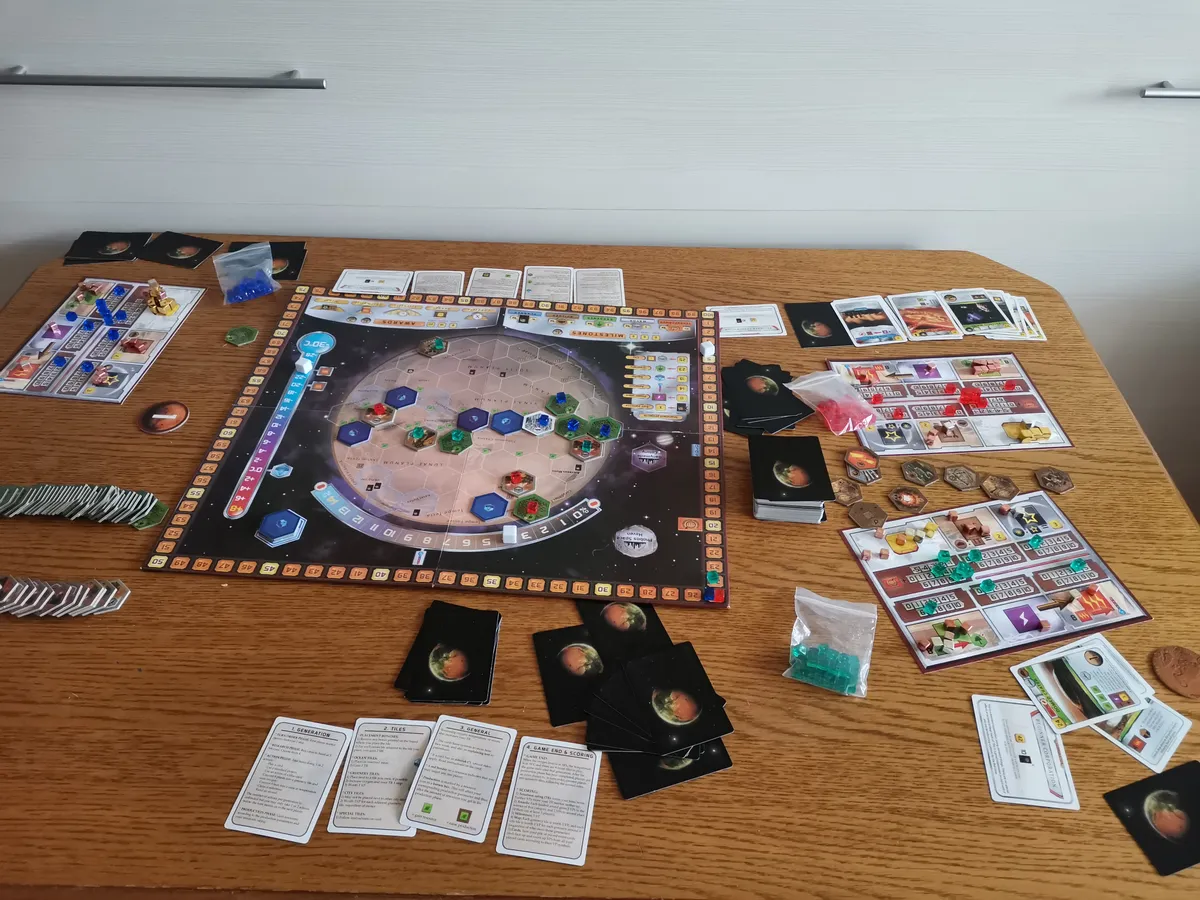
Desert and strategy-table mood — Wikimedia Commons
How Uprising Differs From Base Dune Imperium
Veterans should read this section before their first teach. Uprising is compatible with most original cards and leaders, but it is not identical gameplay.
| Element | Base Dune: Imperium | Uprising |
|---|---|---|
| Board layout | Classic Arrakis routes (Stillsuits at Fremen, etc.) | Redesigned spaces; water often via Spacing Guild |
| Mentat token | Extra agent + delayed combat | Removed; Imperial Privilege space fills similar role |
| Foldspace | Jump icon on select cards | Removed entirely |
| Spies | — | Observation posts enable infiltration or card draw |
| Sandworms | Mostly thematic art | Combat units (3 strength) that double conflict rewards |
| Contracts | — | CHOAM module tiles reward planned future visits |
| Six-player | Not supported | 3v3 team mode with Muad’Dib and Shaddam commanders |
| Average card complexity | Higher on some staples | Slightly streamlined Imperium deck (65 new cards) |
Dennen explicitly capped complexity elsewhere: simpler average Imperium cards, modular contracts you can swap for a beginner-friendly variant, and no Foldspace rules to track. The board itself is denser — more unlock paths tied to faction influence — so the net complexity is similar or slightly higher, not lighter.
Core Loop: Still Agents, Cards, and Conflicts
If you have never touched the line, here is the rhythm in plain language. Each round, players take turns placing one agent on a board space (or passing). Spaces grant solari, spice, water, troops, card draws, intrigue cards, or influence with Fremen, Spacing Guild, Bene Gesserit, or the Emperor. When everyone passes, the conflict phase resolves: players who committed troops and combat icons from revealed cards compare strength. Winners take rewards; losers often still gain consolation prizes.
Between rounds you acquire new Imperium cards into your deck — the deck-building half of the hybrid. Trash weak starters, chain persuasion for influence spikes, and time reveals so combat strength lands when the conflict deck shows a high-value fight. Intrigue cards add one-shot swings: alliances, sabotage, extra troops.
Uprising preserves that push-pull. You are always choosing between visiting a space now versus holding agents for a better conflict, between investing in faction tracks versus buying a card that thins your deck. What changes is how you execute those choices — spies break stalemate placements, sandworms supercharge a winning fight, and contracts pay you for telegraphed plans.
Agent Phase Tension
Worker placement in Dune Imperium was always semi-competitive: spaces are limited, and the conflict phase punishes players who over-commit to the board. Uprising sharpens that knife. Observation posts adjacent to key spaces mean a player who arrives first is not always safe — a spy recall can infiltrate a occupied slot if the board connection allows it. Suddenly the “safe” third pick at Sietch Tabr is negotiable.
That dynamism refreshes veterans who logged hundreds of base-game sessions. Routes you memorized — early Mentat, lock Fremen, rush Swordmaster — no longer apply verbatim. The Spacing Guild’s Deliver Supplies might be your water line now; Gather Support replaces some early Mentat tempo for certain leaders.
Spies: Infiltration Without a New Rules Book
Spies are the headline mechanical addition that actually earns table time. Each player has colored spy tubes placed on observation posts marked on the board. On your turn you can:
- Place a spy on an empty observation post, or
- Recall a spy you already placed — drawing cards or triggering other spy-enabled effects depending on the space and cards in play.
The payoff is infiltration: with the right card icon, you may send an agent to a space connected to your spy’s post even if another player’s agent sits there. In base Dune: Imperium, occupancy was absolute. In Uprising, the table reads like espionage fiction — you thought you blocked the Emperor track, then someone slides in through a spy line.
Spies also interact with the revised intrigue economy. Recall timing matters: do you spend the spy for card velocity this round, or leave it parked to threaten infiltration next round? Groups that enjoy subtle blocking in games like Root or Terraforming Mars will feel at home; groups that prefer open accounting may need a round or two to trust the logic.
From a design standpoint, spies solve a real problem sequels face — solved openings. They add variance without a dice-fest. They are also the main reason mixing old expansion cards into Uprising requires care: some legacy cards reference removed spaces or Foldspace, and Dire Wolf’s FAQ calls out incompatible combinations.
Sandworms, Maker Hooks, and the Shield Wall
If the original game under-delivered on sandworms — they mostly lived on cards and the first-player token — Uprising corrects the thematic gap aggressively.
Maker Hooks are tokens you earn primarily through Fremen influence and visits to Sietch Tabr. Hooks let you deploy a sandworm miniature into a conflict. Each worm contributes three combat strength and, critically, doubles your conflict rewards if you win while using one. That doubling is the swing people talk about online. A mid-tier fight can become a four-point swing plus resources when a worm rides in.
The counterweight is the Shield Wall token. Certain conflicts in the deck are protected; worms cannot enter until the wall falls. Some intrigue and board effects destroy the wall, opening worm-eligible fights later. The push-pull creates a mini arc within a single session: early game hooks stockpile, mid-game someone breaks the wall, late game a worm double can decide the winner.
Is it swingy? Sometimes, yes — especially if one player chains Fremen influence early while others spread political bets. In our experience the complaint overstated when groups skip low-value conflicts more often in Uprising, using those rounds to build hooks and garrison instead of bleeding troops for a single solari. Combat is still optional in spirit; the difference is the upside of committing is higher when worms are in play.

Deck-building and card-table atmosphere — Wikimedia Commons
CHOAM Contracts and the Built-In Module
Uprising ships with the CHOAM module — a built-in mini-expansion Dire Wolf recommends adding after your first standard game (not day one for absolute newcomers). Contracts are tiles you draft or reveal that pay a bonus if you complete a specific future action: send an agent to a named space, harvest a set amount of spice, etc.
Contracts telegraph intent. Tablemates see your tile and can block the relevant space or race you to a conflict that pays what you need. That transparency sounds punitive, but it mirrors Dune’s scheming: plans are public, counter-plans are inevitable. Supporting Imperium cards reward contract completion or make picking new contracts cheaper, so dedicated planners can treat CHOAM as a scoring engine.
For teaching, the rulebook offers a simplified contract variant — Dennen’s “complexity budget” in action. Use the simple version for game two with new players; flip to full CHOAM when everyone understands spy recall timing.
Faction Unlocks and Political Routes
Three board spaces unlock through influence thresholds, reshaping the political meta:
- Shipping (Spacing Guild) — economic and political acceleration when you have spice and Guild influence.
- Imperial Privilege (Emperor) — functional successor to the Mentat: extra agent flexibility, intrigue cycling, delayed combat decisions.
- Sietch Tabr (Fremen) — Maker Hooks and the path to worms.
Bene Gesserit do not unlock a board space at two influence; instead, the reserve card Prepare the Way scales with Sisterhood investment — a nod to the Voice and long-game manipulation. Early alliance locks still work, but over-committing to one faction delays other unlocks, so late-game alliance fights stay volatile. If your group hated “Emperor locked on round two” in the base game, Uprising’s spread incentives help — at the cost of more to explain up front.
Leaders, Decks, and Compatibility
Uprising includes nine new leaders with asymmetric starting resources, agents, and powers. Classic leaders from base Dune: Imperium remain legal in Uprising games, and most base Imperium and intrigue cards mix in cleanly — Dire Wolf estimates the vast majority work. Rise of Ix and Immortality content also integrates, which is unusual for a standalone sequel and generous for collectors.
The new Imperium deck (65 cards, plus four CHOAM extras) and Intrigue deck (40 cards) stand in for their Uprising counterparts during standalone play. The Conflict deck (16 cards) includes Shield Wall fights and worm-friendly payouts. When combining product lines, budget ten minutes for setup culling — remove Foldspace references, verify board space names on older cards, and check the official FAQ on Dire Wolf’s site.
If you own everything, treat Uprising as a second front in the same universe: some nights you play classic Arrakis, some nights you swap boards and spies. If you own nothing, you do not need the 2020 base box first.
Solo, Two-Player, and Rivals
Solo and duels were weak spots in early Dune: Imperium discourse. Uprising answers with a expanded Rivals system:
- Eight Rivals across four difficulty levels, each with a personality card dictating priorities.
- House Hagal deck drives rival placement in solo and two-player — less lookup, smoother turns.
- Streamlined Rivals (Lady Amber, the Beast) block spaces without racing to win — perfect for head-to-head purists who want low upkeep.
In solo you typically face two rivals who collect resources, buy Swordmasters, and convert points like human opponents. Difficulty ramps as rivals upgrade; the rulebook suggests advanced tweaks for masochists. Two-player with a full Rival feels like a three-player table minus social table talk — tighter, but legitimate.
The Dire Wolf Game Room app adds digital House Hagal, Blitz mode, updated Arrakeen Scouts content, and cross-product leader support. App play is optional; the cardboard solo mode is complete out of the box.
For solo-only buyers, community consensus in 2026 still leans Uprising over base if you must pick one — rival variety and board freshness matter more than marginal rules weight.
Six-Player Team Mode: Muad’Dib vs the Emperor
Uprising’s six-player mode is a 3v3 team battle, not six independent winners. Two players become commanders — Paul Muad’Dib and Emperor Shaddam Corrino IV — with personal boards and decks. Commanders do not win conflicts directly; they allocate rewards to teammates and coordinate influence. Muad’Dib’s side gets sandworm exclusivity and easier spice; Shaddam’s Imperium brings different economic tools and Carthag-style spaces (Dennen’s design diaries compare Habbanya Erg to Hagga Basin for card draw).
Public communication only — no whispered side rooms. Trades flow through Economic Support spaces; spies thematically justify the paranoia. Swordmasters on teams grant garrison tokens, changing combat math at scale.
It is ambitious, narrative, and slow relative to four-player free-for-all. Downtime scales with six brains planning simultaneous betrayals. Treat it as a quarterly event, not the reason to buy the box. For regular six-player nights, a dedicated party game or Spirit Island-scale co-op may fit better — but as a licensed Dune scenario night, the mode delivers.
Player Count Recommendations
| Count | Experience |
|---|---|
| 1 (solo) | Strong puzzle; best after one multiplayer teach |
| 2 | Good with full or Streamlined Rivals; tighter conflict races |
| 3 | Works; less blocking tension than four |
| 4 | Sweet spot — board crowded, conflicts costly, spies shine |
| 5 | Unsupported in standard rules |
| 6 (teams) | Epic, lengthy, veteran-only |
Who Should Buy Uprising?
Buy Uprising first if:
- You are new to the line and want the most current board, solo tools, and Part Two theming.
- Your group loves conflict swings, spy infiltration, and visible long-term planning (contracts).
- You play solo often and want Rivals with personality.
Buy base Dune: Imperium first if:
- You want the simplest teach and the historical “classic” meta.
- You find combat optional in deck-builders frustrating — Uprising doubles down on fight payouts.
- Budget is tight and the 2020 box is on sale locally.
Own the base already? Uprising is worth it if you play monthly and crave fresh routes. Skip if the base gathers dust — add Rise of Ix instead for new leaders and tech without a full board swap.
Strategy Tips (Without Over-Optimizing)
- Treat spies as threats, not souvenirs. A spy left on a post is a loaded gun; factor it into placement even before infiltration happens.
- Hooks before worm fantasies. Fremen influence is a enabler, not a victory point track — visit Sietch Tabr with a plan for which conflict deck cards you want doubled.
- Do not auto-commit to every conflict. Uprising rewards skipping small fights to stock resources, then winning one doubled worm payout.
- Spread influence when learning. Unlock Shipping, Imperial Privilege, and Fremen tools in one game to see the board breathe.
- Add CHOAM after game one. Contracts make more sense once spy timing is muscle memory.
- Cull expansions deliberately. Mixing everything without FAQ checks creates “why doesn’t this card work?” moments that kill momentum.
Pros and Cons
| Pros | Cons |
|---|---|
| Fresh board breaks solved base-game openings | More subsystems to teach newcomers |
| Spies add infiltration without dice bloat | Sandworm doubles can feel swingy |
| Standalone box with strong solo Rivals | Six-player mode is long and niche |
| Thematic Fremen and worm payoff | Legacy card integration needs culling |
| Fair MSRP for component count | Overlaps with base if you rarely play either |
Mobile-Friendly Buying Notes
Reading this dune imperium uprising review on a phone before a purchase?
- Confirm you want hybrid deck-building, not pure worker placement or pure deck-builder.
- MSRP $60; compare to base game sales — sometimes the older box is cheaper but less feature-complete for solo.
- Budget 90 minutes for first teach at three or four players.
- Check table size — board, conflict area, and six-player boards need space.
- Download the Dire Wolf Game Room app if you want digital solo helpers; not required.
- You do not need Spice Wars or the 1979 Dune game to enjoy this box.
FAQ — Dune Imperium Uprising Review
Is Dune Imperium Uprising a standalone game or an expansion?
Both, by design. Uprising is a standalone box — you can play without owning base Dune: Imperium. It also functions as a parallel sequel that shares most cards and expansions from the original line.
Do I need the original Dune Imperium to play Uprising?
No. The Uprising box includes its own board, decks, leaders, and tokens for complete games.
How does Uprising compare to base Dune Imperium for beginners?
The base game is slightly easier to teach because it lacks spies, worms, and contracts. Uprising is still approachable if you use simplified contracts and a patient teacher — but for raw onboarding, the 2020 game wins.
Is the Dune Imperium Uprising review score on BoardGameGeek still high in 2026?
Yes. Community ratings have held around 8.7/10 with tens of thousands of votes — evidence the sequel did not split the fan base the way some standalones do.
Are sandworms overpowered?
They are powerful but gated by Maker Hooks, Shield Wall conflicts, and resource costs. Groups that skip trivial fights and force worm players to overextend report healthier balance than hot-take threads suggest.
Does Uprising work with Rise of Ix and Immortality?
Yes. Dire Wolf designed cross-compatibility; verify individual cards against the FAQ when mixing large collections.
Is solo mode good in Uprising?
For hobby soloists, it is one of the stronger official implementations in the line — eight Rivals, scalable difficulty, and the Hagal deck reduce upkeep. It is still a mid-weight brain-burner, not a light filler.
What is the six-player team mode like?
Two teams of three, with Muad’Dib and Shaddam as commanders assigning rewards. Public-only negotiation, extra boards, and long playtime. Fun for events; not the default way to play.
Dune Imperium Uprising vs Spice Wars — which should Dune fans buy?
Different genres. Uprising is a board game hybrid for table groups. Spice Wars is a PC strategy game. This review covers the tabletop Uprising box only.
Is Uprising worth it at $60 in 2026?
If you play monthly at three or four players, or solo regularly, yes — component volume, replay tools, and compatibility justify MSRP. If you already own the base game and play twice a year, reconsider unless you crave the new board.
Final Verdict
Dune: Imperium – Uprising succeeds because Paul Dennen treated “standalone sequel” as a design mandate, not marketing fluff. Replacing the board let Dire Wolf celebrate Dune: Part Two with spies and sandworms without bloating a single map into unreadable icon soup. Spies refresh placement fights; worms sell Arrakis; contracts reward the kind of long con the IP demands. Solo Rivals and cross-line compatibility respect time and money already invested in the franchise.
It is not flawless. Teach weight creeps up, worm doubles can sting, and six-player mode is a spectacle you schedule — not a weekly driver. NexReview lands at 8.6/10: a hair below the base game’s broadest acclaim, but the better default entry for newcomers in 2026 and the pick veterans should buy when their original board feels solved.
Long live the fighters — and may your hooks arrive before the Shield Wall falls.
Score: 8.6/10 — Best Standalone Sequel for Deck-Building Arrakis Fans
Related on NexReview
Want more strategy-table coverage after this dune imperium uprising review? Browse our Game Reviews hub, asymmetric tension in Root, engine-building elegance in Wingspan, and heavy euro crunch in Terraforming Mars. For PC performance checks when you switch back to digital titles, try NexCheck and NexPass.