Pros
- Both ship 120Hz OLED at the same $799 entry tier — rare parity
- Pixel 10 adds a 5x telephoto at base price for the first time
- iPhone 17 doubles base storage to 256GB without a price hike
- Seven years of OS updates on Pixel; long iOS support on iPhone
- Clear winner paths — performance vs zoom vs AI vs ecosystem
Cons
- Neither phone is perfect — telephoto gap on iPhone, speed gap on Pixel
- Carrier deals and trade-in promos shift real street prices weekly
- Dual eSIM-only in the US on Pixel may frustrate physical-SIM holdouts
- Apple Intelligence and Gemini features vary by region and language
The iPhone 17 vs Pixel 10 debate is the sharpest $799 flagship fight in years. Apple and Google both kept entry pricing at $799 while pushing hardware that used to belong on Pro tiers: 120Hz displays, 48MP main cameras, and — on the Pixel side — a dedicated 5x telephoto on the base model for the first time. If you are cross-shopping iOS and Android without jumping to $999 Pro phones, this comparison is the decision tree.
This iPhone 17 vs Pixel 10 guide covers real-world differences after a full year on the market: A19 vs Tensor G5 performance, camera trade-offs, battery and charging, iOS 26 vs Android 16 AI, storage math, and who should pick which phone. We reference MSRP and widely reported specs; confirm current carrier pricing before you buy.
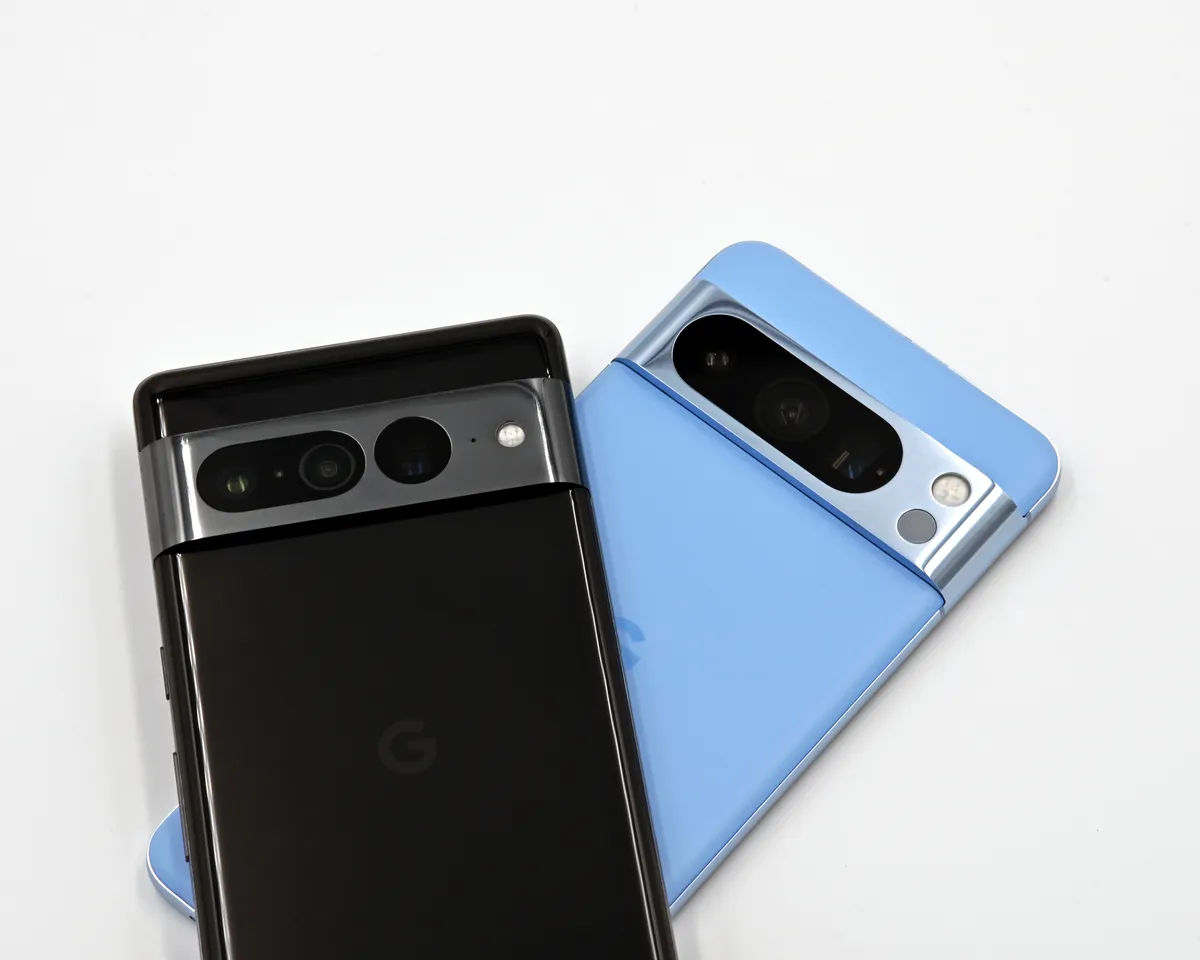
Flagship smartphones side by side — Wikimedia Commons
iPhone 17 vs Pixel 10 at a Glance
| Category | iPhone 17 | Pixel 10 | Edge |
|---|---|---|---|
| Launch | Sep 19, 2025 | Aug 28, 2025 | Pixel by ~3 weeks |
| MSRP (base) | $799 (256GB) | $799 (128GB) | iPhone storage |
| Display | 6.3" LTPO OLED, 120Hz, ~460 ppi | 6.3" OLED, 60–120Hz, ~422 ppi | iPhone sharpness |
| Chip | Apple A19 (N3P) | Google Tensor G5 (N3E) | iPhone raw speed |
| RAM | 8 GB | 12 GB | Pixel headroom |
| Rear cameras | 48MP wide + 48MP ultrawide | 48MP wide + 13MP ultrawide + 10.8MP 5x tele | Pixel zoom |
| Front camera | 18MP Center Stage | 10.5MP | iPhone selfies/video |
| Battery | ~3,692 mAh | ~4,970 mAh | Pixel capacity |
| Wired charge | Up to ~40W (50% ~20 min) | Up to 30W (50% ~30 min) | iPhone speed |
| Wireless | 25W MagSafe / Qi2.2 | 15W Qi2 Pixelsnap | iPhone |
| OS | iOS 26 | Android 16 (7 major updates) | Tie on longevity |
| Water resistance | IP68 (6m / 30 min) | IP68 (1.5m / 30 min) | iPhone rating |
NexReview comparison score: 8.6/10 as a buying framework — both phones earn their price, but they optimize for different owners.
What Changed in the 2025 Base-Model Generation
For most of the 2010s, the “regular” iPhone and base Pixel were compromise phones: 60Hz screens, smaller batteries, or missing zoom lenses. That changed in 2025.
Apple treated the iPhone 17 as a generational reset: ProMotion 120Hz and Always-On Display finally reached the non-Pro tier, base storage doubled from 128GB to 256GB at the same $799, and the front camera jumped to an 18MP Center Stage sensor with a square format for landscape selfies without rotating the phone. The A19 chip on TSMC’s refined N3P node delivers a meaningful speed bump over the prior generation.
Google answered with the Tensor G5 — its first fully in-house silicon design, fabbed at TSMC — and put a 5x optical telephoto on the base Pixel 10, a first for this price tier. The 4,970 mAh battery is one of the largest in any compact flagship, and Pixelsnap brings MagSafe-compatible Qi2 accessories to Pixel without an case adapter.
If you already read our Google Pixel 9 Pro review or iPhone 16 Pro review, think of this pair as the non-Pro successors: less titanium and periscope zoom, but closer feature parity than ever.
Design, Size, and Durability
Both phones target the same hand size: 6.3-inch displays in aluminum frames with glass backs and IP68 sealing. Neither is a mini phone by 2020 standards, but both are easier to live with daily than 6.8-inch Ultra models like the Samsung Galaxy S25 Ultra.
The iPhone 17 uses Apple’s Ceramic Shield 2 front cover (Mohs level 5 in independent scratch tests) with an anti-reflective coating, plus colorways in black, lavender, mist blue, sage, and white. Buttons and the Action-adjacent layout feel familiar; the phone is slightly denser in the hand thanks to tighter screen-to-body ratio (~90%).
The Pixel 10 keeps Google’s horizontal camera bar with a satin metal frame and polished glass back in Obsidian, Frost, Indigo, and Lemongrass. Gorilla Glass Victus 2 protects the panel (Mohs level 4 in comparable tests). The camera bar still catches on tight pockets, but it protects lenses when you put the phone down screen-first.
Durability note: iPhone 17’s IP68 rating is certified to 6 meters for 30 minutes; Pixel 10 is rated to 1.5 meters. Both survive rain and spills; neither replaces a case if you drop onto concrete regularly.
Display: ProMotion vs Actua
This is the closest category in iPhone 17 vs Pixel 10.
Apple’s Super Retina XDR panel hits 1206 × 2622 (~460 ppi) with LTPO ProMotion from 1–120Hz, Always-On, HDR10, Dolby Vision, and 3,000 nits peak outdoor brightness. Scrolling, gaming, and UI animations feel locked-in smooth; the higher pixel density makes small text in Safari and email noticeably crisper.
Google’s Actua display is also 6.3 inches and peaks at 3,000 nits, with HDR10+ and adaptive 60–120Hz refresh. Resolution is 1080 × 2424 (~422 ppi) — fine for video and social feeds, slightly softer for critical photo editing on-phone.
Verdict: iPhone 17 wins on sharpness and coating; Pixel 10 matches on brightness and high refresh. If you stare at spreadsheets or comics on-device, the iPhone panel is the nicer tool. For Netflix in bed, both excel.
Performance: A19 vs Tensor G5
Raw silicon is where iPhone 17 vs Pixel 10 stops being close.
Apple A19
Built on TSMC N3P, the A19 uses a 6-core CPU (2 performance + 4 efficiency), 5-core GPU with hardware ray tracing, and a 16-core Neural Engine. In Geekbench 6 and similar cross-platform tests, the A19 leads Tensor G5 by a 40%+ margin in single- and multi-core CPU, and holds a substantial graphics advantage in sustained gaming sessions.
For owners, that means: faster app launches, smoother Genshin Impact-class titles at high settings, quicker exports in iMovie and third-party video tools, and headroom for on-device Apple Intelligence tasks. RAM is 8GB — enough for iOS 26 today, but the lower ceiling vs Pixel’s 12GB shows up in heavy multitasking and future-proofing debates.
Google Tensor G5
Google’s first fully custom Tensor, fabbed on TSMC N3E, uses an 8-core Arm CPU (1× Cortex-X4, 5× Cortex-A725, 2× Cortex-A520) and Imagination’s PowerVR DXT-48-1536 GPU. Google markets a 34% CPU and 60% TPU uplift for on-device AI vs Tensor G4 — meaningful for Gemini Nano tasks, less so for peak frame rates.
Tensor G5 is fast enough for Android 16, 4K video capture, and daily apps. It is not the chip to buy if mobile gaming performance is your top priority. The 12GB LPDDR5X RAM helps keep dozens of tabs and split-screen workflows alive.
Verdict: iPhone 17 for speed demons and mobile gamers; Pixel 10 for people who prioritize AI features and multitasking RAM over benchmark charts.
Smartphone photography in the field — Wikimedia Commons
Cameras: Dual Fusion vs Triple Stack
Camera choice often decides iPhone 17 vs Pixel 10 — and this year the trade-off is sharper than usual.
iPhone 17 rear and front
- 48MP Fusion Main (ƒ/1.6, sensor-shift OIS) with optical-quality 2× crop from the sensor
- 48MP Fusion Ultrawide (ƒ/2.2) with macro capability — Apple claims up to 4× resolution vs the prior ultrawide generation
- No dedicated telephoto on the base model; digital zoom relies on the main sensor crop and Apple’s image pipeline
Front: 18MP Center Stage with autofocus and OIS on the selfie camera — excellent for video calls, vlogging, and group selfies that stay framed as people move.
Video remains an Apple strength: reliable 4K60, strong stabilization, and consistent color across lenses. Cinematic mode and ProRes workflows are still more Pro-tier, but the base iPhone 17 is a credible content phone.
Pixel 10 rear and front
- 48MP wide (ƒ/1.7, OIS)
- 13MP ultrawide (ƒ/2.2) — a downgrade in resolution vs last year’s ultrawide on paper, but tuned for consistency
- 10.8MP telephoto with 5× optical zoom, up to 20× Super Res Zoom — the headline upgrade at $799
Front: 10.5MP fixed focus — fine for stills, less flexible than Center Stage for moving subjects.
Computational photography still leads in challenging light: Night Sight, HDR+, Magic Eraser, Best Take, and Audio Magic Eraser for video noise. The telephoto is the reason event and travel shooters cross-shop Pixel at this tier.
Who wins which shot?
| Scenario | Better pick | Why |
|---|---|---|
| 5× concert / wildlife | Pixel 10 | Real telephoto lens |
| Selfies & FaceTime | iPhone 17 | 18MP Center Stage + OIS |
| Ultrawide landscapes | Tie / slight iPhone | 48MP ultrawide resolution |
| Low-light street | Pixel 10 | Google HDR pipeline |
| Video consistency | iPhone 17 | Color and stabilization |
| Portrait mode | Tie | Both strong; taste-dependent |
Verdict: Pixel 10 for zoom and computational stills; iPhone 17 for front camera and video-first creators. Neither replaces a Galaxy S25 Ultra periscope at 10×+, but the Pixel closes the gap dramatically at base price.
Battery Life and Charging
Capacity tells part of the story: ~4,970 mAh (Pixel 10) vs ~3,692 mAh (iPhone 17). Independent drain tests (mixed browsing/video loops) consistently show the Pixel 10 ahead by roughly 20–30 minutes — meaningful on travel days, not life-changing for desk workers who charge nightly.
Wired charging: iPhone 17 supports up to ~40W with Apple’s 40W adapter (sold separately), reaching ~50% in about 20 minutes. Pixel 10 caps at 30W, hitting ~50% in about 30 minutes.
Wireless: iPhone 25W MagSafe/Qi2.2 vs Pixel 15W Qi2 Pixelsnap. Both support 4.5W reverse wireless for earbuds.
Verdict: Pixel wins endurance; iPhone wins refill speed. If you live on wireless pads at your desk, iPhone’s faster MagSafe ecosystem matters. If you unplug at 7 a.m. and trust the tank, Pixel’s bigger cell is the safer bet.
Software, AI, and Updates
iOS 26 on iPhone 17
Apple Intelligence features (writing tools, image cleanup, Siri upgrades, notification summaries) run on-device where supported; regional availability still varies — verify for your country and language before buying for AI alone. iOS updates arrive day-one for years; Apple’s support window remains industry-leading even if Google now matches on paper for Pixels.
Ecosystem ties matter: iMessage, AirDrop, Apple Watch, Mac Continuity, and Find My are reasons to stay on iPhone even when Pixel hardware wins a spec sheet row.
Android 16 on Pixel 10
Google promises seven major Android OS updates for Pixel 10 — parity with Apple’s practical lifespan. Gemini Nano on Tensor G5 powers Call Screen, Recorder summaries, on-device transcription, and system-wide Gemini assistant features that feel more experimental and frequent than Apple’s cadence.
Pixel UI stays close to stock Android with timely security patches. Play Store flexibility, sideloading, and default app choice remain Android advantages for power users.
Verdict: Pixel leads on AI feature velocity and openness; iPhone leads on cross-device integration and conservative polish. Neither OS is “better” in abstract — pick the ecosystem you already wear on your wrist and laptop.
Storage, Pricing, and Real Value
MSRP at launch:
| Model | Storage | Price |
|---|---|---|
| iPhone 17 | 256GB | $799 |
| iPhone 17 | 512GB | $999 |
| Pixel 10 | 128GB | $799 |
| Pixel 10 | 256GB | $899 |
Apple’s 256GB base at $799 is the value story of the iPhone side — you get double the entry storage of prior iPhones without paying more. Google kept 128GB at $799, so photographers and offline map hoarders may need the $899 256GB tier, erasing Apple’s storage advantage on equal capacity.
Trade-in promos from carriers and Apple/Google stores swing effective prices by hundreds of dollars seasonally. A Pixel buyer with an old iPhone trade-in might pay less than MSRP; same in reverse.
Verdict: iPhone 17 wins default storage; Pixel 10 wins lens hardware per dollar. Run the math for your capacity needs before declaring a winner.
Connectivity and Extras
Both support 5G, dual eSIM in the US (Pixel is dual eSIM only in the US market — no physical nano-SIM slot on US models), Wi‑Fi 7, and Bluetooth 6. iPhone adds Ultra Wideband for Precision Finding with AirTags; Pixel integrates Pixelsnap magnets for accessories.
Satellite emergency features and mmWave band support vary by region and carrier SKU — check the model sold in your country.
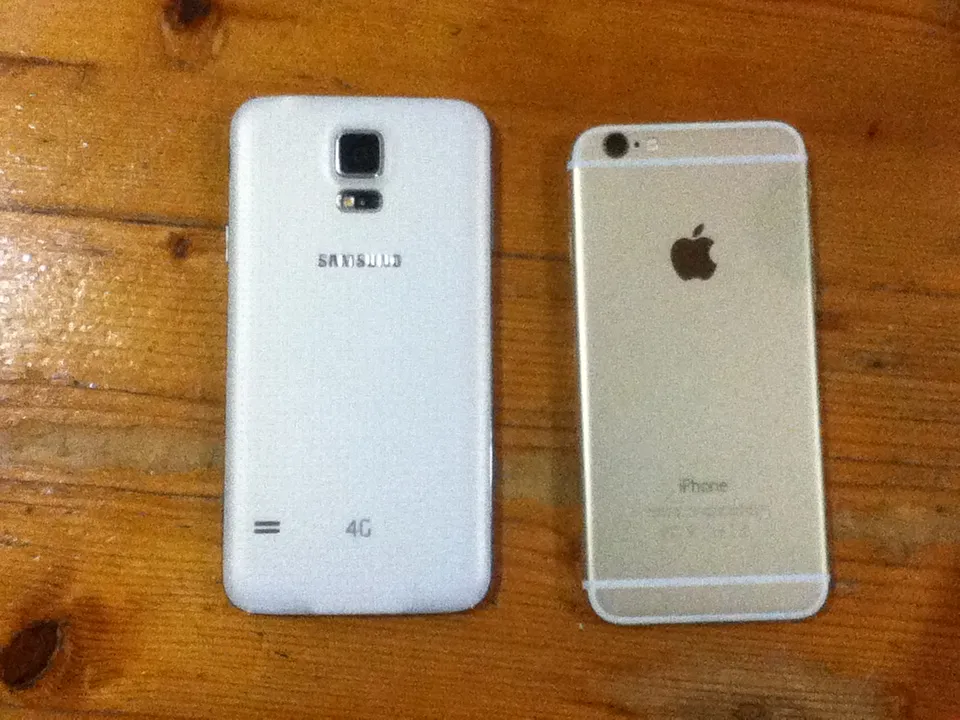
Mobile phones in daily use — Wikimedia Commons
Who Should Buy the iPhone 17?
Pick iPhone 17 if:
- You already use Mac, iPad, or Apple Watch and want frictionless handoff
- Mobile gaming, video export, or benchmark headroom matters more than 5× zoom
- You take selfies, FaceTime, or front-camera video constantly — Center Stage is a genuine upgrade
- You want 256GB minimum at $799 without a storage upsell
- Faster wired and wireless charging fits your routine
Who Should Buy the Pixel 10?
Pick Pixel 10 if:
- A 5× telephoto at $799 is non-negotiable for travel, pets, or stadium seats
- You prefer Gemini AI, Call Screen, and Google’s faster Android feature drops
- Battery endurance beats charging speed in your daily pattern
- 12GB RAM and Android customization matter
- You want seven years of OS updates without paying Pro prices
Skip List — When Neither Phone Fits
- Skip both for max zoom: Buy Pro tiers or a Galaxy Ultra if you need 10×+ optical regularly
- Skip iPhone 17 if telephoto is your main camera — you will feel the missing lens every vacation
- Skip Pixel 10 if you play competitive mobile games daily or need the absolute fastest chip
- Skip either if you want a small phone — 6.3 inches is the new “compact” minimum in 2026
- Skip switching ecosystems for marginal spec gains — migration pain often outweighs hardware wins
FAQ — iPhone 17 vs Pixel 10
Is iPhone 17 or Pixel 10 better overall?
There is no universal winner. iPhone 17 leads performance, front camera, charging, display sharpness, and default storage. Pixel 10 leads telephoto zoom, battery capacity, RAM, and on-device Google AI features. Your existing ecosystem should break ties.
Do both phones cost $799?
Yes at MSRP for entry configs: iPhone 17 at $799 includes 256GB; Pixel 10 at $799 includes 128GB. Matching 256GB on Pixel costs $899, so storage-equal comparisons favor iPhone on price.
Which has the better camera in iPhone 17 vs Pixel 10?
Pixel 10 wins versatility thanks to the 5× telephoto and Google’s computational stills. iPhone 17 wins selfies, front video, and overall video consistency. Ultrawide stills favor iPhone’s 48MP sensor; zoom favors Pixel.
How long will software updates last?
Apple historically supports iPhones for many years; Pixel 10 is rated for seven major Android versions from Google. Both should remain secure and feature-supported through the early 2030s if policies hold.
Is Tensor G5 as fast as the A19?
No. Benchmarks and sustained gaming tests show A19 ahead by a wide margin. Tensor G5 is optimized for Google’s AI workloads and efficient daily use, not peak frame rates.
Can Pixel 10 use MagSafe accessories?
Yes. Pixelsnap aligns with Qi2/MagSafe-compatible magnets and chargers without a separate case on most accessories — a meaningful quality-of-life upgrade over older Pixels.
Which phone has better battery life?
Pixel 10 typically lasts longer in mixed-use drain tests thanks to a ~4,970 mAh cell vs ~3,692 mAh on iPhone 17. iPhone 17 refills faster when you do plug in.
Should Android users switch to iPhone 17?
Switch for ecosystem integration, long-term resale trends in your market, or video/selfie priorities — not because the base iPhone suddenly gained telephoto. Stay on Android if zoom and Gemini matter more.
Should iPhone users switch to Pixel 10?
Switch if you want Google’s telephoto at $799, cleaner Android, or AI features Apple hasn’t matched yet — and you are willing to lose iMessage blue bubbles and Apple Watch pairing. Many iPhone owners try Pixel as a secondary phone first.
Where do Pro models fit?
iPhone 17 Pro ($1,099+) adds a triple-camera stack with telephoto, A19 Pro, and USB 3 speeds. Pixel 10 Pro ($999+) adds brighter Pro Actua displays, 16GB RAM, and Pro Res Zoom up to 100×. If this comparison feels limiting, step up one tier — see our Google Pixel 9 Pro review for how Google’s Pro line evolved into the Pixel 10 generation.
Final Verdict
After a year on shelves, iPhone 17 vs Pixel 10 is not a spec-sheet tie broken by logo loyalty — it is a fork in the road. Buy iPhone 17 for the fastest chip in the class, the best front camera, 256GB at $799, and Apple ecosystem glue. Buy Pixel 10 for the only base-model 5× telephoto in this price bracket, longer battery, 12GB RAM, and the most aggressive on-device AI package Google ships.
NexReview scores: iPhone 17 8.4/10 as a standalone phone; Pixel 10 8.7/10 for hardware-per-dollar at $799; this comparison guide 8.6/10 for decision clarity. Confirm carrier deals, verify AI features in your region, and choose the phone that matches how you shoot, charge, and compute — not the one that wins a benchmark you will never feel.