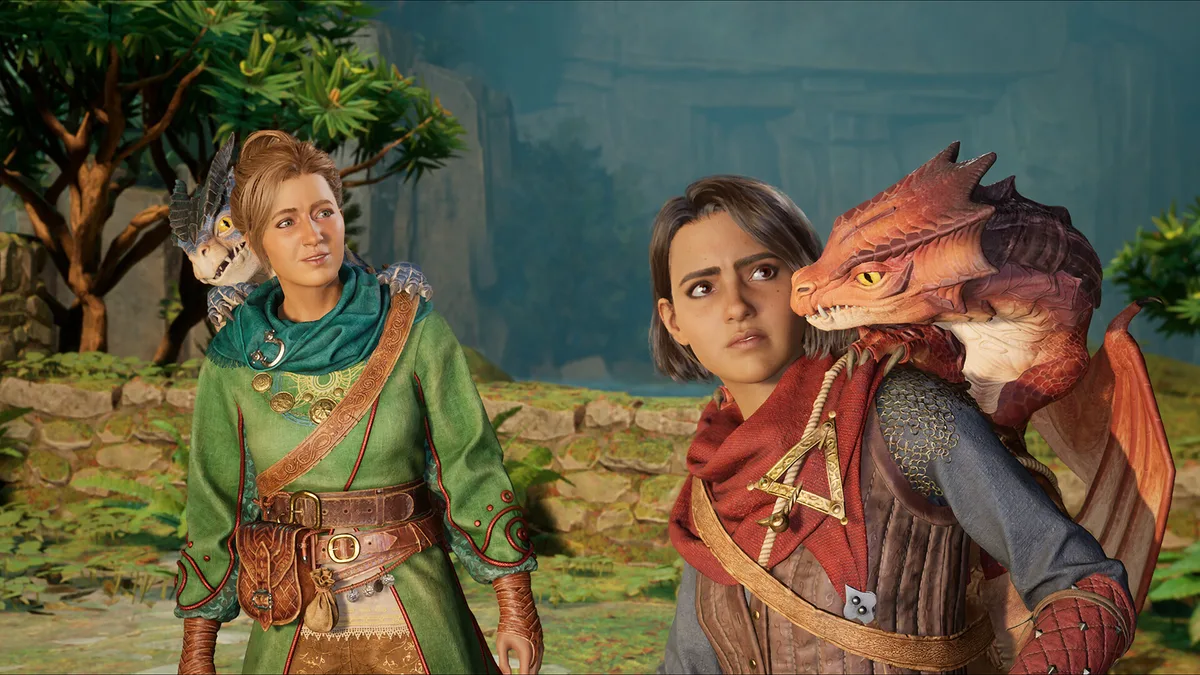
Split Fiction is Hazelight Studios' follow-up to the multi-million-selling It Takes Two, once again demanding two players for a genre-hopping co-op adventure. Starring writers Mio and Zoe, who become trapped inside their own conflicting story pitches, the game bounces between sci-fi action, fantasy platforming, and meta-narrative comedy with relentless creativity. If you want a complete Split Fiction review covering co-op mechanics, story themes, level variety, performance, and whether Josef Fares's team topped their previous masterpiece in 2025, this article answers every question.
Hazelight proved co-op-only games could dominate commercially and critically. Split Fiction doubles down—no single-player mode, friend required, and a campaign designed like an interactive blockbuster film marathon.
What Is Split Fiction?
Split Fiction is a co-op-only action-adventure developed by Hazelight Studios and published by EA. Two players control Mio (sci-fi author) and Zoe (fantasy author) after a publishing experiment merges their minds into a shared fictional multiverse.
Official screenshot — Hazelight Studios (Steam)
The game alternates between split-screen and shared-screen perspectives, forcing cooperation through complementary abilities, timed puzzles, and set-piece sequences that change genres every chapter.
It launched in March 2025 on PC, PlayStation 5, and Xbox Series X|S. One copy includes Friend's Pass for online co-op—only one player needs to purchase.
Co-op Gameplay and Mechanics
Split Fiction is impossible alone by design. Every puzzle, platform, and combat sequence requires coordinated input from both players.
Complementary Abilities
Mio and Zoe gain dimension-specific powers that evolve each chapter. Sci-fi segments feature grappling, hacking, and gravity tools; fantasy sections introduce magic, creature companions, and environmental transformation.
Abilities combo intentionally—one player creates platforms while the other launches projectiles, mirroring It Takes Two's synergy but with broader genre swings. Communication matters; silent partners struggle without voice chat.
Split-Screen and Shared-Screen Design
Hazelight orchestrates screen layout dynamically. Split-screen emphasizes parallel challenges; merged screens signal cooperative focus moments. Cinematic transitions hide loading while maintaining pacing.
Difficulty is moderate—challenge comes from coordination, not mechanical mastery. Accessibility options help mixed-skill duos enjoy the ride.
Genre-Hopping Levels
Chapters reinvent rules: mech combat, dragon riding, stealth infiltration, rhythm sequences, and meta jokes about game development itself. Variety prevents fatigue across the 12–15 hour campaign.
Each segment introduces new mechanics then discards them—Hazelight's philosophy treats games as amusement park attractions rather than uniform systems.
Story, Characters, and Themes
Split Fiction explores creative partnership, artistic ego, and friendship under pressure. Mio and Zoe begin as rivals—sci-fi versus fantasy snobbery—then confront insecurities about commercial success, authenticity, and collaboration.
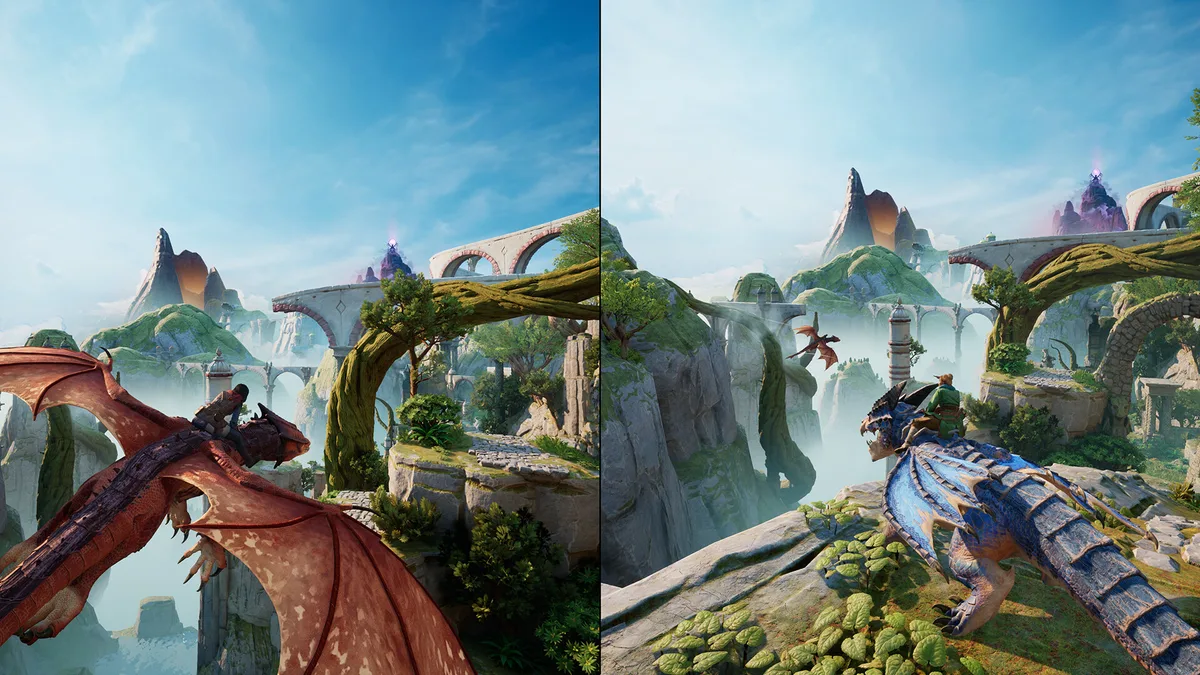
World and exploration — Hazelight Studios (Steam)
Writing and Humor
Dialogue is witty and self-aware without becoming cringe. Meta humor references gaming tropes, publisher meddling, and Hazelight's own co-op mandate. Emotional beats land because characters feel like real writers arguing about craft.
Voice performances sell chemistry. Relationship evolution mirrors It Takes Two's marriage counseling arc but swaps domestic drama for creative partnership.
Narrative Pacing
Story escalates toward a climax addressing whether opposing visions can merge into something better than either alone. Themes resonate with creative professionals and co-op partners alike—appropriate for a game requiring teamwork.
Visuals, Audio, and Production Value
Split Fiction is visually spectacular. Each genre shift brings distinct art direction—neon sci-fi corridors, painterly fantasy forests, abstract narrative voids. Technical polish matches AAA set pieces.
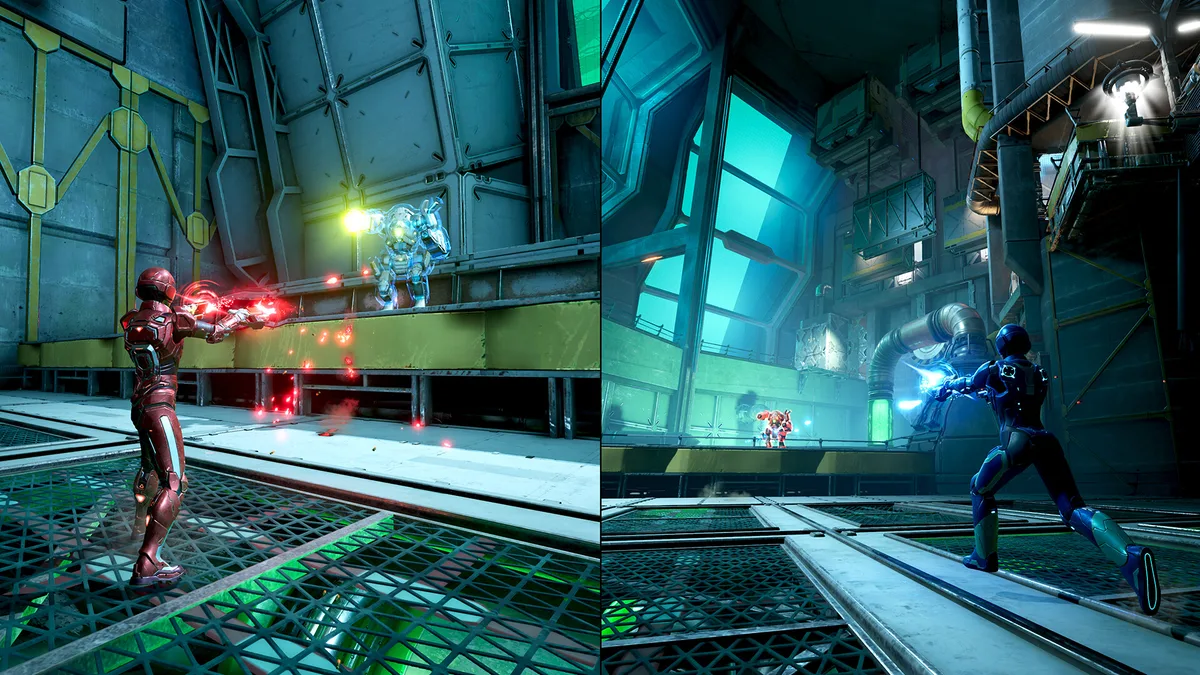
Systems and performance — Hazelight Studios (Steam)
Music adapts to genres dynamically. Sound design emphasizes comedic timing and action impact. Motion capture and facial animation elevate cutscenes.
Performance and Technical Quality
The game targets 60 FPS on modern consoles with stable performance during split-screen chaos. PC scales well with ultrawide support—welcome for shared-screen co-op on single monitors.
Online co-op via Friend's Pass works smoothly for most users; local co-op remains ideal for timing-sensitive platforming.
Pros and Cons
Pros
- Relentless creative variety across genres
- Excellent co-op design requiring genuine teamwork
- Friend's Pass lowers barrier for online play
- Strong writing with humor and heart
- Spectacular set pieces rivaling AAA blockbusters
- Accessible difficulty for mixed-skill pairs
- No microtransactions—full game included
Cons
- Co-op mandatory—no solo play at all
- Shorter than some open-world titles
- Genre shifts may disorient players preferring uniform mechanics
- Online coordination harder than couch co-op for precision segments
- Replay value limited after first complete playthrough
- Story themes less universally relatable than It Takes Two's marriage focus
Who Should Buy Split Fiction?
Buy if you have a reliable co-op partner and loved It Takes Two, A Way Out, or cinematic couch multiplayer experiences.
Skip if you primarily play solo or dislike split-screen platforming.
Wait if you lack a partner—experience suffers dramatically alone (literally unplayable).
FAQ
Can I play Split Fiction alone?
No. Two players are required locally or online.
How long is Split Fiction?
Main campaign 12–15 hours. Optional collectibles add modest time.
Do I need two copies for online co-op?
No. Friend's Pass lets one owner invite a friend free on supported platforms.
Is Split Fiction better than It Takes Two?
Subjective. Split Fiction offers more genre variety; It Takes Two has stronger emotional marriage narrative. Both excel at co-op design.
Is there PvP?
No. Purely cooperative.
Are there difficulty settings?
Yes. Adjustable challenge for younger or less experienced players.
Verdict
Split Fiction is Hazelight's creative victory lap—ambitious, funny, gorgeous, and built exclusively for shared play. It may not emotionally surpass It Takes Two for everyone, but mechanical variety and production value represent co-op gaming at its peak.
NexReview Score: 9/10
Grab a partner and play. For solo adventures, read our Hades 2 review or Black Myth Wukong review.
Score Breakdown
| Category | Score |
|---|---|
| Co-op design | 10/10 |
| Creativity and variety | 9.5/10 |
| Story and characters | 8.5/10 |
| Visual production | 9.5/10 |
| Replay value | 6.5/10 |
| Accessibility | 8.5/10 |
| Overall | 9/10 |
System Requirements Overview
| Component | Minimum | Recommended |
|---|---|---|
| GPU | GTX 970 / RX 470 | RTX 2060 / RX 5700 |
| CPU | Quad-Core | Six-Core |
| RAM | 8 GB | 16 GB |
| Storage | 85 GB SSD | 85 GB SSD |
Hazelight Co-op Comparison
| Game | Players | Theme | Campaign length |
|---|---|---|---|
| A Way Out | 2 | Prison escape | ~6 hrs |
| It Takes Two | 2 | Marriage repair | ~14 hrs |
| Split Fiction | 2 | Creative rivalry | ~14 hrs |
Split Fiction is Hazelight's most visually ambitious co-op project.
Best Co-op Partner Strategies
Communication wins more than mechanical skill. Assign roles verbally before complex platforming segments—"you grapple, I stabilize" prevents repeated failures. Voice chat is strongly recommended for online Friend's Pass sessions; ping systems cannot replace timing callouts.
Mixed-skill duos should enable assist options early rather than frustration-quitting. Hazelight designs accessibility without condescension—easier modes preserve set pieces and story beats.
Couch co-op remains the gold standard for precision sequences. Shared-screen moments create memorable reactions; record sessions if content creation interests you—Split Fiction is built for viral co-op clips.
Standout Chapters and Genre Highlights
Without spoilers, expect mechanical reinventions every 60–90 minutes. Sci-fi mech sequences emphasize destructive spectacle; fantasy segments reward creative spell combinations; meta chapters break fourth walls with humor that lands if you follow game industry news.
The pacing mirrors blockbuster films—breather scenes between explosions let characters develop before the next genre swap. Players who dislike one segment can trust the next chapter will feel completely different.
Replay Value and Completionist Content
Collectibles hide in optional paths requiring coordinated exploration. Completion adds modest hours—not the primary draw. Replay value centers on introducing new partners to Hazelight's co-op magic; veterans report joy watching first-timers react to set pieces.
Speedrun communities emerged quickly, optimizing split-screen routing and ability cooldown timing. Casual players need not engage—main campaign satisfaction is complete without mastery.
Why Co-op-Only Games Matter
Split Fiction defies industry assumptions that single-player campaigns must carry sales. Friend's Pass lowers purchase friction—one sale becomes two players. This model supports creative risk-taking impossible in live-service economies obsessed with retention metrics.
For players asking "best co-op game 2025," Split Fiction competes with Monster Hunter Wilds, Elden Ring Nightreign, and It Takes Two legacy comparisons—each offers different social dynamics.
Friend's Pass and Online Setup
Friend's Pass lets one purchaser invite a friend online without a second copy—verify platform-specific requirements before sessions. EA account linking may be necessary; setup takes minutes but frustrates unprepared duos.
Online latency affects timing puzzles minimally thanks to generous windows, but local co-op remains ideal for frame-perfect platforming. If online partners struggle, switch to easier difficulty rather than abandoning the campaign—story payoff rewards persistence.
Creative Meta-Commentary
Hazelight uses Split Fiction to comment on publisher interference, genre expectations, and the absurdity of forcing collaboration in creative industries. Jokes land for industry-aware players without alienating newcomers—meta humor stays accessible through character chemistry.
Mio and Zoe's rivalry mirrors real writer room dynamics: sci-fi versus fantasy camps, commercial pressure versus artistic integrity, friendship tested by competition. The game argues synthesis beats purity—a thematic match for co-op mechanics requiring merged perspectives.
Parental Guidance and Content Notes
Split Fiction includes mature language, action violence, and emotional themes about creative failure. It is not a kids' co-op platformer despite colorful segments. Parents should preview early chapters before family sessions.
Split Fiction vs It Takes Two: Which to Play First?
It Takes Two remains the emotional entry point—marriage reconciliation resonates universally. Split Fiction assumes comfort with co-op mechanics and meta humor. Play It Takes Two first if new to Hazelight; jump directly to Split Fiction if you want maximum visual variety and industry satire.
Both games require partners. Neither works solo. Budget an evening per campaign—trying to rush Hazelight games diminishes pacing crafted for sustained co-op sessions.
Technical Performance Across Platforms
Split Fiction maintains stable frame rates during split-screen chaos—a technical achievement given visual density. PC players with ultrawide monitors enjoy expanded shared-screen compositions. Console players should download day-one patches for optimal online Friend's Pass stability.
Storage requirements approach 85 GB—plan disk space before inviting partners for marathon sessions.
Split Fiction is proof that co-op games can be event experiences—not live-service obligations, but memorable nights shared with someone on your couch or across a voice channel.
Quick Answers for Buyers
- Need two copies? No—Friend's Pass covers online partner.
- Play solo? Impossible by design.
- Better than It Takes Two? Different strengths—play both.
- Kids appropriate? Mature themes—not for young children.
- Replay value? Low solo; high when introducing new partners.
Mobile-Friendly Reading Note
This review uses scannable headings and quick-answer lists for readers coordinating co-op purchases with friends on mobile. Share the Friend's Pass section before buying to avoid setup confusion.
Final Recommendation
Split Fiction proves games are better together—not as marketing, but as mechanics. Mio and Zoe's journey is a love letter to collaboration, and playing it embodies that message.
Bottom line: Bring a friend, clear your evening, and let Hazelight break every genre rule twice before dessert. Co-op gaming does not get better in 2025.