STALKER 2: Heart of Chornobyl is GSC Game World's long-awaited return to one of gaming's most atmospheric settings — the irradiated, anomaly-haunted Exclusion Zone around the Chornobyl nuclear plant. Released in November 2024 for PC and Xbox Series X|S, it expands the cult trilogy's survival-shooter identity into Unreal Engine 5 scale: a massive open world, reactive faction warfare, artifact hunting, and the kind of dread that makes every flashlight beam feel like a lifeline. This STALKER 2 review examines whether the Ukrainian studio's decade-long gamble delivers a worthy successor in 2025, or whether technical turbulence and design compromises keep it stranded in the Red Forest.
If you played Shadow of Chernobyl, Clear Sky, or Call of Pripyat and still remember the crackle of a Geiger counter, STALKER 2 will feel like coming home — only louder, larger, and more demanding of your hardware. If you are new to the Zone entirely, expect a punishing immersive sim shooter where curiosity kills as often as bandits do.
What Is STALKER 2 Heart of Chornobyl?
STALKER 2: Heart of Chornobyl is a first-person open-world survival shooter developed by GSC Game World and published in partnership with Xbox Game Studios. You play as Skif, a stalker drawn back into the Zone by visions and unfinished business, navigating a landscape where military remnants, mercenary companies, fanatical cultists, and rival stalker factions fight over artifacts born from reality-warping anomalies.
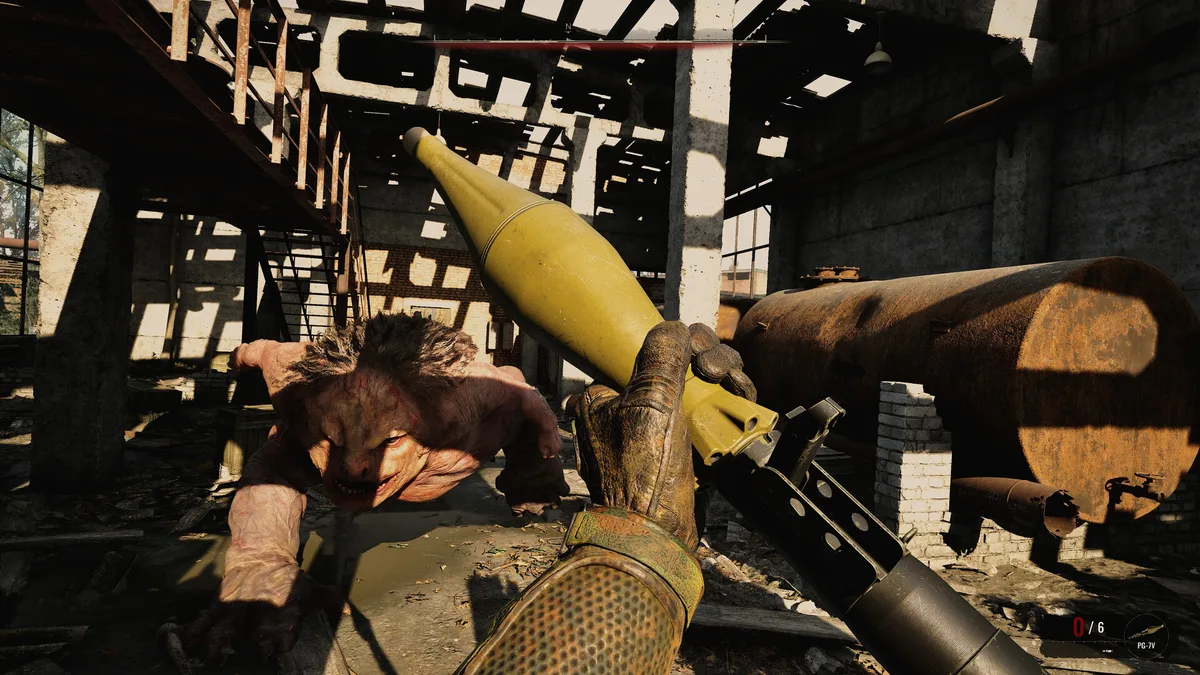
Official screenshot — GSC Game World (Steam)
Unlike mainstream shooters that funnel you through set-piece corridors, STALKER 2 treats the Zone as the main character. Radiation pockets, gravitational traps, psy-storms, mutant nests, and human ambushes create constant risk. Death has weight. Ammunition is scarce. Your inventory is limited. The game trusts you to plan routes, read the environment, and accept that sometimes the smartest play is to run.
GSC built the sequel on Unreal Engine 5, targeting a seamless open world far larger than the interconnected maps of the original trilogy. The studio's A-Life simulation returns in evolved form, governing NPC schedules, faction skirmishes, and ecosystem behavior off-screen as well as in your immediate vicinity. STALKER 2 is not a looter-shooter live service, not a battle royale, and not a narrative walking simulator with occasional gunfire. It is a survival sandbox with a main story thread — and that identity defines every hour inside the Zone.
Gameplay
STALKER 2's gameplay loop is survival first, story second, emergent chaos always present. You explore regions from grim industrial outskirts to the haunting approaches toward Chornobyl itself, scavenging food, medicine, ammunition, and artifact components while managing radiation exposure, bleeding, hunger, and equipment durability.
Core Loop and Exploration
The fundamental rhythm mirrors classic STALKER design, scaled for modern open-world expectations:
- Leave a camp or hub with limited gear and unclear objectives
- Navigate terrain using landmarks, map notes, and environmental cues
- Detect anomalies with bolts, detectors, and careful observation
- Engage or evade humans and mutants depending on ammo and odds
- Extract artifacts, loot stashes, and return to traders or technicians
- Upgrade weapons, armor, and detectors before pushing deeper
Fast travel exists between discovered campfires and major hubs, but the game rewards on-foot travel. Side paths hide stashes, unique encounters, and environmental storytelling. Night cycles and weather reduce visibility and alter mutant behavior. The Zone never fully becomes a checklist map of icons — GSC leans on mystery, and that choice defines the experience.
Combat and Gunplay
Combat is deliberate rather than arcade-fast. Weapons degrade with use and require maintenance kits. Recoil, sway, and ballistics matter at range. Armor tiers meaningfully reduce damage but never trivialize headshots or flanking. Human enemies use cover, grenades, and suppression; mutants charge, flank, or ambush from foliage.
Stealth is viable for patient players. Silenced weapons, knife takedowns, and distraction bolts open routes that conserve scarce ammo. Loud firefights attract attention — nearby patrols investigate, and poorly timed battles spiral into multi-group engagements. STALKER 2 punishes run-and-gun heroics without preparation, which will frustrate action-shooter fans but delights players who treat every encounter as a tactical problem.
Anomalies, Artifacts, and Detectors
Anomalies are the Zone's signature hazard: invisible or semi-visible fields that crush, burn, electrocute, or fling bodies. You probe them by tossing bolts and reading particle cues. Missteps are lethal. Learning anomaly layouts in high-value areas is part of progression.
Artifacts spawn near anomaly clusters and grant powerful buffs with trade-off debuffs — increased healing at the cost of radiation, improved stamina with bleeding risk, and similar exchanges. Detectors range from basic beepers to advanced scanners that reveal artifact locations. The hunt for rare artifacts drives economic loops: sell to traders, gift to factions, or keep for personal builds.
A-Life, Factions, and Emergent Warfare
A-Life simulates stalkers, soldiers, and mutants across the map even when you are elsewhere. Factions like Duty, Freedom, the Monolith, mercenaries, and bandits fight over territory. Skirmishes erupt without scripted quests. Alliances shift based on your choices and main story progress.
This systemic layer creates memorable unscripted moments: stumbling into a three-way firefight and looting the aftermath, escorting a wounded NPC who later remembers your help, or returning to a cleared checkpoint only to find new occupants. A-Life is not flawless simulation — players report occasional odd AI pathing or population quirks — but it restores the Zone's living-world reputation after years of absence.
Survival Systems and Inventory
Weight limits, food spoilage, medicine scarcity, and weapon jamming keep pressure constant. Camps offer sleep, cooking, and storage. Technicians repair guns and attach mods; medics treat wounds; traders rotate stock based on regional conflict. Difficulty settings and optional assists soften some survival edges, but the game's soul remains tense resource management.
Story
STALKER 2's narrative follows Skif, a stalker whose past intertwines with the Zone's deepening mysteries. The main plot pushes toward Chornobyl's heart, uncovering the source of escalating emissions, Monolith fanaticism, and the human greed feeding the catastrophe. GSC balances personal stakes with franchise lore callbacks — familiar names, locations, and philosophical questions about whether the Zone is curse, miracle, or weapon.
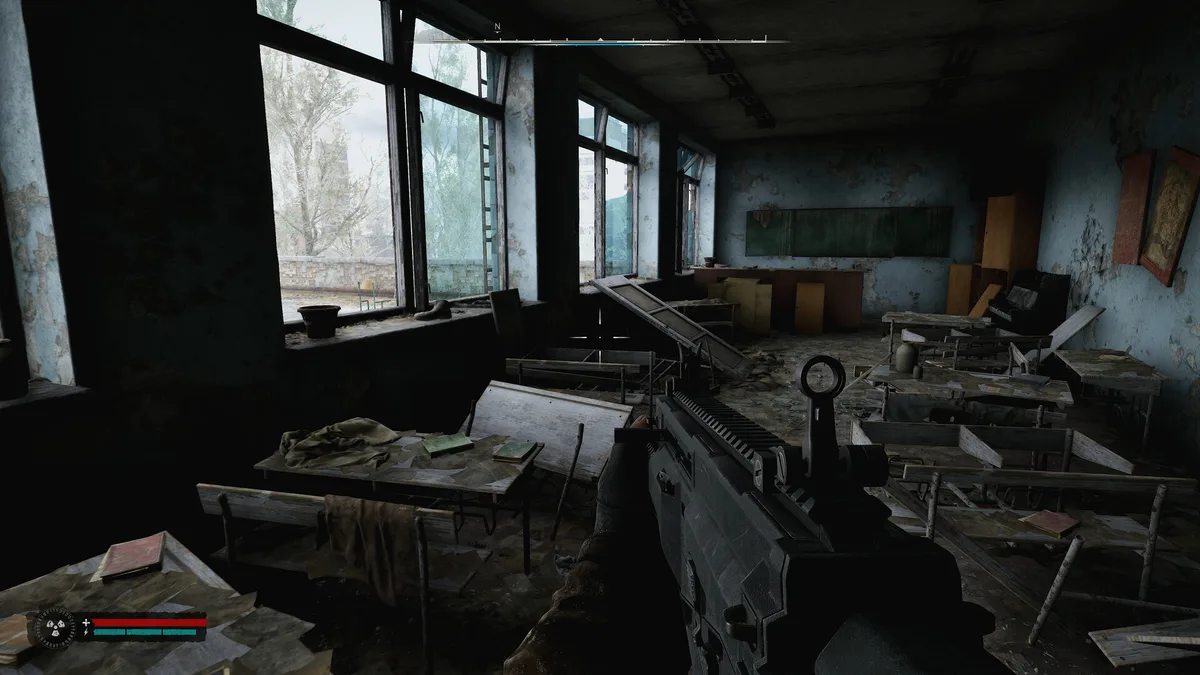
World and exploration — GSC Game World (Steam)
Main Campaign and Pacing
The story unfolds across multiple regions gated by gear, radiation resistance, and plot milestones. Major missions mix infiltration, large-scale battles, anomaly navigation, and moral choices with faction consequences. Pacing is uneven by design: long stretches of sandbox tension punctuate cinematic story beats. Players who want constant scripted momentum may feel lost during organic exploration; players who love environmental narrative will savor the gaps.
Characters and Factions
Supporting characters include technicians, scientists, military officers, and stalkers with distinct motivations. Faction leaders embody STALKER's ideological split: order versus freedom, profit versus faith, humanity versus Monolith transcendence. Dialogue quality is generally strong, with grounded performances that avoid blockbuster quip culture. Side quests range from tragic personal stories to dark humor typical of the franchise.
Themes and Atmosphere
The Zone is not a playground; it is a mirror. STALKER 2 explores exploitation of disaster, corruption in crisis, faith twisted by radiation, and the stalker ethos — individuals who risk everything for artifacts, truth, or redemption. Ukrainian cultural context informs architecture, language options, and emotional weight without turning the game into a lecture. The atmosphere is the narrative's co-author: distant gunfire, mutant cries, wind through pines, and the ever-present Geiger hiss sell dread better than exposition dumps.
Visuals
STALKER 2 is built to impress and unsettle in equal measure. Unreal Engine 5 delivers dense forests, ruined Soviet infrastructure, underground labs, and anomaly visual effects that distort space with nauseating beauty. Lighting is the game's secret weapon: flashlight cones in pitch-black tunnels, storm clouds over Pripyat silhouettes, and emission sky colors create screenshots that linger.
Character models and animations improved substantially over pre-release builds, though uncanny moments still appear in crowded hubs. Mutant designs emphasize grotesque practicality — bloated flesh, exposed bone, twitching movement — rather than generic horror shapes. Weapon and gear visuals show wear convincingly; a battered AK tells a story before you inspect its jam chance.
Environmental storytelling remains top-tier. Abandoned classrooms, rusted playgrounds, military barricades, and stalker shrines communicate history without quest markers. The Zone feels like a place people lived and died, not a texture-painted combat arena.
Audio design matches visual ambition. Geiger clicks escalate near radiation. Anomaly drones hum with subsonic menace. Gunfire echoes across open fields; suppressors change the soundscape of stealth kills. Voice acting in Ukrainian and English tracks supports immersion, and the score sparingly underscores emissions and story peaks rather than drowning ambient dread.
Performance
Technical performance shaped STALKER 2's launch conversation as much as its design. This review reflects qualitative impressions across patches through July 2026, not fabricated benchmark charts.
Systems and performance — GSC Game World (Steam)
PC Performance
On PC, STALKER 2 is demanding. Dense foliage, Lumen lighting, large draw distances, and A-Life simulation load CPU and GPU alike. Mid-range hardware from the RTX 3060 era generally achieves playable frame rates at 1080p with mixed medium-high settings. High-end systems can push 1440p or 4K with selective ultra options, DLSS, FSR, or XeSS upscaling.
Strengths:
- Scalable settings with multiple presets
- Upscaling support helps lower-tier GPUs
- SSD strongly recommended for streaming and load times
- Post-launch patches improved stability and stutter in many scenes
Reported weaknesses:
- CPU bottlenecks in busy hubs and large battles
- VRAM pressure at ultra textures on 8 GB cards
- Occasional shader compilation hitches on first launch
- Rare quest bugs and crash reports, decreasing with patches
PC players should expect to tune settings — especially shadow quality, view distance, and foliage density — rather than max everything blindly on day one.
Xbox Performance
STALKER 2 launched day one on Xbox Game Pass and Series X|S hardware.
- Xbox Series X offers quality and performance modes balancing resolution, effects, and frame rate targets. Performance mode is advisable for combat-heavy sessions; quality mode showcases the Zone's vistas in clearer detail.
- Xbox Series S runs at reduced resolution and pared-back effects but remains a viable entry for players accepting visual compromises.
Console load times benefit from SSD architecture. Fast travel and major transitions are quicker than last-gen expectations, though not instantaneous. Controller aim assist and UI scaling support couch play, though mouse-and-keyboard precision still suits long-range stalker engagements.
Stability, Bugs, and Post-Launch Support
Large open-world launches ship with edge cases. STALKER 2's early weeks included reports of progression blockers, physics oddities, AI glitches, and performance variance by region. GSC committed to ongoing patches and community communication. By mid-2025 and into 2026, many critical issues received fixes, though players should still save often and verify quest states before major transitions — standard survival practice in the Zone.
Pros and Cons
Pros
- Unmatched Zone atmosphere — dread, beauty, and environmental storytelling at franchise peak
- Massive seamless open world that rewards exploration and patience
- A-Life and faction warfare creating emergent firefights and dynamic territory
- Deep survival systems — artifacts, anomalies, radiation, gear maintenance
- Strong audiovisual identity leveraging Unreal Engine 5 lighting and sound design
- Meaningful faction choices tying sandbox behavior to main story outcomes
- Game Pass availability on Xbox lowers barrier for curious newcomers
Cons
- Demanding performance on PC and Series S at high settings
- Launch-window bugs and quest edge cases requiring patch reliance
- Slow-burn pacing may alienate players expecting constant scripted action
- Inventory and survival friction feels tedious to some mainstream shooter fans
- Gunplay less polished than dedicated military sims or blockbuster FPS titles
- A-Life inconsistencies — occasional AI oddities break immersion
- Franchise learning curve for newcomers unfamiliar with anomaly navigation
Who Should Buy STALKER 2 Heart of Chornobyl?
Buy (or play via Game Pass) if you enjoy:
- Immersive sim shooters with survival pressure and scarce resources
- Open worlds that prioritize atmosphere over icon-stuffed checklists
- Emergent faction combat and systemic sandbox storytelling
- The original STALKER trilogy and wanted a modern successor
- Horror-tinged exploration where lighting and sound matter as much as aim
- Games that respect player agency even when punishing mistakes
Skip or wait if you dislike:
- Technical troubleshooting at launch or on mid-tier hardware
- Inventory management, weapon degradation, and radiation maintenance
- Slow narrative pacing between major story missions
- Combat that punishes careless aggression without preparation
- Open worlds without loot-rarity power fantasy curves
- Occasional bugs inherent to large-scale A-Life simulations
Players seeking a polished military power fantasy will clash with STALKER 2's design. Players who loved S.T.A.L.K.E.R., Metro, or immersive sims like Deus Ex and Arkane titles will feel the pull of the Zone immediately.
FAQ — STALKER 2 Heart of Chornobyl
Do I need to play the original STALKER games first?
Not strictly. STALKER 2 introduces Skif and new plot threads accessible to newcomers. However, veterans catch deeper lore references, faction history, and emotional callbacks to Shadow of Chernobyl, Clear Sky, and Call of Pripyat. Playing at least one original entry enriches context.
Is STALKER 2 on Xbox Game Pass?
Yes at launch. Availability can change over time — verify current Game Pass listings before subscribing solely for STALKER 2. PC Game Pass and console tiers supported the game on release.
How long is STALKER 2?
Main story alone can exceed 35–50 hours depending on difficulty and route. Sandbox exploration, side quests, artifact hunting, and faction content push totals toward 80–100+ hours for thorough stalkers.
Is STALKER 2 primarily horror or shooter?
Both, with survival simulation DNA. Mutant encounters, underground labs, and night exploration deliver horror tension. Human combat plays like a tactical shooter with resource scarcity. The blend is signature STALKER — not pure horror, not pure action.
How demanding is STALKER 2 on PC?
Genuinely demanding at high settings. A modern six-core CPU, 16 GB RAM, and GPUs at RTX 3070 / RX 6800 class or better suit 1440p high targets. Budget hardware should use upscaling and medium settings. SSD storage is strongly recommended.
Verdict
STALKER 2: Heart of Chornobyl is the sequel stalkers waited fifteen years to enter — vast, brutal, beautiful, and imperfect. GSC Game World recaptures the Zone's existential dread while expanding scope beyond what the original trilogy could attempt. A-Life skirmishes, anomaly hunts, and faction politics create stories no script could prewrite. Performance and bugs at launch were real obstacles; ongoing support and player patience transform the experience into one of the most distinctive open-world shooters of the generation.
NexReview Score: 8/10
The game does not sand down survival friction to chase mass-market comfort. That restraint is both its triumph and its limitation. For immersive open-world alternatives, read our Avowed review for Obsidian's first-person fantasy RPG, or our Kingdom Come Deliverance 2 review for historical realism with similar slow-burn authenticity.
Score Breakdown
| Category | Score |
|---|---|
| Atmosphere and world design | 9.5/10 |
| Gameplay systems (A-Life, anomalies) | 8.5/10 |
| Story and factions | 8/10 |
| Combat and gunplay | 7.5/10 |
| Visuals and audio | 9/10 |
| Performance and stability | 6.5/10 |
| Overall | 8/10 |
System Requirements Overview
| Component | Minimum | Recommended |
|---|---|---|
| OS | Windows 10 64-bit | Windows 10/11 64-bit |
| CPU | Intel Core i7-7700K / AMD Ryzen 5 1600X | Intel Core i7-11700K / AMD Ryzen 7 5800X |
| RAM | 16 GB | 32 GB |
| GPU | NVIDIA GeForce GTX 1060 6 GB / AMD Radeon RX 580 8 GB | NVIDIA GeForce RTX 3070 Ti / AMD Radeon RX 6800 XT |
| Storage | 150 GB SSD | 150 GB NVMe SSD |
| DirectX | Version 12 | Version 12 |
Xbox Series X|S players choose between quality and performance modes rather than manual settings. Series S owners should expect reduced resolution and effects. An SSD on PC is strongly recommended — hard drive installs increase streaming hitches in dense regions.
Comparison With the Original STALKER Trilogy
| Feature | STALKER Trilogy | STALKER 2 |
|---|---|---|
| World structure | Interconnected maps | Seamless open world |
| Engine | X-Ray | Unreal Engine 5 |
| A-Life | Pioneering for era | Expanded simulation |
| Visual fidelity | Era-appropriate | Generational leap |
| Survival friction | High | High, refined UI |
| Story protagonist | Marked One / Scar / Degtyarev | Skif |
STALKER 2 feels like GSC finally building the Zone at the scale the studio imagined during Shadow of Chernobyl's cult ascent — with modern production values and modern launch pains.
Comparison With Other Open-World Shooters
| Feature | STALKER 2 | Far Cry | Metro Exodus |
|---|---|---|---|
| Tone | Dread and mystery | Action adventure | Linear survival horror |
| Open world | Full sandbox | Icon-driven outposts | Chapter hubs |
| Resources | Scarcity core | Abundant loot | Moderate scarcity |
| Factions | Dynamic A-Life wars | Scripted territories | Minimal |
| Anomalies | Central mechanic | None | Surface mutants |
STALKER 2 competes on atmosphere and systemic tension, not on checklist map completion or power fantasy loot tiers.
Tips for Surviving the Zone
- Carry bolts and antirads always — anomalies and radiation do not negotiate.
- Upgrade detectors early — artifact income funds better gear faster than side loot alone.
- Save before emissions — shelter mistakes are expensive learning moments.
- Repair weapons before long expeditions — jams during mutant rushes are fatal.
- Listen before moving — audio cues reveal patrols, anomalies, and wildlife threats.
Artifact Hunting and Economy Guide
Artifacts drive STALKER 2's economic loop. Basic detectors find common spawns near starter anomalies; advanced equipment reveals rare clusters in high-risk areas like Red Forest approaches and factory complexes. Trade-off debuffs matter: stack artifacts that complement your playstyle rather than chasing raw bonuses.
Traders and technicians rotate inventory based on regional stability. Completing faction tasks improves prices and unlocks mod options. Sell surplus ammunition types you do not use — weight limits punish hoarding. Invest in armor upgrades before weapon cosmetics; survivability enables deeper runs that fund endgame kits.
Faction Alignment Primer (No Spoilers)
Duty represents order and containment; Freedom champions open access to the Zone's secrets; Monolith worships the Zone itself; mercenaries and bandits chase profit. Your choices shift reputation and available quests without locking you into a single morality rail. Think about whether you value stability, liberty, faith, or pragmatism — the Zone remembers through dialogue, prices, and who fires at you on sight.
Community Reception and Long-Term Outlook
Launch reception praised atmosphere, scale, and faithfulness to STALKER identity. Criticism targeted performance on mid-tier PC hardware, bugs in quest progression, and gunfeel compared to dedicated FPS franchises. The audience skews toward players who valued the originals' niche rather than casual open-world tourists.
GSC's post-launch communication and patch cadence signal long-term support. Mod tools and community content — historically vital for the franchise on PC — will extend lifespan for years. Buyers in 2025 and 2026 should view STALKER 2 as a platform evolving through fixes, balance tweaks, and player-created additions.
Why NexReview Recommends STALKER 2 in 2025
Amid homogenized open-world design, STALKER 2: Heart of Chornobyl offers something genuinely rare: a world that hates you beautifully. The Zone demands respect, rewards preparation, and punishes arrogance — design principles that produce unforgettable stories. Few games make a bolt toss feel as consequential as a boss fight.
Final Recommendation
STALKER 2: Heart of Chornobyl is not a flawless victory lap; it is a ambitious, haunted homecoming. GSC Game World rebuilt the Exclusion Zone for a new generation without erasing what made stalkers fall in love with radiation storms and campfire rumors. Performance hurdles and occasional bugs are real, but the atmosphere, A-Life chaos, and artifact economy deliver an experience no other 2024 release replicated.
NexReview recommends STALKER 2 to immersive sim fans, survival shooter veterans, and anyone who ever wondered what lies beyond the Cordon fence. Start on balanced difficulty, upgrade your detector, and move slowly at night. Rush the Zone, and it will bury you; respect it, and you will remember every emission sky for years.
Bottom line: The wait was long, the launch was rough, and the Zone is still worth the trip. This is essential playing for STALKER faithful and a defining open-world shooter for players patient enough to earn their artifacts.