
Pros
- Poker hand scoring creates instant readability with absurd late-run scaling
- 150+ jokers enable wildly different runs without rules bloat
- Runs fit a lunch break or a three-hour binge equally well
- $14.99 base price with years of free content updates
- Verified on Steam Deck and excellent on phone/tablet ports
Cons
- Discard vs. play mis-clicks can ruin a perfect run on touch controls
- Late-game UI density overwhelms newcomers until joker order clicks
- No multiplayer — pure solo score-chasing only
- Some boss blinds feel like hard counters to specific builds
Balatro is LocalThunk’s poker-themed roguelike deckbuilder — a solo score-chasing game where standard playing cards, joker modifiers, and escalating blind targets collide into some of the most satisfying “one more ante” loops in modern indie gaming. This Balatro review (updated September 2026) covers how blinds and antes work, why joker order matters more than memorizing poker charts, platform pricing after two years of ports and updates, and whether the breakout still earns a spot next to Slay the Spire on your shelf.
If you searched balatro review because a friend showed you a billion-point flush, you are in the right place. This is not an online poker client, a casino app, or a lookalike card battler — it is Balatro, published by Playstack, built in the Löve engine by a solo developer who famously does not play real poker. The theme is familiar; the execution is something else entirely.
Poker-table atmosphere — photo via Wikimedia Commons
Quick Verdict (For Skimmers)
| Field | Detail |
|---|---|
| Developer | LocalThunk (Joshua Eustis) |
| Publisher | Playstack |
| Release | February 20, 2024 (PC/console); mobile September 2024 |
| Price | $14.99 on Steam (often discounted in bundles) |
| Platforms | Windows, macOS, Linux, Steam Deck, Switch, PS4/PS5, Xbox, iOS, Android |
| Genre | Roguelike deckbuilder / poker-hand scoring |
| Run length | ~30–90 minutes per attempt; endless mode after Ante 8 |
| NexReview score | 9.2/10 |
Buy it if you want a readable roguelike with explosive combo potential, low price, and handheld-friendly sessions. Skip it if you need multiplayer, narrative campaigns, or you hate number-scaling puzzles where one mis-click ends the run.
What Is Balatro?
Balatro strips multiplayer poker down to its scoring skeleton and rebuilds it as a single-player roguelike. You start each run with a standard 52-card deck. Every round presents a blind — a chip target you must hit before you run out of hands (plays) and discards. You select up to five cards, form a recognized poker hand (pair, flush, full house, and so on), and watch the score resolve as Chips × Mult.
The twist is everything layered on top of vanilla poker math:
- Jokers sit in persistent slots and rewrite scoring rules — flat chip bonuses, additive mult, multiplicative XMult, retriggers, economy tricks, and outright rule breaks.
- Consumables — Tarot, Planet, and Spectral cards — enhance, destroy, or transform cards in your deck between rounds.
- Vouchers upgrade the shop; booster packs inject random power spikes.
- Boss blinds introduce run-ending constraints unless your build can brute-force or sidestep them.
LocalThunk has said publicly that he thinks about roguelikes constantly but does not want Balatro used for gambling practice. That design ethic shows. The game uses poker iconography the way Dicey Dungeons uses dice — as a language players already understand, not as simulation.
Visually, Balatro commits to a CRT-soaked pixel aesthetic: buzzing scanlines, neon suit symbols, and a soundtrack by Luis Clemente (LouisF) that feels like a smoky lounge stuck between decades. It is distinctive without the acid-nightmare chaos of some Devolver-adjacent indies. Many players describe the vibe as “hypnotic” — and that matters when you are on your fiftieth run chasing a high score.
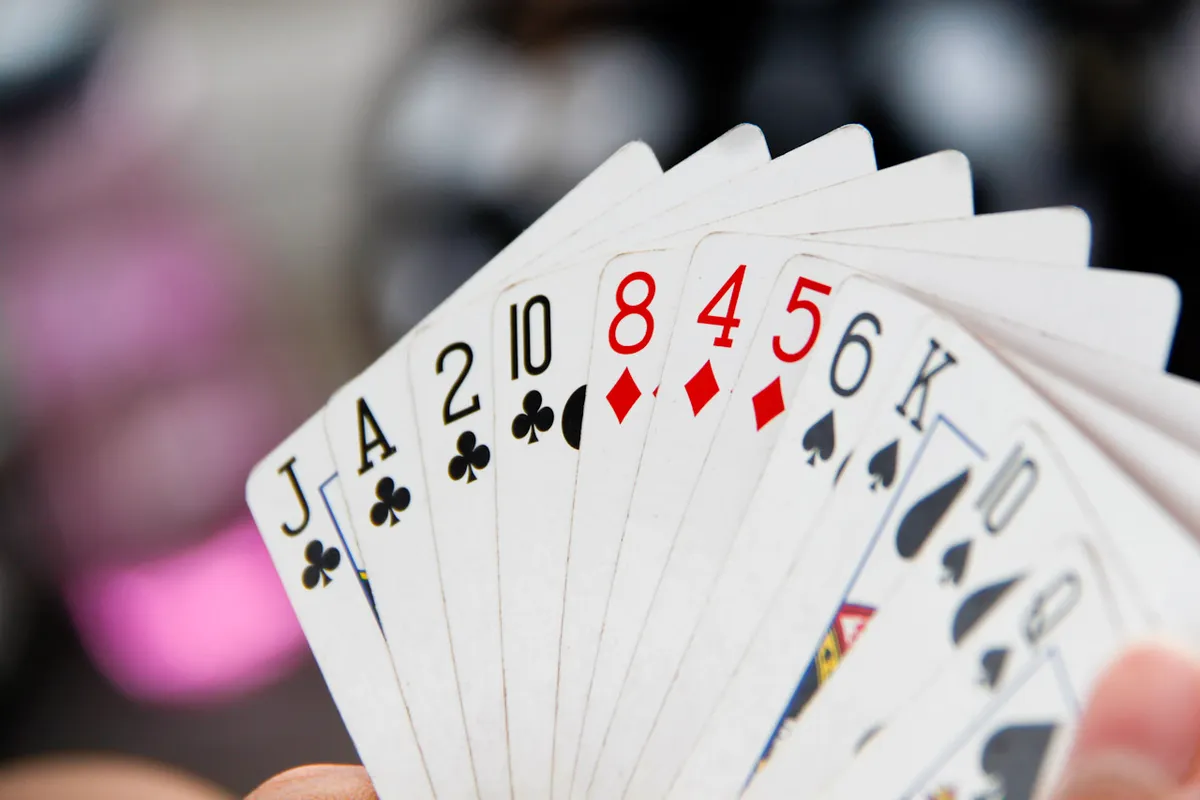
Card-table mood — Wikimedia Commons
How a Run Works: Antes, Blinds, and Tags
Understanding structure prevents early frustration. A standard Balatro run spans eight antes. Each ante contains three blinds in sequence:
- Small Blind — lower chip target; can be skipped for a tag (a small meta-reward like free rerolls or a booster pack).
- Big Blind — tougher target; also skippable for a tag.
- Boss Blind — mandatory. Defeat it to advance to the next ante.
Skipping blinds is a real strategic choice, not a beginner trap. Tags feed economy, joker slots, or consumable inventory. Aggressive skip strategies can snowball — but skipping too often leaves you under-leveled when a boss blind demands raw numbers.
After you beat a blind’s chip requirement, you cash out: base payout for the blind type, bonus dollars for unused hands, interest on saved cash (capped), and triggers from economy jokers. Then you enter the shop, buy power, and return to blind select. The loop is tight: select blind → play hands → cash out → shop → repeat.
Beating the Showdown Boss at Ante 8 wins the run. You can continue in Endless Mode, where chip requirements escalate brutally and new showdown bosses rotate in. For score chasers, Endless is the real endgame; for most players, the first full clear is the graduation ceremony.
Stakes: Difficulty That Actually Changes Math
After your first win, Stakes unlock — tiered difficulty modifiers that alter blind sizes, joker behavior, and economy rules. White Stake is the baseline lesson; Red Stake and beyond introduce permanent card debuffs, tougher interest caps, and faster scaling targets. Purple Stake and higher ranks are for players who already intuit joker ordering and boss blind counters.
Stakes are Balatro’s answer to ascension levels in Slay the Spire. They extend lifespan without DLC walls.
Scoring: Why Chips × Mult Is the Whole Game
Every hand resolves through the same headline formula: final score = Chips × Mult (with XMult applied as multiplicative layers inside Mult). Poker hand types provide a base chip and mult value — a pair behaves differently from a straight flush — but only scored cards contribute their printed rank chips and suit bonuses.
This distinction matters. If you play five cards but only two form the hand type, the other three are “played” but not “scored.” Jokers that care about face cards, suits, or retriggers only fire on scored cards unless their text says otherwise. Intermediate players lose runs by misunderstanding that split.
Enhancements add another layer:
- Bonus cards add flat chips.
- Mult cards add additive mult when scored.
- Glass cards multiply value but can shatter.
- Steel cards reward holding them in hand.
- Gold cards pay money at round end.
Editions on jokers — Foil, Holographic, Polychrome — push scaling further. Polychrome’s XMult especially belongs late in your joker row so it multiplies a fat mult total, not a skinny one.
Joker Order Is Silent Skill Expression
Jokers activate left to right during scoring. Additive +Mult generally wants to sit before XMult jokers so you multiply a larger number. Copy effects break the simple rule: Blueprint copies the joker to its right; Brainstorm copies the leftmost joker. A perfectly good row becomes wrong if you insert a copy piece one slot off.
Boss blinds like The Flint halve your base chips and mult; The Arm levels down hand types. These fights test whether your build has redundancy — chip engines that do not rely on a single hand type, or XMult chains that survive debuffs. When a boss feels unfair, it is often telegraphing that your skew was too narrow.
Jokers, Consumables, and Shop Economy
The shop is where runs become stories. At any time you may hold up to five jokers (expandable via vouchers and certain jokers), plus consumable slots for Tarot and Spectral cards. Planet cards permanently level up a poker hand type — raising base chips and mult every time you play that hand later.
Good runs usually combine three pillars:
- A scoring engine — jokers that scale with repetition (Wee Joker, Ride the Bus, Obelisk) or burst (Blueprint + Brainstorm setups, Baron held-card tricks).
- An economy line — interest, Golden jokers, tags that grant cash, or voucher discounts so you can reroll the shop aggressively.
- A plan for bosses — either overwhelming raw score or consumables saved for a blind that disables discards or shrinks hand size.
Tarot cards modify your deck directly: enhance ranks, convert suits, or destroy clutter. Spectral cards are higher risk — create jokers from destroyed cards, add editions, or duplicate with constraints. Planet cards are long-term investments; buying Mercury early can make every pair feel like a haymaker by Ante 4.
Rerolls cost escalating dollars. Skilled players treat rerolls as part of the build — sometimes you shop twice and leave with nothing but a voucher, and that is correct if the alternative is a dead joker that breaks synergy.
Decks, Discovery, and Meta Progression
Balatro ships with multiple decks that twist starting rules: extra joker slots, different discard counts, suit-focused bonuses, or challenge constraints like Plasma Deck doubling blind requirements while balancing chips and mult differently. Unlocking decks and jokers through the collection screen gives long-term goals beyond win streaks.
The discovery loop is generous. Every unseen joker, blind, and voucher appears in a catalog as you encounter it. Runs feel like filling a museum — even losses unlock knowledge. After five million copies sold (a milestone Playstack confirmed in early 2025), the community wiki and challenge-seed culture are mature. Daily seeded runs and custom challenge codes extend replay without live-service bloat.
If you come from board-game nights, Balatro scratches a similar “combo click” itch as engine-builders — except the table is virtual and the clock is your lunch break. For a tabletop comparison point, see our Everdell board game review — another title about stacking small rules into big payoffs, though analog and family-weighted.
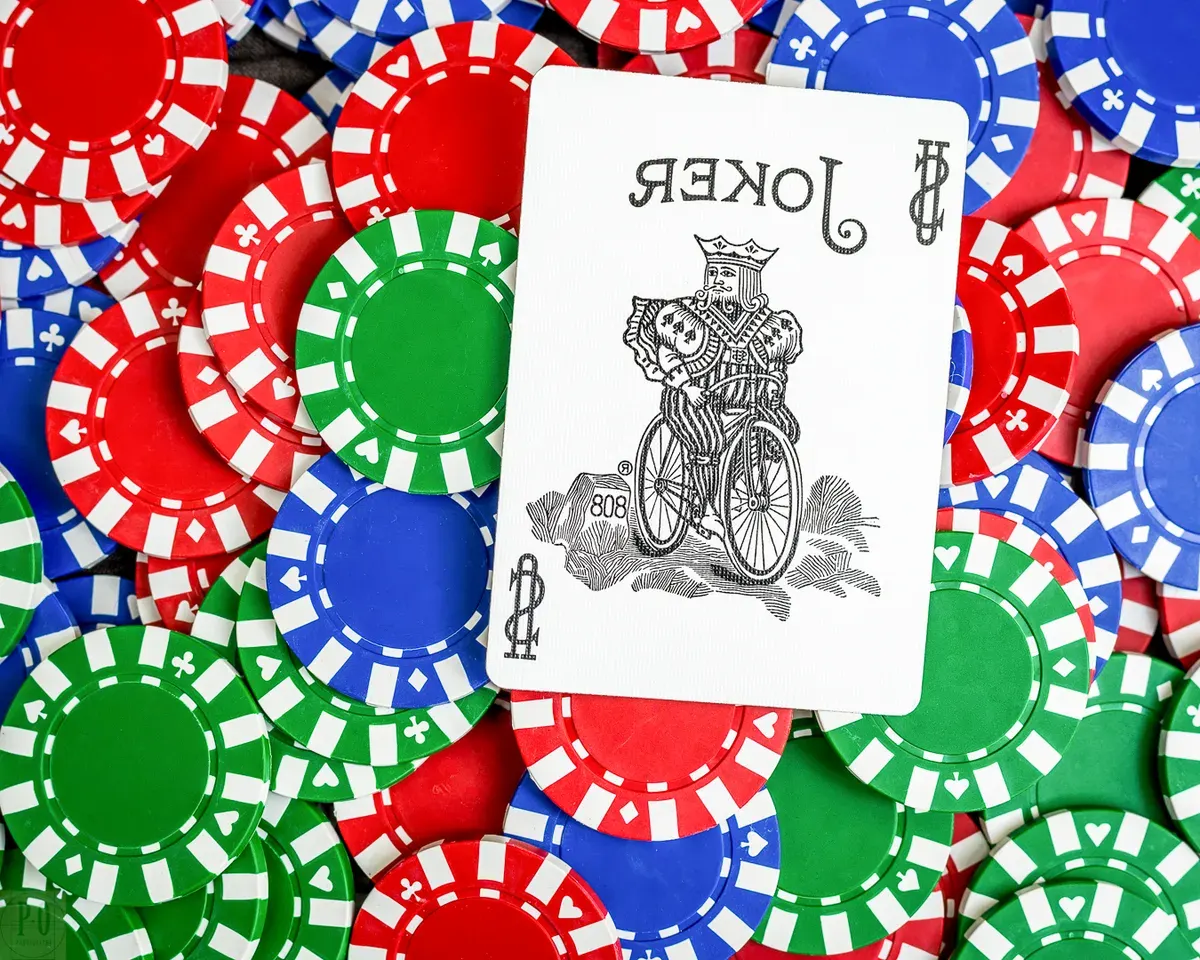
Focused play session — Wikimedia Commons
Platforms, Performance, and Price in 2026
Balatro launched February 20, 2024 on PC and consoles, macOS a week later, and iOS/Android in September 2024 (including Apple Arcade’s Balatro+ variant). A dedicated Nintendo Switch 2 version arrived February 25, 2026 — evidence that Playstack treats the IP as a long-tail platform holder, not a one-year wonder.
On Steam, the list price remains $14.99. Valve verifies it Steam Deck playable — and PC Gamer famously joked the handheld should be renamed “the Balatro machine.” That is marketing hyperbole, but the touch-friendly card selection and quick suspend-resume make handheld the natural home.
Controller and touch caveats are real. Several reviews — including ours after extended Switch play — note that Discard and Play sit close together. One mistaken button on a final hand ends a perfect run. On phone screens, text and joker tooltips can feel cramped until you learn icons by silhouette. These are polish gaps in an otherwise razor-balanced design, not deal-breakers.
Cross-save and cloud support vary by platform; Steam Cloud covers PC handoffs. Family Sharing on Steam makes it an easy “buy once, partner steals the Deck” title.
Balatro vs Other Roguelike Deckbuilders
| Game | Core fantasy | Choose Balatro instead when… |
|---|---|---|
| Balatro | Cheat at poker against math | You want instant hand readability and explosive mult scaling |
| Slay the Spire | Climb a spire with energy-curve combat | You prefer attack/block routing and enemy intent puzzles |
| Monster Train | Defend a train on multiple floors | You want lane-based tower defense deckbuilding |
| Inscryption | Escape a cabin horror metanarrative | Story twists matter more than pure score optimization |
| Luck be a Landlord | Slot-machine roguelike | You like symbol rows more than poker grammar |
Balatro sits closest to Slay the Spire in genre shelf space but differs in cadence. Spire rounds are tactical fights; Balatro rounds are optimization puzzles with a countdown. There is no enemy HP bar — only a chip threshold and your dwindling hands. That makes Balatro faster to parse for non-roguelike fans who already know what a flush is.
If your roguelike appetite leans action instead of cards, our Hades 2 review covers Supergiant’s combat-forward sequel — a different dopamine channel, equally dangerous to sleep schedules.
Who Should Buy Balatro in 2026?
Perfect For
- Players who understand poker hands but want zero bluffing or multiplayer toxicity
- Commuters who need a save-anywhere run structure on Deck or phone
- Min-maxers who enjoy joker order puzzles and seed sharing
- Indie fans supporting a solo-dev success story without AAA price tags
- Streamers and friends who want readable “how did that score happen?” moments
Not Ideal For
- Multiplayer groups — there is no co-op or versus mode
- Story-first gamers — narrative is atmospheric, not scripted campaign
- People triggered by gambling aesthetics despite no real-money stakes
- Players who rage-quit when a mis-input wastes an hour (see control notes above)
Pros and Cons
| Pros | Cons |
|---|---|
| Absurdly deep for a $15 poker skin | Mis-clicks hurt on touch and some controllers |
| Runs readable in minutes, mastered over months | Boss blinds can hard-counter naive builds |
| Constant free updates and platform support | No social or competitive modes |
| Soundtrack and CRT art age well | Late-run UI can intimidate until basics click |
| Perfect “one more blind” pacing | Endless mode scaling outpaces casual math |
Strategy Tips (Without Spoiling Every Secret)
- Learn which cards score for each hand type before buying exotic jokers. Foundation beats flair.
- Skip small blinds early when a tag feeds your planned economy — not every ante needs three fights.
- Save consumables for boss blinds that shrink hand size or disable discards unless your score is already absurd.
- Place +Mult before XMult unless Blueprint/Brainstorm forces a copy puzzle.
- Level planets on hands you actually play — buffing straights while your deck pairs every round is vanity.
- Watch interest caps on higher stakes; hoarding cash is useless if interest stops scaling.
- Reroll the shop when your build is incomplete — a dead joker slot is worse than spending $5 now.
- Read boss blind text before ante select so you can pivot hand types or buy counters in the shop.
Mobile-Friendly Buying Notes
Reading this balatro review on a phone before purchase?
- Confirm store version: standard mobile buy vs. Apple Arcade Balatro+
- Budget 300–600 MB storage depending on platform
- Try the first ante with sound on — audio feedback teaches scoring rhythm
- Use larger touch targets in accessibility settings if available on your port
- Check bundle sales on Steam if you own a PC — Balatro + Vampire Survivors pairs often discount both
FAQ — Balatro Review
Is Balatro actual online poker?
No. There is no house, no bluffing, and no real-money wagering. You play poker hands against score targets in a roguelike structure.
Is Balatro worth buying in 2026?
Yes. Two years of updates, mobile ports, and community challenges have only strengthened the base game. At $14.99 it remains one of the highest-value indies on Steam.
How long does a Balatro run take?
Most clears land between 30 and 90 minutes depending on shop deliberation and stakes. Endless pushes beyond that.
Do I need to know poker strategy?
Knowing hand rankings is enough. Optimal real-world poker math is irrelevant; joker synergies dominate.
Balatro vs Slay the Spire — which first?
If poker hands click instantly, start with Balatro. If you prefer turn-based combat and enemy intents, start with Spire. Many players love both.
Can I play Balatro on Steam Deck?
Yes — verified playable. It is among the best Deck indies for pick-up-and-put-down sessions.
Does Balatro have multiplayer?
No. Solo only.
What is the best platform for Balatro?
PC for mods and seeds; handheld Switch or Deck for couch and travel play; mobile for daily commutes.
Are there microtransactions?
The base game is a one-time purchase. Mobile/Apple Arcade variants follow their store policies; there is no pay-to-win card shop.
Who made Balatro?
LocalThunk (Joshua Eustis) developed the game; Playstack publishes. LouisF composed the soundtrack.
Final Verdict
Balatro succeeds because it respects your time and intelligence at the same time. The first ante teaches poker hands you already know; the eighth ante asks you to orchestrate joker triggers like a conductor in front of a CRT. LocalThunk’s solo-dev craft and Playstack’s port commitment turned a February 2024 surprise into a genre staple — not by bloating the design, but by sharpening a loop that was already dangerously sticky on day one.
Minor control quibbles and boss-blind variance keep it from perfection, but nothing else at this price delivers the same “I’ll just beat one more blind” gravity. If you missed the launch hype, 2026 is still the right moment: the game is complete, portable everywhere, and cheap enough to gift without thinking.
Score: 9.2/10 — Essential Poker Roguelike Deckbuilder
Related on NexReview
Want more roguelike and indie coverage after this Balatro review? Browse our Game Reviews hub, dig into action-roguelike depth in Hades 2, or shift to co-op chaos in Lethal Company. For PC performance checks when you rotate back to AAA titles, open NexCheck and NexPass.