Pros
- 170 unique bird cards create genuinely different engines every session
- Stonemaier production quality — dice tower, eggs, art — impresses newcomers
- Clear turn structure and solo Automa make it easy to learn and replay
- Scientific bird facts on every card reward curiosity beyond scoring
- Expansions integrate cleanly without replacing the base box
Cons
- Low direct interaction — you optimize in parallel, not against each other
- Card draw luck can swing tight games more than veterans prefer
- End-game scoring often rewards egg-laying engines over other paths
- Base box storage gets cramped once you add Oceania components
- MSRP sits at the high end for a gateway-weight title
Wingspan is Elizabeth Hargrave’s bird-collecting engine-builder — a competitive tabletop game where you attract North American species to forest, grassland, and wetland habitats while food dice clatter through Stonemaier’s birdfeeder tower. This Wingspan board game review (updated September 2026) covers how the four-round loop works, why the 2019 Kennerspiel des Jahres winner still dominates gift lists, who should buy the base box versus Oceania or Asia, and where the hobby’s backlash misses the point.
If you searched for a wingspan board game review because a friend raved about pastel eggs and a card called “Common Raven,” you are in the right place. This is Wingspan (2019) from Stonemaier Games — not the digital app (though that exists), not Wyrmspan (dragons), and not Finspan (fish). Same publisher family, different boxes.
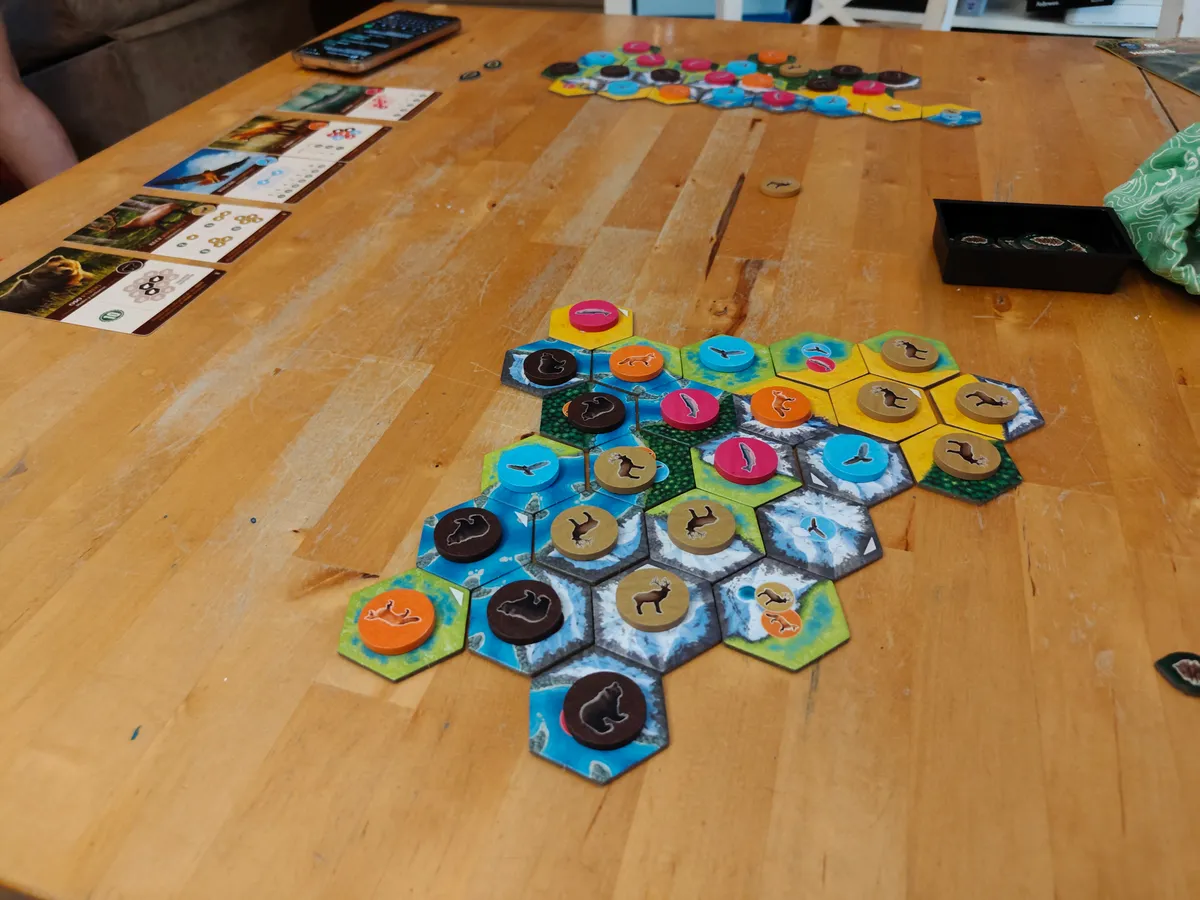
Tabletop bird theme — photo via Wikimedia Commons
Quick Verdict (For Skimmers)
| Field | Detail |
|---|---|
| Designer | Elizabeth Hargrave |
| Publisher | Stonemaier Games |
| Players | 1–5 (solo via Automa; up to 7 with Asia Flock mode) |
| Play time | ~40–70 minutes (first teach can run longer) |
| Age | 10+ |
| Type | Medium-light engine-building card game |
| Standout feature | Habitat actions + 170 unique bird powers |
| NexReview score | 8.5/10 |
Buy it if you want a beautiful, low-conflict puzzle that welcomes new hobbyists and still satisfies engine fans on a weeknight. Skip it if your group craves direct confrontation, negotiation, or heavy euro crunch — or if card luck in tight scoring races frustrates you.
What Is Wingspan?
Wingspan casts each player as a bird enthusiast building a personal wildlife preserve. Over four rounds you take one action per turn: gain food from the birdfeeder, lay eggs on your birds, draw bird cards, or play a bird into one of three habitats. Each habitat improves as you fill its rows — the first slot is weak, the last slot is powerful — and every bird card adds a unique power that can chain with others.
Hargrave, an amateur birder and former policy analyst, built the card data from real ornithological sources including the Cornell Lab of Ornithology. Powers echo biology: raptors hunt, flocking birds care about neighbors, wetland specialists want fish tokens. That integrity is why Nature, Science, and mainstream outlets treated Wingspan as more than a novelty — it is a gateway game that happens to teach while it scores.
Stonemaier’s production set a new bar for “gateway” boxes: thick player boards, a functional dice tower shaped like a birdfeeder, pastel egg tokens, and illustrations by Natalia Rojas and Ana Maria Martinez Jaramillo that look like field-guide plates. The game launched worldwide on March 8, 2019 (SKU STM910) and sold through print runs so fast that early adopters waited months. By 2021 sales passed 1.3 million copies; the franchise has since crossed 2.6 million including expansions — rare air for a hobby strategy title.

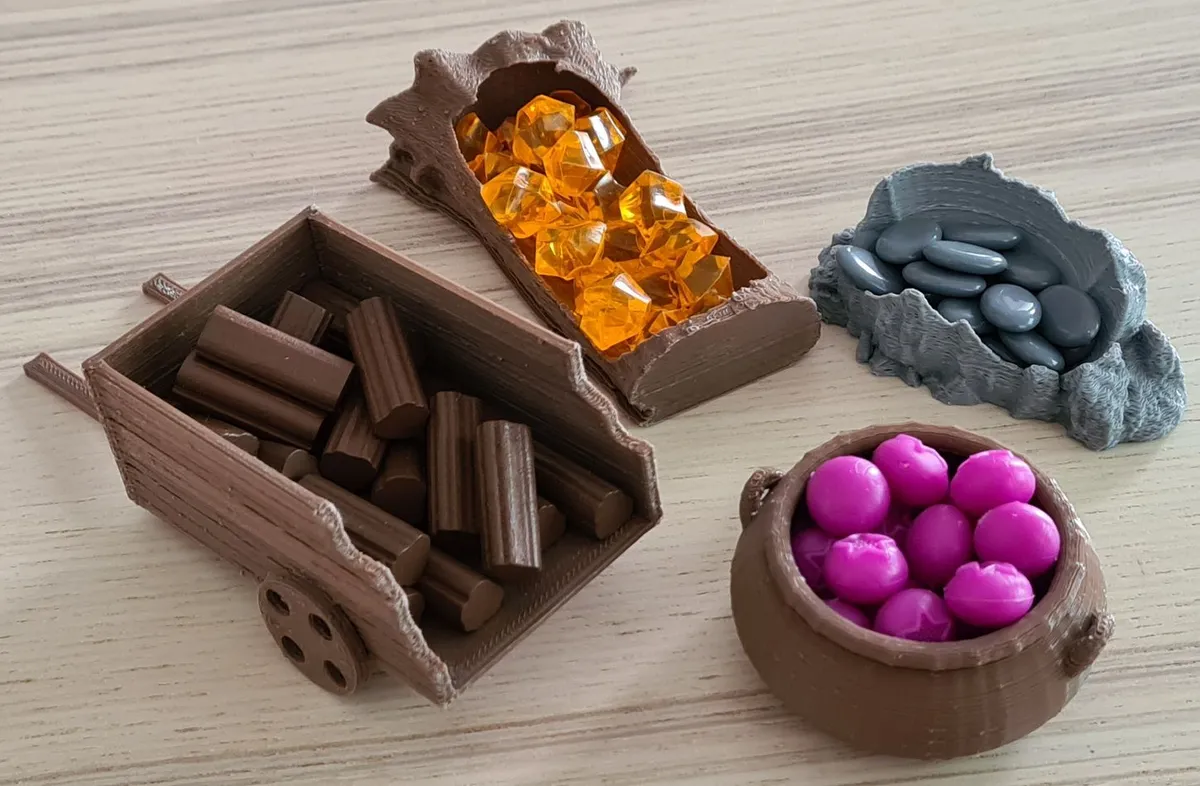
Bird and card-table atmosphere — Wikimedia Commons
How a Round Feels (Core Loop)
Understanding the rhythm matters more than memorizing every bird power on day one. Each of the four rounds has a decreasing number of turns per player (eight down to five in the standard game), plus a end-of-round goal that scores bonus points. Your turn is always exactly one action:
- Forest — gain food — roll dice from the birdfeeder (or take cached food) to pay for future birds.
- Grassland — lay eggs — place egg tokens on your birds; eggs score at game end and fuel certain powers.
- Wetland — draw bird cards — refill your hand to find the right species for your engine.
- Play a bird — pay the food cost (and sometimes egg cost) to tuck a card into a habitat row, triggering its “when played” power and permanently upgrading that habitat’s action.
The tension is opportunity cost, not table combat. Do you spend this turn grabbing wheat and fish so you can afford a powerful raptor next turn, or do you lay eggs now because the round-end goal rewards them? Do you activate a habitat that triggers three chained bird powers, or play a new bird that unlocks a fourth row slot?
That “excruciating balance” — as IGN’s Matt Thrower put it — is the heart of this Wingspan board game review. You are always building toward a scoring snapshot four rounds away while the round-end goal keeps shifting priorities.
Round-End Goals and Bonus Cards
At setup you reveal one face-up goal tile per round (more birds in a habitat, eggs on certain rows, etc.). You also hold one private bonus card (e.g., favor wetland birds, cache food, tuck cards under birds). Public goals push the table in similar directions; private bonuses create hidden specialization. Neither creates take-that moments — nobody steals your birds — but you will notice when someone’s engine aligns suspiciously well with the current tile.
The Three Habitats Explained
Each player board has three columns — forest, grassland, wetland — with up to five bird slots each (fewer in early rounds until you expand rows). Activating a habitat runs its base action plus every “when activated” power on birds in that column, top to bottom.
| Habitat | Base action | Typical engine direction |
|---|---|---|
| Forest | Gain food from birdfeeder | Resource engine; powers that gain extra food or cache it on cards |
| Grassland | Lay eggs on birds | End-game points; powers that reward egg counts or duplicate eggs |
| Wetland | Draw bird cards | Hand churn; powers that reduce costs or gain birds from discard |
Playing birds into a column is permanent real estate. A weak early filler bird might block a premium slot unless you use powers that tuck cards underneath or discard inefficient species — rare but possible with specific expansions and cards.
Why “Engine-Building” Fits
By round three your grassland activation might lay three eggs, trigger a bonus draw, and score interim points from a bird that cares about neighbors in the wetland. That acceleration is classic engine-building: early investments change the efficiency of later turns. Wingspan’s genius is packaging that arc in one action per turn so newcomers never face AP paralysis from twelve optional sub-phases.
Bird Cards: Powers, Facts, and Replayability
The base game includes 170 unique North American bird cards. Each lists wingspan length, nest type, egg capacity, food cost, and a power — brown powers activate when the bird is played, pink when activated, white at end of round, yellow when another player takes an action in that habitat (one of the few interaction hooks), teal in expansions, and so on.
Every card also includes a factual paragraph — range, behavior, conservation notes. Non-birders skim them; birders quote them. Either way the deck is the replay engine. Shuffle variance means your “cached fish + tuck cards” plan might appear in game one and never show up in game two.
Interaction Without Conflict
Yellow “between turns” powers are as close as Wingspan gets to direct interaction. A well-placed bird might let you gain food when an opponent activates forest, or discard from their hand when they draw cards. European Expansion birds added more end-of-round and player-adjacent triggers. Still, expect parallel optimization, not Cosmic Encounter-style blows. If your group measures fun by blocking, Wingspan will feel polite.
Food Dice and the Birdfeeder Tower
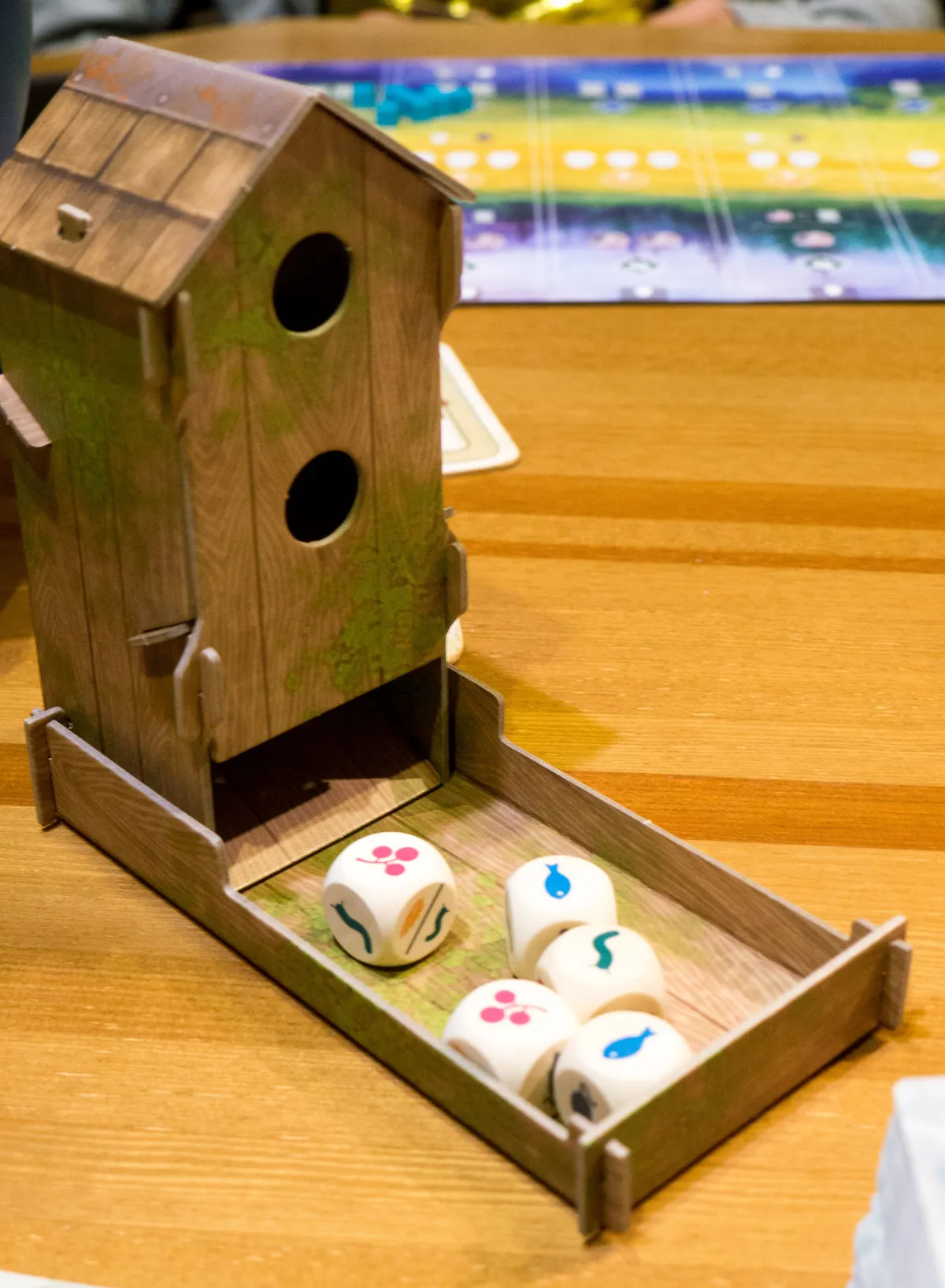
Food comes from five custom dice rolled into the birdfeeder dice tower — one of the most photographed components in modern board gaming. Faces show invertebrate, seed, fish, fruit, rodent, and wheat symbols (with reroll rules when dice sit on the tray). Players take dice from the tray subject to availability; reroll all dice when the tray empties or when you choose to refresh.
The tower is not just vanity. It randomizes supply, creates mild scarcity, and gives tactile joy to a genre often associated with dry accounting. Expansions add nectar (Oceania) as a wild food type, which smooths dead draws without removing tension entirely.
Critics note that bad feeder luck can delay key plays — especially when you need one specific fish for a high-value bird. That is real, though mitigated by birds that convert food, cache resources, or ignore costs. Veterans who want full control often prefer Wyrmspan, where exploration chooses resources more freely; newcomers usually prefer Wingspan’s visible randomness.
Player Count and Solo Automa
| Players | Experience |
|---|---|
| 1 (Automa) | Excellent — tuned solo deck simulates an opponent with minimal upkeep |
| 2 | Strong — fast, readable engines; Asia adds dedicated Duet mode |
| 3 | Sweet spot for many groups — enough variety without downtime drag |
| 4 | Still good; teach time and feeder contention increase |
| 5 | Works; longest downtime between your turns |
Solo mode uses the Automa — a separate deck and rules that simulate an opponent’s score track without you running a second board. It retains the core one-action loop and remains one of the best solo implementations in a mass-market box. Oceania introduced Automa variants including cooperative Automa rules for groups that want a shared score challenge.
Components, Production, and Table Presence
Stonemaier built its reputation on insert quality, linen finish, and weighted tokens. Wingspan delivers:
- Dual-layered player boards with clear iconography
- Thick bird and bonus cards (sleeve if you play weekly)
- Pastel egg tokens in multiple colors
- Goal board, action cubes, and scorepad
- Swift-Start promo guides in current printings (sample first four turns)
Footprint is medium — one player board per person plus a shared center for goals and feeder. A standard dining table fits four comfortably; five plus snacks gets tight.
Storage is the hidden downside. European birds fit the original insert with effort. Oceania adds new player mats and nectar tokens that do not fit cleanly in the base box — Stonemaier has acknowledged this and offered storage solutions over time. Plan on a expansion box or third-party organizer if you collect the line.

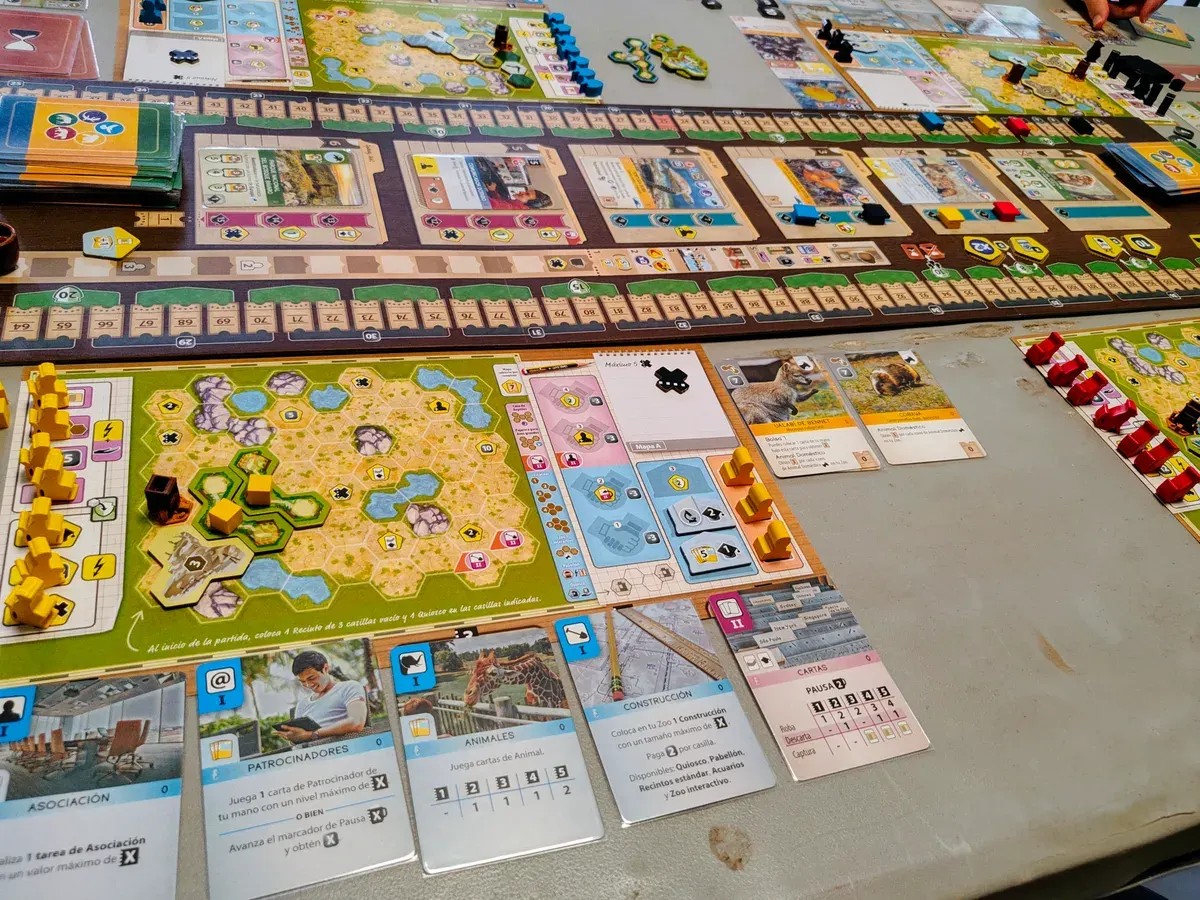
Game night energy — Wikimedia Commons
Teaching Wingspan Without Overwhelming the Table
Rules complexity is moderate-light (BGG weight ~2.48). Teach in layers:
- Goal — most points after four rounds from birds, eggs, goals, bonus card, tucked/cache scoring.
- One action per turn — four choices, always.
- Habitats — each column gets stronger with more birds; powers trigger in order.
- Food costs — show the birdfeeder and dice faces once.
- Round structure — fewer turns each round; score the goal tile before flipping the next.
Use the Swift-Start guides for the first round if your copy includes them. Play the first game open-hand or with gentle coaching — engine games click mid-session when someone chains two powers unexpectedly.
Common New-Player Mistakes
- Playing expensive birds before the habitat can support repeated activations
- Ignoring round-end goals until round four
- Hoarding cards in hand instead of cycling the wetland
- Forgetting end-of-round powers on European and Oceania birds
- Undervaluing egg placement when bonus cards and goals align
Expansions: European, Oceania, Asia, and Beyond
All major expansions shuffle new bird cards into the base deck — you do not replace the core box.
Wingspan: European Expansion (2019)
Adds 81 European birds, new end-of-round powers, birds that span two slots, and slightly more player interaction. Fits the original insert better than Oceania. Best first expansion if you want more variety without new mats.
Wingspan: Oceania Expansion (2020)
Adds 95 Oceania birds, nectar wild food, redesigned player mats (with a second side for fresh layouts), end-of-game powers, and Automa updates. Most reviewers call Oceania the biggest mechanical upgrade because the mats rebalance habitat incentives. Downside: storage and higher table footprint.
Wingspan Asia (2022)
Adds 90 Asian birds, Flock mode for larger groups, and Duet — a two-player-focused mode with its own goal map. Can serve as a standalone entry for bird-card content though you still need base components for full integration.
Stonemaier’s long-term plan has been continent-themed expansions; check current retail listings for the latest regional boxes before buying — release schedules evolve.
Wyrmspan and Finspan (Same Family, Different Games)
Stonemaier’s “trilogy” strategy produced Wyrmspan (heavier dragon cavern-building) and Finspan (lighter fish diving). They share DNA but are not expansions. Choose Wingspan for accessible bird theme; Wyrmspan if your group wants more resource control; Finspan for families who find Wingspan’s teach still slightly long.
Wingspan vs Similar Games
| Game | Vibe | Choose it instead when… |
|---|---|---|
| Wingspan | Parallel bird engine, premium production | You want low conflict and nature theme |
| Everdell | Whimsical woodland worker placement | You prefer spatial board building over cards |
| Terraforming Mars | Heavy corporate engine | Your group wants 2+ hours and cutthroat scoring |
| Photosynthesis | Abstract tree growth | You need simpler rules with light theme |
| Ark Nova | Modern zoo-building euro | You want deeper interaction and longer play |
| Cascadia | Tile-laying puzzle | You want quicker, tighter spatial scoring |
Wingspan occupies the “gateway-plus” shelf: easier than Ark Nova, richer than pure family fillers, less confrontational than most economic euros.
Who Should Buy Wingspan in 2026?
Perfect For
- Couples and families introducing hobby games beyond Monopoly
- Birders and nature educators who want accurate flavor text
- Solo players seeking a polished Automa experience
- Groups that enjoy optimizing personal engines without direct attacks
- Gift-givers who want a box that looks impressive before the first shuffle
Not Ideal For
- Competitive players who need blocking, trading, or combat
- Groups allergic to card-draw variance in close games
- Buyers on a tight budget — MSRP typically lands around $65–70 USD / £55–65 GBP, premium for gateway weight
- Anyone expecting a co-op nature sim — this is strictly competitive scoring
Strategy Tips (Without Listing Every Bird)
- Read the round-end goal before round one ends — pivot early; chasing a mismatched engine costs more than one suboptimal turn.
- Balance habitat growth — a forest that produces food nobody spends is dead value.
- Cheap birds can be scaffolding — low-cost species that enable draws or extra food often outperform flashy expensive birds played one turn too late.
- Watch the birdfeeder — if fish are scarce, adapt costs or cache food on forest birds before committing to wetland draws.
- Eggs are points, not decoration — many tight games swing on egg counts plus bonus cards; grassland engines remain strong late game.
- Hand size matters — wetland cycling finds synergies; hoarding ten cards without playing them is usually a mistake.
- Learn five birds, not all 170 — depth comes from combinations, not memorization.
Digital Edition vs Physical Box
Monster Couch’s Wingspan digital edition (Steam, mobile, consoles) faithfully ports rules with automated scoring and online async play. It is excellent for solo practice and learning bird powers. This review still recommends the physical board game for the tactile birdfeeder, table conversation, and giftability — but the app is a legitimate companion, not a substitute for the cardboard experience.
Mobile-Friendly Buying & Play Notes
Reading this wingspan board game review on a phone? Condensed checklist:
- Confirm player count — solo and 2–3 shine brightest
- Budget 60–90 minutes for first teach including setup
- Buy base Wingspan before expansions unless Asia standalone fits your shelf plan
- Oceania is the first expansion for most owners; European is the space-efficient add-on
- Sleeve bird cards if you play monthly — shuffling wears art quickly
- Not a travel game — player boards and tower need room
FAQ — Wingspan Board Game Review
Is Wingspan a board game or a video game?
This review covers the Stonemaier Games board game (2019). A separate digital app exists; search “wingspan board game review” almost always means the tabletop box with birdfeeder dice tower.
Is Wingspan worth it in 2026?
Yes — for low-conflict engine fans, couples, and gateway groups. It remains one of the best-designed medium-light games of the last decade despite veteran nitpicks about interaction.
How long does Wingspan take?
Most groups finish in 40–70 minutes once rules are known. First plays with four or five new players can approach 90 minutes.
What age is Wingspan for?
Publisher guidance is 10+. Younger children can play coached; reading bird powers and planning one turn ahead is the main barrier.
Does Wingspan work solo?
Yes. The Automa solo mode is widely praised and keeps the same one-action core loop.
Which Wingspan expansion should I buy first?
Oceania for new mats, nectar, and mechanical variety; European if you want more birds with minimal storage pain.
Is Wingspan too lucky?
Card draws and dice faces introduce variance. Skilled play mitigates luck through habitat timing and food caching, but tight races can feel swingy — know your group’s tolerance.
Wingspan vs Wyrmspan — which first?
Start with Wingspan unless your group already plays medium euros and wants heavier cavern exploration with less feeder randomness.
Can Wingspan teach real bird facts?
Each card includes accurate natural-history text sourced from real databases. It is not a field guide replacement, but birders consistently praise the flavor.
Is there direct conflict in Wingspan?
Very little. A few bird powers nudge opponents, but you never attack or steal birds. It is parallel competition.
Final Verdict
Wingspan earned its Kennerspiel des Jahres trophy and million-copy sales honestly: Elizabeth Hargrave fused real ecology with an engine arc that clicks in the first hour, and Stonemaier wrapped it in components that still photograph beautifully seven years later. The hobby’s grumbles about low interaction and late-game egg scoring are fair — but they target an audience Wingspan never chased. For couples, families, solo players, and anyone who wants a gorgeous puzzle with minimal table aggression, it remains a reference point.
Buy the base box, play three sessions, then decide on Oceania. Teach with the Swift-Start guides, respect the birdfeeder’s chaos, and let someone at the table read a card fact aloud at least once. Do that, and this Wingspan board game review ends the way most good sessions do — with everyone googling a bird they did not know existed five minutes earlier.
Score: 8.5/10 — Best Gateway Engine-Builder With Premium Table Presence
Related on NexReview
Want more tabletop and game coverage after this wingspan board game review? Browse our Game Reviews hub, narrative tension in Dead of Winter, cozy long-form play in Stardew Valley, and co-op creativity in Split Fiction. For PC performance checks when you switch back to digital titles, try NexCheck and NexPass.