Hellblade 2: Senua's Saga is one of the most visually arresting and emotionally demanding action adventures of its generation. Ninja Theory returns with Senua, the Celtic warrior whose psychosis manifests as voices, visions, and a relentless internal war fought alongside external battles against Norse mythology and human cruelty. If you want a complete Hellblade 2 review covering combat evolution, mental health storytelling, Iceland's breathtaking atmosphere, performance on Xbox and PC, and whether the sequel surpasses the 2017 original in 2025, this article delivers an honest verdict before you buy.
The first Hellblade proved that a mid-budget game could punch above its weight with AAA presentation, binaural audio design, and respectful treatment of psychosis as narrative device rather than horror gimmick. The sequel arrives with Microsoft's backing, Unreal Engine 5 fidelity, and even higher production ambition—yet it is also shorter, more linear, and more controversial on value. Understanding those trade-offs is essential.
What Is Hellblade 2: Senua's Saga?
Hellblade 2 is a single-player action-adventure game developed by Ninja Theory and published by Xbox Game Studios. It continues the story of Senua, a Pict warrior who experiences psychosis—hearing voices, seeing illusions, and navigating a world where internal and external threats blur together.
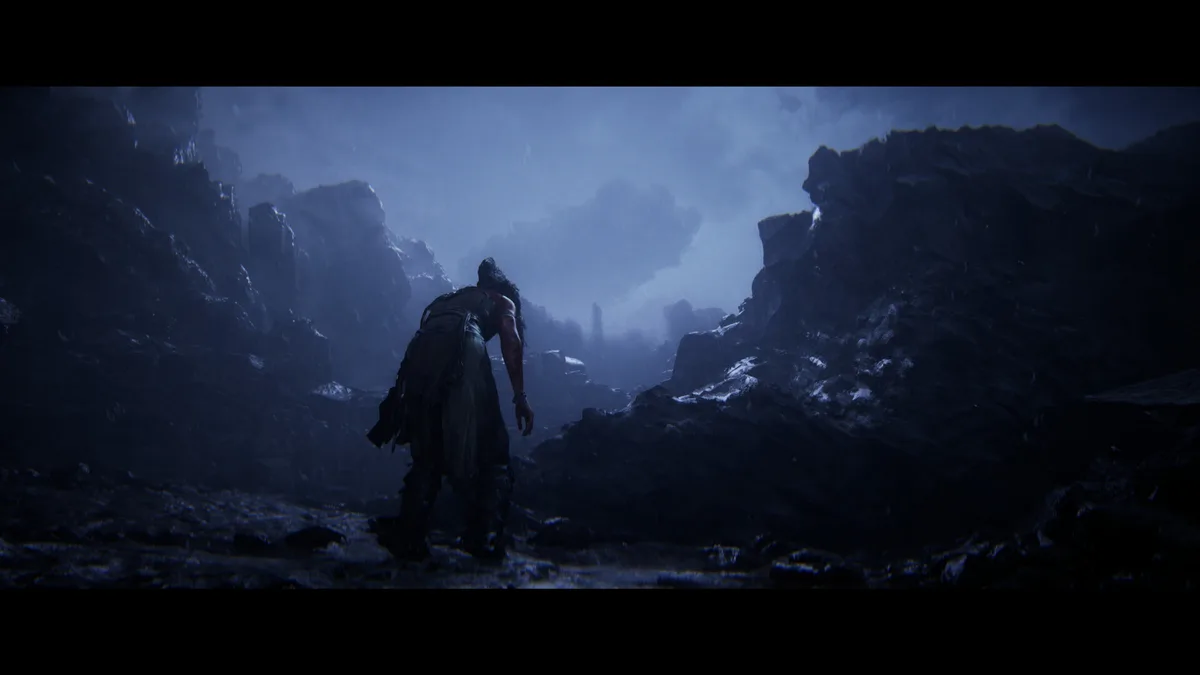
Official screenshot — Ninja Theory (Steam)
Where the original Hellblade: Senua's Sacrifice journeyed through Celtic and Norse mythology across Britain, the sequel relocates Senua to Viking-era Iceland. She travels with a small group of enslaved companions toward a confrontation with a tyrannical warlord, fighting both human enemies and mythological threats while her mind fractures and rebuilds in parallel.
The game launched on May 21, 2024 for Xbox Series X|S and PC (Microsoft Store and Steam), with day-one availability on Xbox Game Pass. It is not an open-world RPG, a soulslike, or a traditional hack-and-slash—it is a cinematic psychological action adventure with deliberate pacing, minimalist HUD design, and a runtime that prioritizes intensity over length.
For buyers searching "Hellblade 2 review 2025" or "is Hellblade 2 worth it," the short answer: it is an extraordinary audiovisual and emotional experience held back slightly by brevity and linear design—but for the right audience, those limitations are features, not failures.
Gameplay and Combat
Combat in Hellblade 2 refines the original's melee-focused system without reinventing it. Senua wields swords and axes in third-person encounters that emphasize timing, weight, and tension rather than combo complexity or loot progression.
Melee Combat and Pacing
Fights are intimate and brutal. Enemies attack with readable animations; Senua counters, dodges, and strikes with a heaviness that sells every impact. There is no traditional HUD cluttering the screen—health and status communicate through visual and audio cues, maintaining immersion at the cost of immediate clarity for some players.
Combat difficulty sits between accessibility and challenge. Aggressive play is punished; patient observation rewards players who learn attack rhythms. Boss encounters and large enemy groups escalate tension through arena design and Senua's shifting mental state rather than mechanical variety alone.
The sequel adds more set-piece combat scenarios—shield walls, pursuit sequences, and mythological confrontations that blend quick-time responsiveness with player agency. These moments feel cinematic without fully surrendering control, though players who dislike scripted sequences may find certain encounters restrictive compared to freeform action games.
Exploration and Linear Structure
Hellblade 2 is linear. You follow a guided path through Icelandic landscapes—beaches, cliffs, caves, and volcanic terrain—with occasional branching for collectibles and environmental puzzles. There is no map overlay, no quest log, no skill tree sprawling across dozens of hours.
Environmental interaction focuses on traversal: climbing, squeezing through tight spaces, balancing across beams, and solving light puzzles tied to Senua's perception. Some puzzles require distinguishing reality from illusion—voices in Senua's head may offer contradictory guidance, and the game expects players to sit with uncertainty rather than rush to solutions.
This structure mirrors the original's philosophy. Hellblade 2 is not designed for completionist sandbox play; it is designed for uninterrupted narrative flow. Players expecting God of War scale or Elden Ring freedom should adjust expectations before purchase.
Audio as Gameplay Mechanic
The binaural audio design remains a defining feature. Voices whisper from different spatial positions—some encouraging, some hostile, some protective. Headphones are not optional for the intended experience; they are the primary interface through which Senua's psychosis communicates gameplay information and emotional context.
Audio cues telegraph enemy positions, warn of incoming attacks, and comment on Senua's choices. This integration of sound and mechanics is rare in AAA gaming and represents Ninja Theory's most distinctive design signature across both Hellblade titles.
Story, Characters, and Mental Health Themes
Hellblade 2's narrative continues the franchise's commitment to portraying psychosis with research-backed consultation and narrative dignity. Senua is not a "crazy warrior" caricature—she is a fully realized character whose mental health condition shapes perception without defining her entire identity.
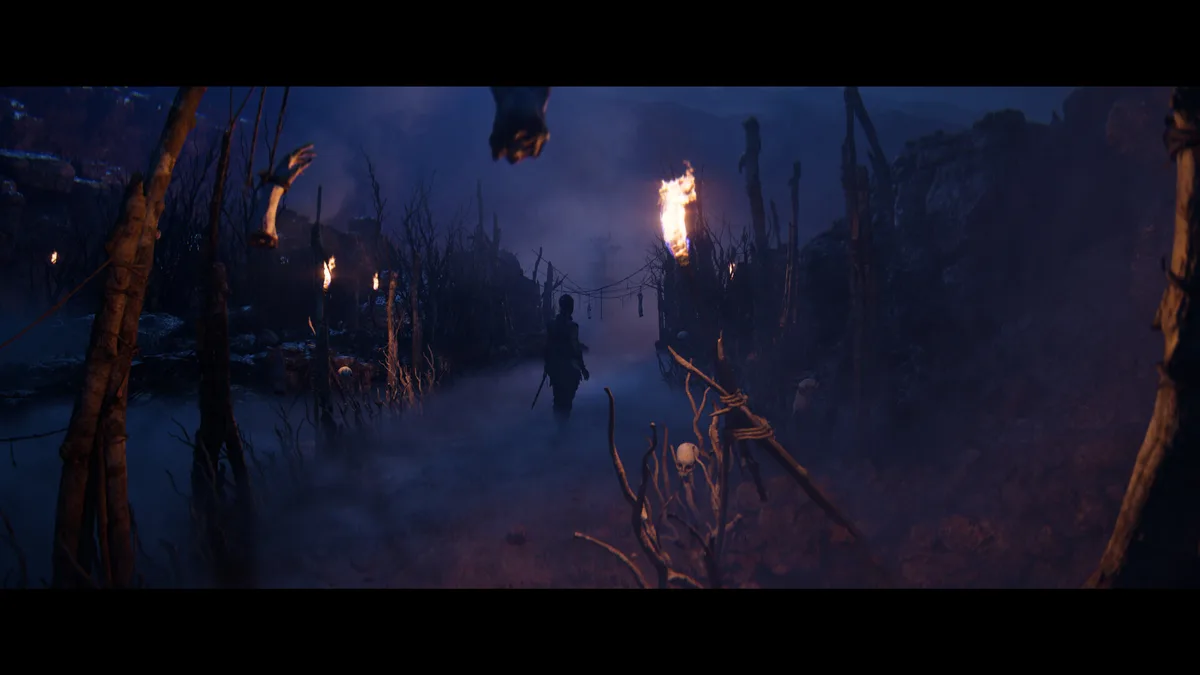
World and exploration — Ninja Theory (Steam)
Senua's Journey in Iceland
The story opens with Senua captive aboard a Viking longship, traveling toward an uncertain fate alongside other enslaved people. Her mission expands beyond personal survival into confronting Heidrún and the systems of violence that chain both body and mind.
Narrative delivery blends performance-captured cinematics, environmental storytelling, and internal monologue voiced by the chorus in Senua's head. Cutscenes are frequent and lengthy by action-game standards, but they serve emotional architecture rather than padding—every major beat explores guilt, grief, agency, and the cost of vengeance.
The sequel is more explicit about community and collective trauma than the first game's inward spiral. Senua's relationship with companions Fargrimr, Astrid, and Saga grounds abstract psychological themes in human connection. Whether she can trust others—and herself—becomes as important as defeating external enemies.
Mental Health Representation
Ninja Theory collaborated with mental health professionals and individuals with lived experience of psychosis, continuing practices established on the original Hellblade. The game does not treat voices as jump-scare horror devices; they are companions, critics, and mirrors of Senua's emotional state.
This approach matters in a medium that historically stigmatized mental illness through asylum horror tropes. Hellblade 2 asks players to empathize with perceptual experiences unlike their own—a design goal that aligns thematically with narrative adventures like our Silent Hill 2 remake review, where psychological horror serves character tragedy rather than exploitation.
The game includes content warnings and resources for players who may find themes triggering. Mature subject matter includes slavery, violence, self-harm references, and intense depictions of psychological distress. This is not casual entertainment—it demands emotional readiness.
Norse Mythology and Symbolism
Iceland's mythological elements weave through human conflict. Creatures and visions from Norse tradition manifest as manifestations of Senua's inner state and cultural collision between Pict and Viking worlds. Symbolism rewards attentive players who read environmental details, rune carvings, and voice dialogue for layered meaning.
The story resolves more conclusively than some players expected, trading ambiguous horror for cathartic narrative closure. Veterans of the first game may debate whether clarity strengthens or softens the franchise's psychological edge—NexReview finds the ending emotionally earned even when it sacrifices some of the original's unsettling open questions.
Visuals and Art Direction
Hellblade 2 is among the most visually spectacular games of 2024 and 2025. Ninja Theory leverages Unreal Engine 5 technology—Nanite geometry, Lumen lighting, and Metahuman-caliber facial animation—to deliver photorealistic Icelandic landscapes and performances that blur the line between game and film.
Environments and Cinematography
Iceland's geography becomes a character: black sand beaches, mist-covered mountains, geothermal steam, and violent seas render with documentary-level detail. Weather systems, volumetric fog, and dynamic lighting create sequences that feel directed by cinematographers rather than level designers.
Camera work during exploration and combat favors tight framing and deliberate movement. The game rarely lets you sprint through environments without noticing texture on wet rock, ash in the air, or light breaking through cloud cover. Visual craft is not background—it is the primary reason many players recommend Hellblade 2 despite its short runtime.
Character Animation and Performance Capture
Melina Juergens returns as Senua through performance capture that communicates micro-expressions, exhaustion, and resolve without dialogue exposition. Supporting characters receive similar care; eyes, breath, and body language sell trauma and tenderness in close-up shots that AAA games often rush past.

Systems and performance — Ninja Theory (Steam)
Mythological entities and hallucinations vary from subtly wrong human figures to towering supernatural visions. The contrast between grounded realism and surreal distortion reinforces the narrative's central theme: reality is not always a stable platform.
Art Direction vs. Photorealism Trends
Industry discourse often pits stylization against photorealism. Hellblade 2 argues both can coexist when art direction is disciplined—realistic rendering in service of emotional truth rather than tech-demo flexing. Players comparing visual ambition across 2024 releases will find Hellblade 2 competitive with our Black Myth Wukong review coverage, though the games pursue entirely different aesthetic philosophies.
Performance and Technical Quality
Hellblade 2 runs well on intended hardware, with PC offering the most flexibility and Xbox Series consoles delivering consistent console experiences.
Xbox Series X and S
On Xbox Series X, the game targets high frame rates with visual modes that showcase Ninja Theory's art direction. Series S scales resolution and effects but remains playable for Game Pass subscribers on budget hardware. Load times are minimal thanks to SSD optimization; transitions between gameplay and cinematics are seamless by console standards.
Xbox Game Pass availability significantly lowers the barrier to entry. For subscribers, Hellblade 2's brevity feels less like a value problem and more like a premium weekend experience—an important context when evaluating price complaints.
PC Performance
The PC version supports upscaling technologies and adjustable settings for mid-range hardware. High-end GPUs showcase the game's visual peak; mid-tier systems trade resolution and ray-tracing features for stable frame rates. Ninja Theory patched minor issues post-launch; by 2025, performance is stable across common configurations.
Storage requirements are modest compared to open-world blockbusters—another reflection of the game's focused scope. Players with older SSDs need not reserve hundreds of gigabytes.
Accessibility and Controls
Hellblade 2 includes difficulty adjustments for combat, puzzle assistance, and narrative-forward options for players who want the story without mechanical friction. Full accessibility suite is not industry-leading, but combat difficulty toggles welcome players who found the original's fights stressful rather than engaging.
Controller and keyboard support on PC are both functional. The game is best experienced with a controller for analog subtlety during traversal sequences, though mouse-and-keyboard players report satisfactory combat responsiveness.
Pros and Cons
Pros
- Stunning photorealistic visuals and cinematography
- Groundbreaking binaural audio and voice design
- Respectful, research-informed mental health storytelling
- Refined melee combat with immersive no-HUD presentation
- Powerful performance capture from Melina Juergens
- Emotionally cathartic narrative with strong character writing
- Xbox Game Pass availability lowers cost barrier
- Efficient runtime for players who prefer focused experiences
Cons
- Short campaign (roughly 6–9 hours) frustrates full-price buyers
- Highly linear structure limits replay and exploration
- Combat variety does not match longer action adventures
- Some cinematic sequences reduce player agency
- Limited mechanical depth compared to RPG or soulslike peers
- No traditional HUD may confuse players during hectic fights
- Story clarity may disappoint fans of the original's ambiguity
Who Should Buy Hellblade 2?
Buy or play via Game Pass if you value narrative-driven action, psychological storytelling, audiovisual craft, and single-sitting experiences that respect your time. Players who loved the original Hellblade, enjoyed cinematic adventures like God of War (2018), or seek mature themes handled with care will find Hellblade 2 essential.
Wait for a sale if you measure value strictly by hours-per-dollar and expect open-world content, RPG progression, or replayable combat systems. At full MSRP, the runtime is the game's most criticized element.
Skip if you dislike linear narratives, find psychosis themes triggering without proper preparation, or need extensive gameplay systems to stay engaged. Action fans seeking deep build variety should look elsewhere.
FAQ
How long is Hellblade 2?
A typical playthrough takes 6 to 9 hours depending on puzzle engagement and collectible hunting. There is limited replay incentive beyond experiencing the story again or hunting achievements.
Do I need to play Hellblade 1 first?
Not strictly required. Hellblade 2 references the first game's events but tells a largely self-contained story. Playing the original enriches emotional context and character understanding.
Is Hellblade 2 on PlayStation?
As of 2025, Hellblade 2 remains Xbox and PC only. PlayStation players must wait for any future port announcement.
Is Hellblade 2 accurate about psychosis?
Ninja Theory consulted experts and individuals with lived experience, but the game is fiction—not clinical documentation. It aims for empathy and dignity rather than medical textbook accuracy.
Is Hellblade 2 scarier than the first game?
It is tense and psychologically intense rather than horror-focused. Violence and mythological imagery disturb, but the game prioritizes emotional drama over jump scares.
Verdict
Hellblade 2: Senua's Saga is a masterpiece of atmosphere, audio design, and performance capture constrained by brevity and linearity. Ninja Theory delivered a sequel that surpasses its predecessor visually and matches it emotionally, even when gameplay evolution feels incremental rather than revolutionary.
The game asks a simple question with complicated answers: can interactive media portray psychosis with empathy while still delivering compelling action? Hellblade 2 answers yes—loudly, beautifully, and unforgettably.
NexReview Score: 8.5/10
For players who want psychological depth with blockbuster production, Hellblade 2 belongs on your 2025 playlist. Pair it with our Silent Hill 2 remake review for another mature story about grief and perception, and our Black Myth Wukong review for mythological action at an entirely different scale and structure.
Score Breakdown
| Category | Score |
|---|---|
| Visuals and art direction | 10/10 |
| Audio design | 10/10 |
| Story and themes | 9/10 |
| Combat | 7.5/10 |
| Gameplay variety | 6.5/10 |
| Performance | 8.5/10 |
| Value (full price) | 7/10 |
| Overall | 8.5/10 |
System Requirements Overview (PC)
| Component | Minimum | Recommended |
|---|---|---|
| GPU | GTX 1070 / RX 5700 XT | RTX 3070 / RX 6800 XT |
| CPU | Intel i5-8400 / Ryzen 5 2600 | Intel i7-10700K / Ryzen 7 3700X |
| RAM | 16 GB | 16 GB |
| Storage | 70 GB SSD | 70 GB SSD |
| OS | Windows 10/11 64-bit | Windows 10/11 64-bit |
SSD storage is recommended for asset streaming. Hellblade 2 benefits significantly from headphones supporting spatial audio.
Hellblade 2 vs. Hellblade 1 Comparison
| Feature | Hellblade (2017) | Hellblade 2 (2024) |
|---|---|---|
| Setting | Celtic Britain | Viking-era Iceland |
| Runtime | 7–10 hours | 6–9 hours |
| Visual fidelity | Strong for era | Industry-leading |
| Combat depth | Similar melee focus | Refined, more set pieces |
| Narrative tone | Bleak, ambiguous | Cathartic, conclusive |
| Platforms | Multi-platform | Xbox Series X/S, PC |
| Price positioning | Indie AA value | AAA pricing controversy |
The sequel trades some of the original's raw psychological horror for expanded production scale and narrative resolution. Both games complement each other; neither fully replaces the other.
Psychological Action Adventure Landscape
Hellblade 2 occupies a niche between cinematic action and narrative adventure—closer to interactive film than systems-heavy RPG. Understanding that positioning prevents misplaced expectations.
| Title | Focus | Runtime | Mental health themes |
|---|---|---|---|
| Hellblade 2 | Cinematic action | Short | Central, researched |
| Silent Hill 2 Remake | Survival horror | Medium | Symbolic, grief |
| God of War Ragnarök | Action RPG | Long | Secondary themes |
| Life is Strange | Adventure | Episodic | Teen mental health |
Hellblade 2 is the clearest choice for players who want psychosis portrayed as lived experience within action gameplay—not metaphorical horror symbolism or peripheral subplot.
Tips for the Best Experience
- Wear quality headphones — spatial audio is foundational, not optional enhancement.
- Play in focused sessions — the game's pacing rewards 2–3 hour sittings over fragmented multitasking.
- Adjust combat difficulty if needed — the story is the primary draw; mechanical friction should not block access.
- Read content warnings — mature themes deserve preparation, not surprise.
- Consider Game Pass — subscription access mitigates runtime-to-price concerns substantially.
Community Reception and Industry Impact
Hellblade 2 sparked debate upon launch: universal praise for visuals and audio alongside criticism of $50–$70 pricing for under ten hours of content. Metacritic and user scores reflect that split—critical acclaim for craft, community friction for value.
Industry impact extends beyond sales. Ninja Theory, now under Xbox Game Studios, demonstrated that experiential games with sensitive themes can command AAA resources without conforming to live-service or open-world templates. For developers exploring mental health narratives, Hellblade 2 provides a reference point for consultation practices and audio-driven design.
Speedrun and achievement communities remain smaller than blockbuster franchises, but the game's cinematic consistency makes it popular for narrative-focused streamers and content creators who emphasize reaction and interpretation over mechanical mastery.
Final Recommendation
Hellblade 2: Senua's Saga is not the longest game of 2025, nor the most mechanically complex—but it may be the most unforgettable hour-for-hour experience you play this year. Senua's voices will follow you after the credits roll, and Iceland's ash-stained beaches will linger in memory longer than many 100-hour open worlds.
Bottom line: Put on headphones, clear an evening, and let Ninja Theory show you what focused interactive storytelling can achieve when craft meets courage. For the right player, eight hours of excellence beats forty hours of adequacy every time.