Hollow Knight: Silksong is the sequel millions of metroidvania fans waited years to play. Developed by Team Cherry, the Australian studio that turned a crowdfunded indie into one of gaming's most beloved action-platformers, Silksong trades the silent Knight for the agile princess-warrior Hornet and relocates the adventure to Pharloom—a fallen kingdom of silk, spires, and insect civilization. If you want a complete Hollow Knight Silksong review covering combat, exploration, boss design, difficulty, performance on PC and consoles, and whether it matches the original Hollow Knight in 2025, this article breaks down everything before you buy.
The game launched on September 4, 2025 for PC, Nintendo Switch, PlayStation 5, and Xbox Series X|S after a development cycle that stretched far beyond initial expectations. What Team Cherry delivered is not a safe retread—it is a faster, more vertical, more mechanically expressive sequel that respects Hollow Knight's identity while confidently rewriting its rulebook.
What Is Hollow Knight Silksong?
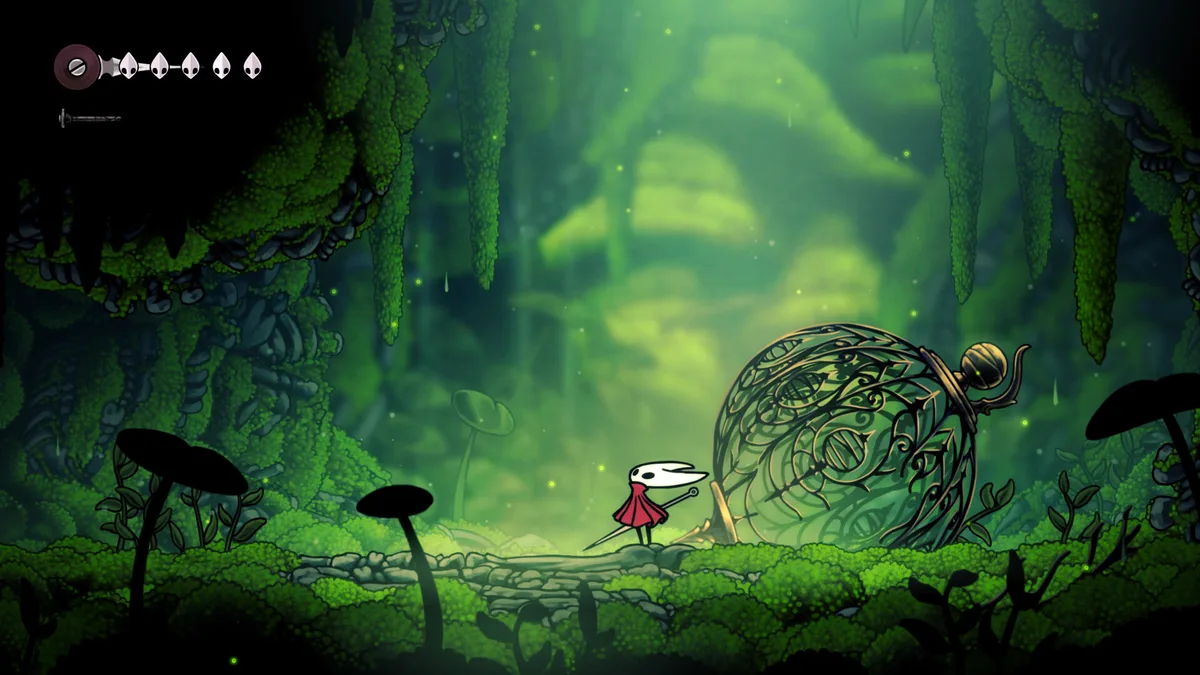
Hollow Knight: Silksong is a single-player 2D action-platformer in the metroidvania tradition. You play as Hornet, protector of Hallownest's last spark and a fan-favorite boss from the original game, now thrust into the role of protagonist. Captured and brought to Pharloom against her will, Hornet must traverse a vast interconnected world, uncover the kingdom's decay, and confront the forces that bind its citizens to silk and servitude.
Official screenshot — Team Cherry (Steam)
Unlike the Knight's nail-centric combat and void-shrouded melancholy, Hornet fights with a needle and thread. Her kit emphasizes aerial mobility, silk-based traversal, and aggressive combo strings that make Silksong feel immediately distinct from its predecessor. Team Cherry designed Silksong as a standalone experience—you can enjoy it without finishing Hollow Knight—but veterans will recognize lore threads, character callbacks, and design philosophy carried forward from Hallownest.
Silksong arrived simultaneously across PC and consoles, a notable achievement for an indie studio that previously staggered platform releases. The simultaneous launch reflected both Team Cherry's expanded production capacity and the global anticipation built over years of trailers, delays, and community speculation.
For buyers searching "Hollow Knight Silksong review 2025" or "is Silksong better than Hollow Knight," the honest answer upfront: it is different, bolder in places, and in several categories it surpasses the original—though some players will always prefer Hallownest's oppressive atmosphere and minimalist storytelling.
Gameplay Overview and Hornet's Combat Kit
Combat is Silksong's most visible evolution. Hornet is faster than the Knight, with a moveset built around needle strikes, aerial chains, and silk abilities that blur the line between offense and traversal.
Needle Combat and Combo Systems
Hornet's needle delivers quick slashes, lunging thrusts, and upward strikes that keep her airborne. Team Cherry refined hit-stop and animation timing so every attack feels crisp—critical in a game where platforming and fighting share the same input vocabulary. Enemies react visibly to stagger states, encouraging aggressive play without removing the need for defensive reads.
A bind mechanic lets Hornet tether enemies with silk thread, pulling them into follow-up attacks or repositioning them for environmental hazards. Bind timing rewards mastery: early attempts feel clumsy, but experienced players use binds to control elite encounters and shorten boss phases. The system adds tactical depth without requiring a separate "grapple mode" that would slow pacing.
Silk Abilities and Mobility
Silk is Silksong's defining resource. Hornet spends silk on special moves—Silk Spear dashes, Silk Storm area attacks, Needle Throw ranged pressure, and traversal tools like Silk Soar that launch her between platforms. Silk regenerates through combat success and environmental pickups, creating a rhythm where skilled play refuels your toolkit mid-fight.
Mobility upgrades arrive through exploration rather than arbitrary level gates. Double jumps, wall climbs, silk swings, and late-game aerial tools open Pharloom region by region. The sense of gaining physical capability mirrors Hollow Knight's nail upgrades and mantle abilities, but Silksong's vertical level design makes each unlock feel more immediately transformative.
Healing and Risk-Reward Loops
Hornet heals by consuming Bind charges or using dedicated healing items found throughout Pharloom. The healing economy is tighter than Hollow Knight's focus-based system in early hours, pushing players toward bind mastery and item management. Late-game upgrades relax constraints, but Silksong never becomes a passive experience—you earn safety through skill and preparation.
Exploration and Pharloom World Design
Pharloom is Team Cherry's most ambitious world. Where Hallownest felt like a collapsing underground tomb, Pharloom presents a layered kingdom of citadels, coral grottos, industrial foundries, and skyborne spires connected by silk bridges and hidden shafts.

World and exploration — Team Cherry (Steam)
Interconnected Map Structure
True metroidvania design remains Silksong's backbone. Regions loop back on themselves through shortcuts unlocked by abilities, benches, and fast-travel systems introduced mid-campaign. The map is larger than Hollow Knight's, with more distinct biome identity per zone. The Citadel rises with gothic grandeur; Deep Docks churn with maritime industry; Moss Grotto breathes organic decay; Greymoor shivers under perpetual rain.
Exploration rewards curiosity. Secret rooms hide tool upgrades, lore tablets, and optional boss arenas. Environmental storytelling through background animation, NPC placement, and ambient audio sells Pharloom as a living kingdom rather than a dungeon collection. Team Cherry's hand-drawn art direction remains industry-leading—every screen could hang as concept art, yet readability during combat never suffers.
Verticality and Platforming Challenges
Silksong emphasizes vertical traversal more aggressively than Hollow Knight. Multi-tier regions require silk swings, wall kicks, and precision jumps across hazards that punish hesitation. Platforming sections are challenging but fair; checkpoints and benches are placed generously relative to the hardest gauntlets.
Optional platforming challenges—Silk Trials and hidden parkour routes—offer cosmetic rewards and resource caches for completionists. These segments echo Hollow Knight's Path of Pain philosophy without mandatory difficulty spikes blocking main story progress.
NPC Hubs and Side Content
Pharloom hosts bustling NPC communities compared to Hallownest's sparse survivors. Hub areas include shops, quest givers, and characters with multi-stage storylines. Side quests range from fetch errands to multi-step mysteries that unlock tools, map markers, and emotional payoffs. The density of optional content supports 40–60 hour completionist runs without padding—most side content teaches mechanics or expands world understanding.
Boss Design and Difficulty
Boss encounters are Team Cherry's signature strength, and Silksong delivers some of the studio's finest work.
Main Story Bosses
Major bosses combine pattern recognition, arena hazards, and phase transitions that test every tool in Hornet's kit. Fights are animated with generous telegraphs—Team Cherry respects player learning curves. Deaths feel instructive rather than cheap, though some late-game encounters demand dozens of attempts for average players.
Boss arenas often integrate environmental storytelling. Background elements shift mid-fight; NPC spectators appear in certain encounters; music transitions mark phase changes with operatic weight. Silksong's boss soundtrack, composed again by Christopher Larkin, rivals Hollow Knight's best tracks.
Optional and Super-Boss Content
Optional bosses populate hidden arenas throughout Pharloom. These encounters range from rematch variants of story bosses to entirely unique fighters with mechanics not seen elsewhere. Super-boss content at the campaign's edge pushes bind mastery and silk economy optimization—content clearly aimed at veterans seeking Hollow Knight's Pantheon-level challenge.
Difficulty Curve and Accessibility
Silksong is challenging but not masochistic. Early regions teach mechanics gently; mid-game spikes test build preparation and pattern knowledge; late-game content assumes mastery. Team Cherry included accessibility options—damage adjustment, silk regeneration modifiers, and optional assists—that broaden audience reach without compromising default balance for purists.
Compared to Hollow Knight, Silksong's default difficulty feels slightly more approachable in opening hours, then matches or exceeds the original's late-game brutality. Players who struggled with Hollow Knight's platforming gauntlets may find Hornet's mobility a relief; players who mastered Pantheon of Hallownest will find endgame content satisfyingly punishing.
Story, Lore, and Atmosphere
Silksong tells a more explicit story than Hollow Knight while preserving environmental mystery.
Hornet as Protagonist
Hornet speaks, emotes, and drives narrative momentum through dialogue and cutscenes. Her personality—proud, protective, occasionally sharp-tongued—anchors a plot about captivity, identity, and the cost of duty. Where the Knight's silence invited projection, Hornet's voice provides emotional clarity without over-explaining Pharloom's mysteries.
The narrative explores themes of servitude, religious control, and ecological collapse through insect allegory. Pharloom's citizens are bound by silk—a literal and metaphorical tether to power structures Hornet must unravel. The writing avoids heavy-handed moralizing; instead, item descriptions, NPC conversations, and background details layer meaning for attentive players.
Connection to Hollow Knight
Silksong stands alone narratively but rewards Hollow Knight knowledge. References to Hallownest, familiar factions, and lore implications connect the games without requiring homework. New players receive sufficient context; veterans experience deeper resonance from callbacks and parallel themes about kingdoms consumed by their own ambition.
Tone and Emotional Register
Hallownest was melancholic and oppressive—beauty in decay. Pharloom shifts toward urgency and defiance. Hornet's agency drives momentum; the world feels larger and more populated; moments of warmth appear more frequently among the darkness. Some fans miss Hollow Knight's suffocating atmosphere; others welcome Silksong's emotional variety.
Progression Systems: Tools, Crests, and Craft
Silksong replaces Hollow Knight's charm system with Crests and Craft—progression frameworks that encourage experimentation without overwhelming newcomers.
Tool Collection and Upgrades
Hornet acquires tools throughout Pharloom—offensive silk arts, defensive counters, traversal gadgets, and utility items. Tools slot into limited loadouts, forcing meaningful choices before difficult regions. Upgrades found through exploration and vendor purchases expand tool potency, silk efficiency, and combo potential.
Tool diversity supports multiple playstyles. Aggressive players prioritize bind extensions and damage arts; defensive players invest in counters and healing enhancements; exploration-focused players unlock traversal tools early through optional content.
Crest System
Crests function as Silksong's build-defining equipment—analogous to charms but organized into slot types with clearer synergy rules. Crests modify silk regeneration, needle damage, bind behavior, and environmental interactions. Mixing crests creates distinct builds without the charm-notching math that intimidated some Hollow Knight players.
Crest slots expand through story progression and optional achievements, pacing build complexity alongside player skill growth. Endgame crest hunting provides long-term goals for completionists.
Craft and Resource Economy
Craft uses materials gathered from enemies, mining nodes, and environmental harvesting to create consumables, tool upgrades, and crest enhancements. The economy is richer than Hollow Knight's geo-spending loop, giving every encounter potential value beyond experience-less combat.
Resource management matters in late-game optional content where consumable preparation separates success from frustration. Casual players can ignore craft depth for main story completion; hardcore players will optimize material routes with community spreadsheets within weeks of launch.
Performance, Visuals, and Audio
Team Cherry's hand-drawn aesthetic scales beautifully across platforms, with technical performance reflecting indie polish rather than AAA overhead.

Systems and performance — Team Cherry (Steam)
Art and Animation
Silksong's visual identity is stunning. Character animations flow with martial grace—Hornet's needle work looks like choreographed swordplay translated to insect scale. Background parallax layers create depth in 2D space; particle effects for silk abilities shimmer without obscuring hitboxes. Enemy designs range from adorable to grotesque, maintaining Hollow Knight's biodiversity charm.
PC and Console Performance
On PC, Silksong targets 60 FPS at 1080p on modest hardware, with 120 FPS support on high-refresh displays. Load times are short; fast travel is near-instant. The game runs excellently on Steam Deck with minor settings adjustments.
Nintendo Switch maintains stable 60 FPS in most regions, with occasional frame dips in the most particle-heavy boss fights—acceptable for portable play. PlayStation 5 and Xbox Series X|S offer 4K modes at 60 FPS with crisp image quality and DualSense haptic feedback on supported features.
Team Cherry's simultaneous console launch avoided the port-quality concerns that plague many indie sequels. By 2026, post-launch patches have addressed rare crash reports and input latency edge cases reported at launch.
Music and Sound Design
Christopher Larkin's score evolves Hollow Knight's orchestral melancholy into broader emotional range—triumphant horn sections during exploration peaks, tense strings during stealth sequences, and boss themes that rank among the year's best game music. Sound cues for enemy attacks remain precise, supporting reaction-based combat without excessive visual telegraphs.
Pros and Cons
Pros
- Hornet's combat kit feels fresh, fast, and deeply satisfying
- Pharloom is a masterclass in metroidvania world design—large, interconnected, and visually breathtaking
- Boss encounters rank among Team Cherry's best work
- Crest and craft systems streamline build experimentation compared to charm notching
- Simultaneous PC and console launch with strong performance across platforms
- Rich optional content supports 40–60 hour completionist campaigns
- Accessibility options broaden audience without compromising default challenge
- Standalone narrative accessible to newcomers; lore rewards for Hollow Knight veterans
- Industry-leading 2D art direction and animation
- Fair monetization—full premium game, no microtransactions
Cons
- Some players prefer Hollow Knight's silent protagonist and oppressive atmosphere
- Craft economy complexity may overwhelm casual players in late optional content
- Map scale can cause occasional navigation confusion without thorough bench usage
- Platforming difficulty spikes may frustrate players expecting pure combat focus
- A few mid-game pacing lulls between major ability unlocks
- Endgame super-boss content is extremely demanding—intentional but niche
- Story is more explicit than Hollow Knight, which may disappoint mystery purists
Who Should Buy Hollow Knight Silksong?
Buy if you enjoy:
- Metroidvania exploration with ability-gated progression
- Challenging 2D action-platformers with boss-focused combat
- Hand-drawn art and atmospheric world-building
- Character-driven narratives with environmental lore depth
- Games that reward skill growth and mechanical mastery
- Hollow Knight and want a worthy sequel with distinct identity
Consider carefully if you:
- Dislike challenging platforming combined with combat pressure
- Prefer open-world 3D exploration over 2D interconnected maps
- Found Hollow Knight too difficult and want a significantly easier experience
- Need multiplayer or live-service content
Skip if you:
- Strongly dislike metroidvania backtracking and ability gating
- Want purely narrative games without combat difficulty
- Have no tolerance for repeated boss attempts
If you loved Hollow Knight, Silksong is essential—it honors the original while justifying its long development. If you never played Hollow Knight, Silksong works as an entry point, though playing the original first adds emotional context worth the investment.
FAQ — Hollow Knight Silksong
Is Hollow Knight Silksong worth it in 2025?
Yes. It is one of the strongest metroidvanias of the year and among Team Cherry's finest achievements. The September 2025 launch delivered on years of anticipation for most players.
Do I need to play Hollow Knight first?
Not required. Silksong tells a standalone story. Playing Hollow Knight first enhances lore appreciation and emotional callbacks.
How long is Hollow Knight Silksong?
Main story completion typically requires 20–30 hours. Completionist runs with optional bosses, side quests, and super-boss content can exceed 45–60 hours.
Is Silksong harder than Hollow Knight?
Comparable overall. Early game is slightly more approachable; late-game optional content matches or exceeds Hollow Knight's hardest challenges. Hornet's mobility reduces some platforming frustration.
Is Silksong on Game Pass or PlayStation Plus?
Check current subscription availability—launch was premium purchase across platforms. Team Cherry has not announced free subscription inclusion as of mid-2026.
Does Silksong have multiplayer?
No. It is a single-player experience exclusively.
Is Silksong better than Hollow Knight?
Subjective. Silksong improves combat expressiveness, world scale, and accessibility options. Hollow Knight retains advantages in atmospheric cohesion and minimalist storytelling. Most fans consider both essential.
Will there be DLC?
Team Cherry has not announced major DLC as of July 2026. Post-launch patches addressed bugs and balance. The base game is substantial.
Verdict
Hollow Knight: Silksong is the sequel metroidvania fans deserved. Team Cherry did not simply reskin Hallownest—they rebuilt the formula around Hornet's agility, Pharloom's vertical grandeur, and progression systems that welcome experimentation. Combat feels sharper, exploration feels vaster, and boss design reaches new heights. Minor pacing lulls and craft complexity prevent perfection, but the fundamentals—feel, world design, art, music, and fair challenge—are elite.
NexReview Score: 9.5/10
If you want the definitive 2D action-platformer of 2025, Silksong belongs at the top of your list. For related coverage, read our Hades 2 review for another 2025 action standout with exceptional combat feel, and our Metaphor ReFantazio review for a narrative-rich single-player epic with a different genre lens.
Score Breakdown
| Category | Score |
|---|---|
| Combat | 9.5/10 |
| World design and exploration | 9.5/10 |
| Boss design | 9.5/10 |
| Story and atmosphere | 9/10 |
| Progression systems | 9/10 |
| Visual and audio polish | 10/10 |
| Performance (2025) | 9/10 |
| Accessibility | 8.5/10 |
| Overall | 9.5/10 |
Comparison: Hollow Knight vs Silksong
| Feature | Hollow Knight (2017) | Silksong (2025) |
|---|---|---|
| Protagonist | The Knight (silent) | Hornet (voiced) |
| Setting | Hallownest (underground) | Pharloom (vertical kingdom) |
| Combat focus | Nail and spells | Needle, bind, and silk arts |
| Build system | Charms (notch slots) | Crests and craft |
| Tone | Melancholic, oppressive | Urgent, defiant |
| Map scale | Large | Larger, more vertical |
| Difficulty | High | High (slightly gentler start) |
Silksong is the more mechanically expressive game. Hollow Knight remains the tighter atmospheric experience. Play both if possible.
System Requirements Overview (PC)
| Component | Minimum | Recommended |
|---|---|---|
| GPU | GTX 1050 / RX 560 | GTX 1060 / RX 580 |
| CPU | Dual-Core 3.0 GHz | Quad-Core 3.0 GHz |
| RAM | 4 GB | 8 GB |
| Storage | 7 GB SSD | 7 GB SSD |
Silksong is modestly demanding—accessible on older hardware and excellent on Steam Deck.
Tips for New Players
- Master bind early — it controls crowds, extends combos, and fuels healing opportunities.
- Explore thoroughly before pushing main story — tools and crests gate difficulty spikes more than player skill alone.
- Use benches liberally — map markers and fast travel unlocks prevent lost hours backtracking.
- Experiment with crest loadouts — swap builds for boss types rather than forcing one setup everywhere.
- Do not skip side quests in hub areas — they unlock tools that simplify later regions significantly.
- Learn aerial combo routes — Hornet's strength is staying airborne; ground fighting is intentionally weaker.
Community Reception and Critical Consensus
Critical reception in September 2025 praised combat evolution, world design, and audiovisual craft. Metacritic scores placed Silksong among the year's highest-rated action-platformers. Common criticisms targeted craft system complexity for casual players and occasional navigation confusion in the largest regions. Player communities remain active with crest build guides, boss pattern breakdowns, and speedrun categories—signs of long-term engagement mirroring Hollow Knight's multi-year community health.
Post-Launch Support and Long-Term Value
Team Cherry's post-launch track record with Hollow Knight—free content updates, balance patches, and quality improvements over years—sets expectations for Silksong support. Launch patches addressed input latency and rare crash scenarios. As of mid-2026, the base game package provides complete campaign and endgame content without paid DLC pressure.
Silksong vs Other 2025 Action Games
2025 delivered exceptional single-player action across genres. Silksong competes not through scale but through precision—every animation frame, platform placement, and boss pattern reflects authored intent rather than procedural breadth. Compared to roguelike loops like Hades 2 or turn-based epics like Metaphor ReFantazio, Silksong offers the purest metroidvania experience: one world, one character, one continuous journey of mechanical growth.
Players seeking combat mastery in 2D space will prefer Silksong. Players wanting narrative variety or run-based replay should explore those alternatives—each represents 2025's best in its respective genre.
Final Recommendation
Buy Hollow Knight: Silksong if you value crafted 2D worlds, demanding but fair combat, and sequels that evolve rather than imitate. Wait only if you strongly dislike metroidvania backtracking or expect open-world 3D scale. For platforming action fans, metroidvania devotees, and anyone who appreciates indie studios punching far above their weight, Silksong is essential playing.
Bottom line: Hornet's needle finds the seams in Pharloom's oppression and cuts through. Team Cherry waited years to deliver this sequel—and the wait, for most players, was worth every day. Pharloom is not Hallownest, and that is exactly why Silksong succeeds.
Mobile-Friendly Reading Note
This review uses scannable headings, tables, and FAQ blocks for readers researching purchases on phones and tablets. NexReview's responsive layout keeps long guides readable whether you are comparing 2025 releases during a commute or planning a weekend Pharloom expedition at your desk.