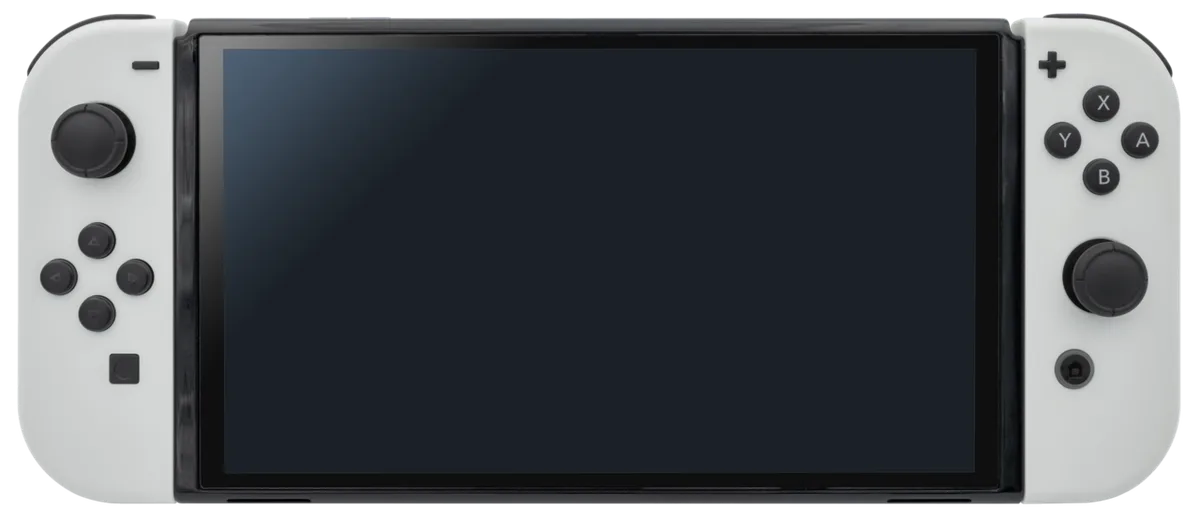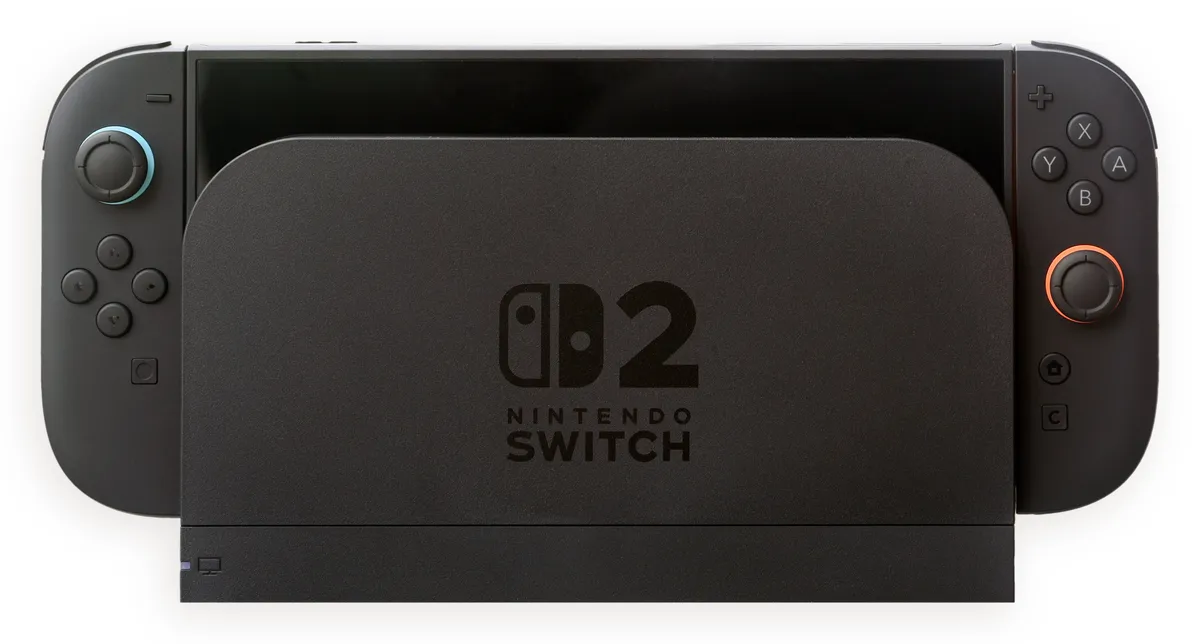
Pros
- Hybrid docked/handheld design still unmatched for couch-to-commute play
- 1080p handheld LCD with HDR10 and VRR up to 120Hz feels like a generation jump
- Joy-Con 2 magnetic attach plus mouse mode unlock new control ideas
- Strong first-party pipeline and deep Switch 1 backward compatibility
- GameChat and social features make multiplayer sessions stickier
Cons
- US MSRP jumped to $499.99 on Sept 1, 2026 — value math got harder
- Heavier than Switch OLED; battery still swings widely by title (about 2–6.5 hours)
- microSD Express-only storage means pricey expansion cards
- Not every Switch 1 game is confirmed compatible without patches or caveats
- LCD (not OLED) panel loses the deep blacks Switch OLED owners loved
This nintendo switch 2 review is written for buyers deciding in November 2026 — after launch day hype cooled and after Nintendo raised the US console MSRP from $449.99 to $499.99 on September 1, 2026. The Nintendo Switch 2 launched on June 5, 2025. Seventeen months later it is clearly Nintendo’s next-gen hybrid: a 7.9-inch 1080p LCD handheld that docks to up to 4K/60 or high-refresh 1080p/1440p output, powered by an Nvidia Tegra T239 with 12GB of LPDDR5X and 256GB of UFS storage. The question is no longer “what is it?” — it is is Switch 2 worth it at the new sticker price, and who should buy a bundle instead of the bare console.
If you only need a one-line answer: yes for Nintendo-first households and hybrid players, especially if you can land a fair bundle or sale; pause if you mainly want a PC handheld (compare our Switch 2 vs Steam Deck 2026 guide) or if the $500+ ask clashes with a thin game backlog.
Nintendo Switch 2 hybrid handheld — Wikimedia Commons
Quick Verdict (For Skimmers)
| Field | Detail |
|---|---|
| Maker | Nintendo |
| Launch | June 5, 2025 |
| US MSRP (Nov 2026) | $499.99 (raised from $449.99 on Sept 1, 2026) |
| Mario Kart World bundle | ~$549.99 |
| Sports Resort bundle | ~$529.99 |
| Screen | 7.9" 1080p LCD, HDR10, VRR up to 120Hz |
| Docked output | Up to 4K/60 or 1080p/1440p 120Hz |
| SoC / RAM / storage | Nvidia Tegra T239 · 12GB LPDDR5X · 256GB UFS |
| Expansion | microSD Express only |
| Battery (Nintendo range) | About 2–6.5 hours |
| NexReview score | 8.5/10 |
Buy it if you want Nintendo exclusives, seamless couch/handheld play, and a library that already includes most of your Switch 1 games. Skip it if you need Steam library freedom, OLED blacks at all costs, or a sub-$400 handheld — the Steam Deck OLED and Nintendo Switch OLED still own those niches.
What Is the Nintendo Switch 2?
Switch 2 is Nintendo’s successor to the original Switch family: same “play on the TV, then undock and leave” philosophy, rebuilt around a larger brighter panel, a much stronger Nvidia-derived chipset, magnetic Joy-Con 2 controllers, and social features like GameChat. It is not a Windows PC, not an Android tablet, and not a VR headset — though if you also want room-scale immersion, our Meta Quest 3S review covers that separate lane.
The hardware brief that matters for a serious switch 2 review:
- Display: 7.9-inch 1080p LCD with HDR10 and variable refresh up to 120Hz in supported handheld scenarios.
- Docked modes: up to 4K at 60Hz, or 1080p/1440p at 120Hz when a game and TV support that path.
- Chipset: Nvidia Tegra T239 with 12GB LPDDR5X.
- Storage: 256GB UFS onboard; expansion is microSD Express only (legacy microSD cards are not the upgrade path).
- Controls: Joy-Con 2 attach magnetically; mouse-style modes enable pointer and twin-stick hybrid input in supported software.
- Compatibility: most Switch 1 games play on Switch 2; not all titles are guaranteed without patches, performance notes, or edge-case exclusions.
That last bullet is critical. Marketing slides say “backward compatible.” Reality says “mostly, with a compatibility list you should check for your must-play catalog before you sell the old dock.”
Design, Weight, and Everyday Ergonomics
In the hand, Switch 2 feels like a grown-up Switch: wider panel, more substantial chassis, and a weight that exceeds the Switch OLED. If you loved one-handed subway sessions on the OLED, expect more wrist awareness on long flights. The magnetic Joy-Con 2 rails are a quality-of-life win — faster attach/detach, fewer “did I seat that correctly?” moments — and mouse mode is more than a novelty when a game supports precise pointer aiming or UI navigation.
Build quality is console-grade plastic with Nintendo’s usual durable-but-not-luxury vibe. Kickstand usability and grip comfort will vary by hand size; larger adult hands generally prefer Switch 2 to Switch Lite-class devices. Travel cases matter more now because the larger slab is less pocketable and more expensive to replace after a bag scratch.
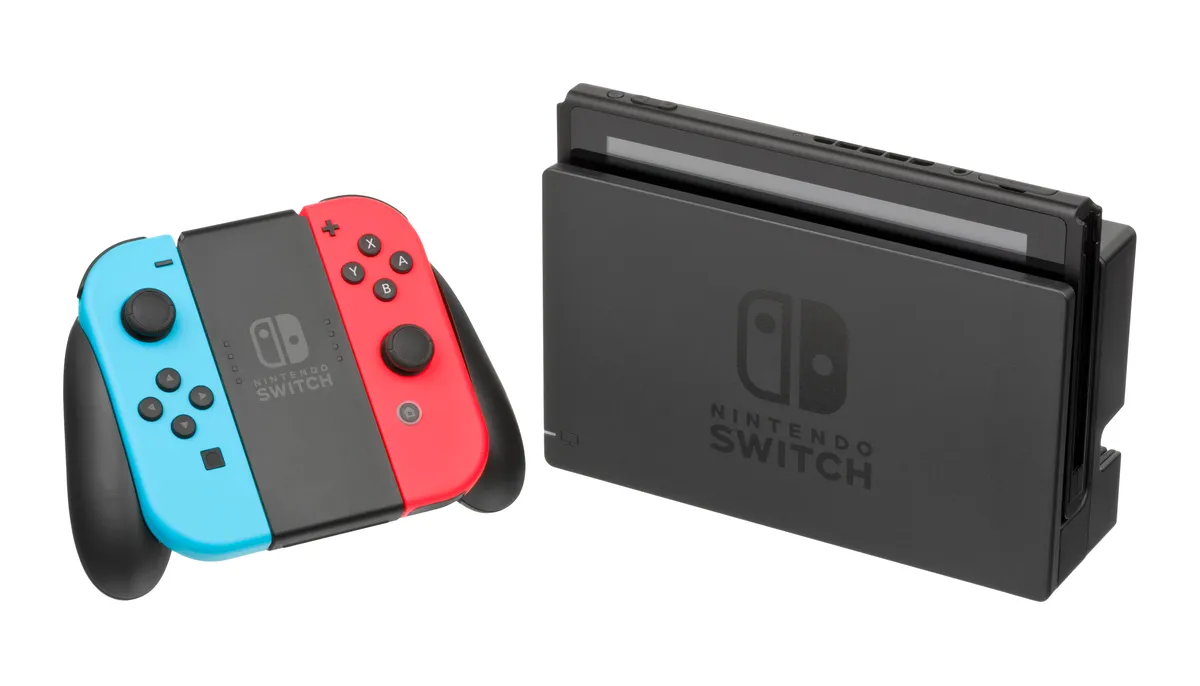
Handheld and docked living-room play — Wikimedia Commons
Display and Docked Output
The 7.9" 1080p LCD is the headline handheld upgrade versus original Switch and even versus OLED’s smaller footprint. Sharpness for UI text, map screens, and handheld third-person games is noticeably better. HDR10 helps highlight pops in supported titles. VRR up to 120Hz smooths frame pacing when developers target high refresh — competitive and platformer fans will feel it first.
Is it as contrast-rich as Switch OLED’s panel? No. Black levels and “cinema dark” scenes still favor OLED. If pure contrast is your religion, that is a real trade-off in this nintendo switch 2 review. For most hybrid play — bright trains, living rooms with lamps on, kids’ cartoons — the bigger sharper LCD wins more hours than it loses nights.
Docked, the story gets more interesting for TV owners. 4K/60 lets Nintendo’s showcase games look denser on modern sets without pretending this is a PS5 Pro competitor. 1080p or 1440p at 120Hz is the better path for fighting games, racers, and anything that values fluidity over pixel density. Match the dock setting to the game: chasing 4K on a title that prefers high frame rates is a self-own.
Performance: Tegra T239 in Real Games
The Nvidia Tegra T239 with 12GB LPDDR5X is the reason third-party ports finally stop looking like obligatory charity. Load times shrink versus Switch 1. Resolution and effects budgets rise. System stability in docked multiplayer nights feels closer to “modern console” than “tablet with dreams.”
That said, Switch 2 is still a power-efficient hybrid, not a desktop APU. Expect developers to ship dual profiles: handheld targets that protect battery and thermals, docked targets that spend the power budget on fidelity or frame rate. Fan noise exists under sustained docked load — quieter than many Windows handhelds, louder than a Switch Lite under a blanket.
If your mental model is “Steam Deck competitor,” read the dedicated Switch 2 vs Steam Deck 2026 comparison. Short version: Switch 2 wins exclusives, family shareability, and docked living-room polish; Deck wins open PC library, mods, and emulation flexibility.
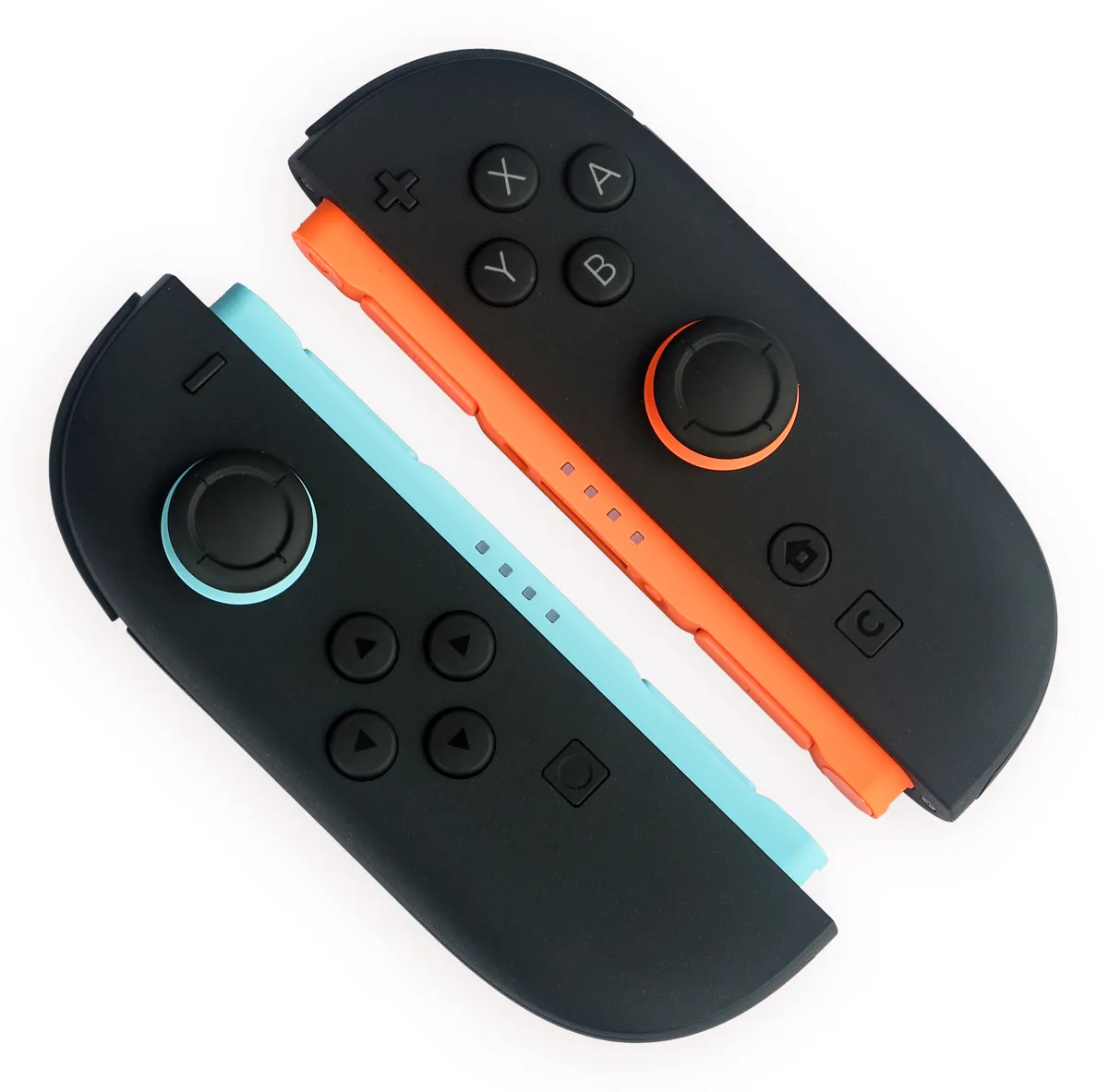
Performance, multiplayer, and Joy-Con 2 play — Wikimedia Commons
Battery Life: The Honest 2–6.5 Hour Range
Nintendo’s published handheld window of roughly 2 to 6.5 hours is not marketing fluff — it is a confession that battery life is title-dependent. Demanding docked-class visual targets pushed into handheld, max brightness, and high refresh will land near the bottom. Indiedoms, 2D platformers, and capped frame rates stretch toward the top.
Practical tips that actually move the needle:
- Cap brightness outdoors only when needed; indoor default should be moderate.
- Prefer 60Hz or capped FPS modes when a game offers them for travel days.
- Keep Joy-Con 2 charged; wireless controllers sip from the same outing budget if you undock them.
- Airplane mode when you are not using online features.
Compared with Steam Deck OLED, Switch 2’s efficiency story is better for Nintendo-native software and worse if you mentally expect “all-day AAA at max settings.” Nobody’s hybrid does that without compromises.
Storage, microSD Express, and Library Reality
256GB UFS sounds fine until you install a few modern first-party showcases, downloadable packs, and your Switch 1 backlog. Plan on a microSD Express card earlier than you think. Legacy microSD habits from Switch 1 do not transfer cleanly — Express is the supported expansion lane, and cards cost more. Budget storage the same way you budget the console: the sticker price is not the only spend.
Digital vs physical still matters. Physical carts help you rotate games without filling UFS, but Switch 2’s generation increasingly assumes downloads, patches, and online features. Keep 20–40GB free for updates so a Friday night party game does not brick itself mid-install.
Joy-Con 2, Mouse Mode, and GameChat
Magnetic Joy-Con 2 controllers reduce the fiddliness of the original rails and make pass-around multiplayer faster. Mouse mode is the sleeper feature: twin controllers as pointer devices open strategy UIs, creative tools, and aiming schemes that felt awkward on sticks alone. Not every launch title uses it brilliantly, but the hardware is ready when software catches up.
GameChat leans into social play — voice and presence features that make Switch nights feel less like isolated solo sessions and more like a living-room Discord without a PC. Families and friend groups benefit most. Hardcore competitive players may still prefer external headsets and Discord, but Nintendo’s first-party social layer is no longer an afterthought.
HD Rumble-style feedback, IR/camera accessories history, and Nintendo’s usual peripheral zoo continue in spirit: buy accessories after you know which genres you actually play weekly.
Software, Exclusives, and Backward Compatibility
Nintendo platforms live or die on software. Switch 2’s early and ongoing library strategy mixes enhanced ports, new flagship exclusives, and third-party titles that finally look respectable. The emotional sell is continuity: start a Switch 1 save culture on day one of ownership, then grow into Switch 2 showcases.
Backward compatibility covers most Switch 1 games, which is the single biggest retention feature Nintendo shipped. Still — not all titles are seamless. Before you trade in every cartridge, check:
- Games with unique peripherals or lab/camera requirements
- Online-only titles with server or account quirks
- Performance-sensitive multiplayer games awaiting patches
- Any title Nintendo lists with known issues
For VR-curious households, remember Switch 2 is not a Quest. Keep hybrid gaming on Switch 2 and headset experiments on Meta Quest 3S if that itch remains.
Switch 2 Price in November 2026: Bundles and Value Math
Price is the sore spot in this switch 2 review. Launch-era US pricing around $449.99 already sat above old Switch norms. On September 1, 2026, Nintendo raised the US MSRP to $499.99. Bundles soften the blow if you wanted the packed-in game anyway:
| Configuration | Approx. US street / MSRP context |
|---|---|
| Switch 2 console | $499.99 MSRP |
| Mario Kart World bundle | ~$549.99 |
| Sports Resort bundle | ~$529.99 |
Is Switch 2 worth it at $500? For a Nintendo household with three players and a backlog of first-party must-plays: still yes, because the alternative is missing the platform where those games live. For a solo buyer who already owns Switch OLED and only plays indie carts: maybe wait for a retailer bundle discount, a refurbished unit, or a holiday promo. Value score in our rubric (7.3) is the lowest category score precisely because the September hike compressed the “easy recommend” zone.
Do not ignore total cost of ownership: Express storage, online membership, and $70-class software add up. The Mario Kart World bundle ($549.99) often beats buying console + game separately if that title is your day-one priority. Sports Resort ($529.99) is the party-household pick.
Nintendo Switch 2 vs Alternatives
| Device | Best for | Choose instead when… |
|---|---|---|
| Switch 2 | Nintendo exclusives + hybrid dock/handheld | You want first-party Nintendo and couch multiplayer |
| Switch OLED | Cheaper Nintendo library + OLED blacks | Budget is tight and Switch 2 exclusives can wait |
| Steam Deck OLED | Steam library, mods, emulation | Your backlog is PC-first |
| Meta Quest 3S | VR fitness and immersive rooms | You specifically want headset gaming |
Deep dive: Switch 2 vs Steam Deck 2026.
Who Should Buy Switch 2 (and Who Should Skip)
Perfect For
- Families and friend groups that rotate Mario Kart, party games, and couch co-op
- Travelers who want one device for hotel TVs and airplane mode sessions
- Switch 1 owners whose backlog is mostly compatible and who want sharper handheld play
- Players excited by Joy-Con 2 mouse mode and GameChat social features
- Anyone standardized on Nintendo accounts, parental controls, and eShop gift-card culture
Skip (For Now) If
- Your primary library is Steam/Epic and you rarely touch Nintendo exclusives
- You refuse LCD after living on Switch OLED’s contrast
- $499.99 (+ storage + games) breaks the budget and no bundle discount is in sight
- You need guaranteed compatibility for a niche Switch 1 title that is not cleared yet
- You want a Windows handheld for desktop modes, browsers, and sideloading everything
Pros and Cons
| Pros | Cons |
|---|---|
| True hybrid docked/handheld lifestyle | $499.99 US MSRP after Sept 2026 hike |
| 7.9" 1080p HDR10 + VRR up to 120Hz | Heavier than Switch OLED |
| Tegra T239 + 12GB RAM lifts ports and exclusives | Battery swings ~2–6.5 hours |
| Magnetic Joy-Con 2 + mouse mode | microSD Express cards are pricey |
| Most Switch 1 games carry forward | Not 100% compatibility |
| GameChat strengthens social play | LCD lacks OLED deep blacks |
FAQ
What is the Nintendo Switch 2 launch date?
June 5, 2025.
What is the Switch 2 price in the US now?
Console MSRP is $499.99 as of the September 1, 2026 increase (up from $449.99). Mario Kart World bundles are about $549.99; Sports Resort bundles about $529.99. Street prices vary by retailer.
Is Switch 2 worth it in 2026?
Yes if Nintendo exclusives and hybrid play matter to you. The value case is weaker after the hike — hunt bundles or sales if you are price-sensitive.
What are the core Switch 2 specs?
7.9" 1080p LCD with HDR10 and VRR up to 120Hz; docked up to 4K/60 or 1080p/1440p 120Hz; Nvidia Tegra T239; 12GB LPDDR5X; 256GB UFS; microSD Express expansion.
How long does the Switch 2 battery last?
Nintendo’s range is roughly 2–6.5 hours depending on game, brightness, and performance mode.
Does Switch 2 play Switch 1 games?
Most of them, yes. Not all titles are guaranteed without caveats — verify your must-play list.
Switch 2 vs Steam Deck OLED?
Switch 2 for Nintendo software and living-room hybrid polish; Deck for PC libraries. See Switch 2 vs Steam Deck 2026 and our Steam Deck OLED review.
Should I keep my Switch OLED?
Optional. Many owners sell or gift the OLED after migrating saves, but keeping it as a kid/travel secondary can still make sense — especially for OLED contrast lovers. Read the Nintendo Switch OLED review if you are choosing between staying put and upgrading.
Is the LCD a dealbreaker vs OLED?
Only if contrast is your top priority. Most players adapt quickly to the larger sharper handheld panel.
Do I need microSD Express immediately?
If you install more than a handful of modern titles plus your backlog, yes — budget an Express card early.
Final Verdict
Seventeen months after launch, this nintendo switch 2 review lands at 8.5/10. The hybrid idea is still Nintendo’s superpower: a 7.9" 1080p HDR10 handheld that docks into serious TV modes, magnetic Joy-Con 2 controllers with mouse tricks, GameChat for social glue, and a software ecosystem that most living rooms actually finish. Tegra T239 and 12GB of LPDDR5X make the generation feel real. The September 2026 US price hike to $499.99, the heavier chassis, Express-only storage costs, and imperfect Switch 1 compatibility keep it from a higher score.
If you asked “is Switch 2 worth it?” as a Nintendo household in November 2026: buy the configuration that includes the game you will play weekly — often the Mario Kart World or Sports Resort bundle — and treat storage as part of the sticker. If you asked as a PC handheld shopper: compare Deck first. Switch 2 is not trying to be everything. It is trying to be the best Nintendo hybrid yet — and on that narrower mission, it succeeds.
Score: 8.5/10 — Best Living-Room-Plus-Handheld Hybrid in 2026