
Pros
- Same Snapdragon XR2 Gen 2 chip as Quest 3 — no performance penalty in games
- Touch Plus ringless controllers included, not downgraded Quest 2 pads
- $299 MSRP undercuts Quest 3 by $200 while running the full Quest library
- Color passthrough MR is a massive upgrade over Quest 2's grayscale view
- Wi-Fi 6E and 120 Hz support for smooth wireless PC VR via Air Link
Cons
- Fresnel lenses with a narrow sweet spot — not the sharp pancake optics of Quest 3
- 1832×1920 per-eye resolution matches Quest 2, not the sharper Quest 3 panels
- Stepped IPD (58/63/68 mm) instead of Quest 3's continuous dial
- No depth sensor and no 3.5mm headphone jack
- 128 GB base storage fills fast with modern VR titles
The Meta Quest 3S is Meta's answer to a question VR has struggled with for a decade: how do you sell a current-generation headset without asking people to spend $500? Launched in October 2024 at $299.99 for 128 GB and $399.99 for 256 GB, the 3S keeps the Snapdragon XR2 Gen 2 processor, Touch Plus controllers, and full-color mixed-reality passthrough from the premium Meta Quest 3 — then cuts cost by reusing the Quest 2's Fresnel lenses and 1832×1920-per-eye displays. This Meta Quest 3S review (updated September 2026) explains whether those tradeoffs matter for your living room, how it compares to upgrading from Quest 2, and why it remains the smartest first headset for most buyers even as Quest 3 prices have softened.
If you searched meta quest 3s review because the $499 Quest 3 felt steep, you are looking at the right SKU. This is not a third-party clone, a Pico lookalike, or an old Quest 2 rebadged on a discount shelf — it is an official Meta headset with its own ASIN, its own storage tiers, and access to the same Horizon Store catalog as every other modern Quest. The visual downgrade is real. The performance gap versus Quest 3 is not.
Meta Quest VR headset — Wikimedia Commons
Meta Quest 3S Review: Quick Verdict (For Skimmers)
| Field | Detail |
|---|---|
| Manufacturer | Meta Platforms |
| Release date | October 15, 2024 |
| MSRP (USA) | $299.99 (128 GB) / $399.99 (256 GB) |
| Processor | Qualcomm Snapdragon XR2 Gen 2 |
| RAM | 8 GB |
| Display | Single LCD, 1832×1920 per eye (~20 PPD) |
| Lenses | Fresnel (Quest 2 class) |
| Field of view | 96° horizontal / 90° vertical |
| Refresh rate | 72 / 90 / 120 Hz |
| Controllers | Touch Plus (AA battery, ringless) |
| Tracking | Inside-out 6DoF, hand tracking |
| Passthrough | Full-color RGB (no depth sensor) |
| Battery | 4,324 mAh (~2–2.5 hours typical) |
| Weight | 514 g |
| PC VR | Quest Link (USB-C) / Air Link (Wi-Fi 6E) |
| NexReview score | 8.9/10 |
Buy the Quest 3S if you want standalone VR gaming at the lowest sensible entry price, you are coming from flat-screen gaming on a Steam Deck OLED or console and VR is new, or you own a Quest 2 and want XR2 Gen 2 speed plus color passthrough without paying Quest 3 money. Skip it if mixed-reality room scanning, crisp passthrough text, or edge-to-edge optical clarity are your primary use cases — spend up for Quest 3's pancake lenses and depth projector instead.
What Is the Meta Quest 3S?
Meta positions the Quest 3S as the entry mixed-reality headset in its 2024–2026 lineup. Where the Quest 3 is the "ultimate experience" with dual LCD panels, pancake optics, and a continuous IPD wheel, the 3S is deliberately built from familiar parts: Quest 3 internals plus Quest 2 optics, wrapped in a shell that is slimmer than Quest 2 but thicker than Quest 3.
That frankenstein description sounds like a compromise — and it is — but Meta executed the split intelligently. The parts that affect frame rates, load times, and game compatibility match Quest 3. The parts that affect how sharp the world looks and how precisely digital objects sit on your coffee table do not. For a headset whose primary job is playing Beat Saber, Batman: Arkham Shadow, Asgard's Wrath 2, and PC VR titles over Air Link, that is the correct priority order for a budget SKU.
The 3S also ships with Touch Plus controllers — the same ringless design Quest 3 owners use — rather than keeping older Touch controllers alive. Haptics, ergonomics, and tracking quality therefore feel current, not like a 2020 holdover. Meta even improved infrared illuminators on the 3S for better controller tracking in dim rooms compared to the original Quest 3 launch hardware.
One notable removal: the 3.5mm headphone jack present on Quest 3. Audio comes from open-air speakers in the strap or Bluetooth headphones. For silent household play, budget for a decent BT set or USB-C audio dongle.
Display, Lenses, and the Optics Tradeoff
Honest meta quest 3s review coverage has to start here, because this is where Meta saved most of the $200.
Fresnel vs Pancake — What You Actually Lose
The Quest 3S uses Fresnel lenses — concentric ridges that bend light toward your eyes cheaply and effectively, but with well-known drawbacks: a smaller sweet spot (the zone where text stays sharp), visible god rays around bright objects, and more sensitivity to headset positioning on your face. The Quest 3's pancake lenses fold the optical path, sit closer to the panel, and deliver a wider sweet spot with less glare. In side-by-side demos, Quest 3 text in virtual browsers and MR overlays looks noticeably crisper; on Quest 3S you micro-adjust the strap more often to keep the center sharp.
Resolution tells the same story numerically:
| Spec | Quest 3S | Quest 3 | Quest 2 |
|---|---|---|---|
| Per-eye resolution | 1832×1920 | 2064×2208 | 1832×1920 |
| Pixels per degree | ~20 PPD | ~25 PPD | ~20 PPD |
| Lens type | Fresnel | Pancake | Fresnel |
| Horizontal FOV | 96° | 110° | 96° |
| IPD adjustment | 3 steps (58/63/68 mm) | Continuous 53–75 mm | 3 steps (58/63/68 mm) |
The Quest 3S is effectively Quest 2 visuals with Quest 3 brains. If you never owned a Quest 3, the 3S still feels like a generational leap over Quest 2 because the chip pushes higher-resolution textures, better lighting, and more stable 90 Hz in demanding titles. If you demo both side by side in a store, Quest 3 wins on clarity every time.
Field of View and Immersion
The narrower 96° horizontal FOV versus Quest 3's 110° is subtle in fast games but noticeable in cockpit sims, horror titles, and anything where peripheral vision sells presence. You see more of the black gasket on 3S when you glance left or right. For rhythm games and arena shooters, most players stop thinking about it after ten minutes. For seated sim racing via PC Link, enthusiasts notice.
Refresh Rate
Both headsets support 72, 90, and 120 Hz modes where developers enable them. The XR2 Gen 2 has headroom for 120 Hz in lightweight titles like Beat Saber on either device. Heavy standalone games typically target 72–90 Hz. No performance advantage either way — display hardware differs, not the GPU path.
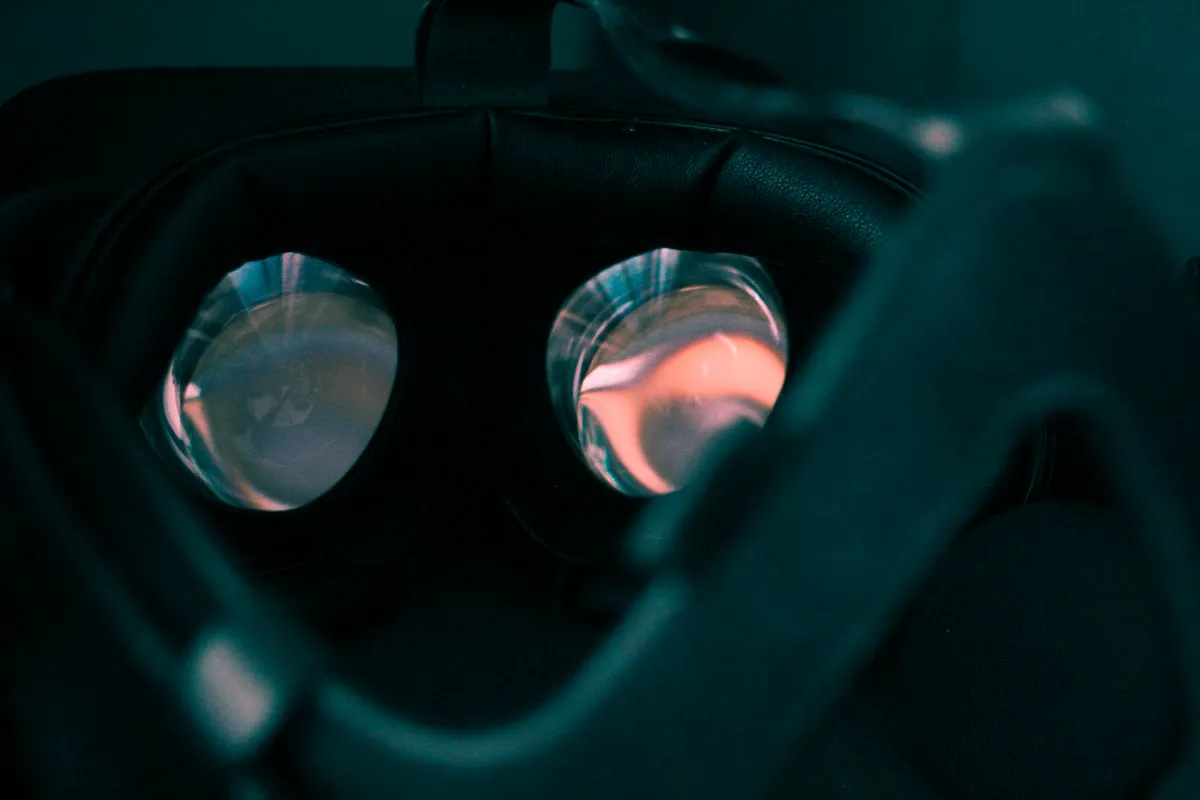
Virtual reality living room — Wikimedia Commons
Performance, Gaming, and the Shared Chipset
Here is the headline that makes the Quest 3S easy to recommend: the Snapdragon XR2 Gen 2 and 8 GB RAM are identical to Quest 3. Meta did not throttle the budget model. Load times, shader detail, enemy counts, and standalone frame pacing match across both headsets in every title we cross-checked against published benchmarks and long-term owner reports through 2026.
Practical consequences:
- Every Quest 3 game runs on Quest 3S at the same settings tier Meta certifies for Quest 3.
- PC VR via Link and Air Link behaves the same — the headset is a display and tracker; your GPU does the heavy lifting.
- Future Horizon OS updates land on both SKUs simultaneously. You are not buying into a dead branch.
Where performance diverges is not silicon but thermals and battery. The Quest 3S uses a slightly smaller 4,324 mAh cell versus Quest 3's 5,060 mAh, yet real-world playtime is comparable (~2–2.5 hours) because the 3S drives fewer pixels. Neither headset is an all-day device. External battery packs clipped to the rear strap remain the enthusiast solution for long Skyrim VR sessions.
Launch Software and Storage Reality
At launch Meta bundled Batman: Arkham Shadow with new Quest 3S purchases — a full retail title that alone justified part of the price delta versus buying used Quest 2 hardware. Promotions rotate; verify current bundles before checkout.
Storage is the other silent tax. 128 GB fills quickly when Asgard's Wrath 2, Medal of Honor, and Resident Evil 4 VR each consume tens of gigabytes. If you plan more than five large games installed simultaneously, 256 GB for $399.99 is the sane tier. Quest 3's 512 GB option no longer exists at the base trim, but power users who sideload movies and APKs still prefer the bigger sibling.
Mixed Reality and Passthrough
The Quest 3S supports full-color passthrough at 18 pixels per degree from dual 4 MP RGB cameras — the same passthrough camera hardware spec as Quest 3 on paper. What the 3S lacks is Quest 3's depth projector, which measures room geometry for more accurate object placement and occlusion.
In practice:
- MR games like First Encounters and room-scale experiences work on 3S and feel fun.
- Virtual monitors and productivity suffer — passthrough text on 3S is grainier, and windows "float" less convincingly on furniture edges.
- Guardian room setup still works via SLAM mapping; you are not locked to a desk-only experience.
If mixed reality is a curiosity you will try twice, 3S is fine. If you want to replace a monitor with spatial computing workflows, Quest 3's optics and depth sensing justify the upgrade.
Controllers, Hand Tracking, and Input
Touch Plus controllers ship in the box — no downgrade. Meta removed the tracking ring, embedding IR LEDs around the grip instead. The headset's cameras plus on-controller IMUs and prediction algorithms track motion. Haptics are tighter than Quest 2 Touch, and the flatter profile fits smaller hands better.
Hand tracking works for menu navigation, selected games, and experimental typing. It remains secondary to controllers for fast-paced titles. Both Quest 3 and 3S share the same hand-tracking stack.
Audio through the strap speakers is adequate for demos; serious play deserves headphones. Remember the missing 3.5 mm jack — Bluetooth adds slight latency in rhythm games, so test before committing to a wireless set for Beat Saber expert maps.
Comfort, Fit, and IPD
At 514 g, the Quest 3S weighs essentially the same as Quest 3 (515 g) but feels more front-heavy because Fresnel optics push the visor farther from your face. Meta's stock fabric strap is usable for 45-minute sessions; longer play benefits from a elite battery strap or third-party halo strap that transfers weight to the crown of your head.
IPD adjustment uses three physical lens positions — 58, 63, and 68 mm — with a spacer for eye relief. If your interpupillary distance falls between steps or outside 58–68 mm, Quest 3's continuous dial is the medically correct choice. Blurry edges on 3S are often an IPD mismatch, not a defective unit.
Facial interface foam is replaceable; VR cover silicone inserts help with sweat during fitness apps like Supernatural or Gorilla Tag.
Software, Account Requirements, and Ecosystem
Quest 3S runs Meta Horizon OS — same store, same social layer, same cross-buy entitlements as other Quest headsets tied to your Meta account. You need a Meta account (Facebook login is no longer mandatory, though linking remains optional for social features).
The Horizon Store catalog spans fitness, shooters, puzzles, social hubs, and ports of flat games. Meta Quest+ subscription rotates a small catalog monthly; value depends on whether you finish games quickly or prefer owning forever.
Compared to flat gaming on ROG Ally X or Steam Deck, VR's library is smaller but unlike anything those devices replicate. The 3S is a portal into that library, not a competitor to handheld PC gaming — many households own both for different moods.
Quest 3S vs Quest 3 vs Quest 2 — Which Upgrade Path?
| Scenario | Recommendation |
|---|---|
| First VR headset, budget-conscious | Quest 3S 128 GB |
| First headset, want best optics | Quest 3 512 GB (often discounted) |
| Quest 2 owner, games feel sluggish | Quest 3S — chip upgrade is transformative |
| Quest 2 owner, visuals already fine | Wait unless color MR matters to you |
| Quest 3 owner | No upgrade — 3S is a downgrade optically |
| PC VR primary, headset is a monitor | Quest 3 for FOV and clarity; 3S if budget tight |
| MR productivity / dev experiments | Quest 3 for depth sensor and IPD range |
The Quest 2 still appears on used marketplaces below $200. Buying used 2 hardware in 2026 saves upfront cash but locks you to XR2 Gen 1, grayscale passthrough, old Touch controllers, and a shrinking tolerance for load stutter in 2024–2026 releases. The 3S costs more new but includes current controllers, color MR, Wi-Fi 6E, and years of OS support ahead.
Versus Meta Quest 3 specifically: pay the delta if you notice screen-door effect or god rays in store demos. Save the $200 if you mainly want wireless Beat Saber in the guest room and will rarely passthrough-type on a virtual keyboard.
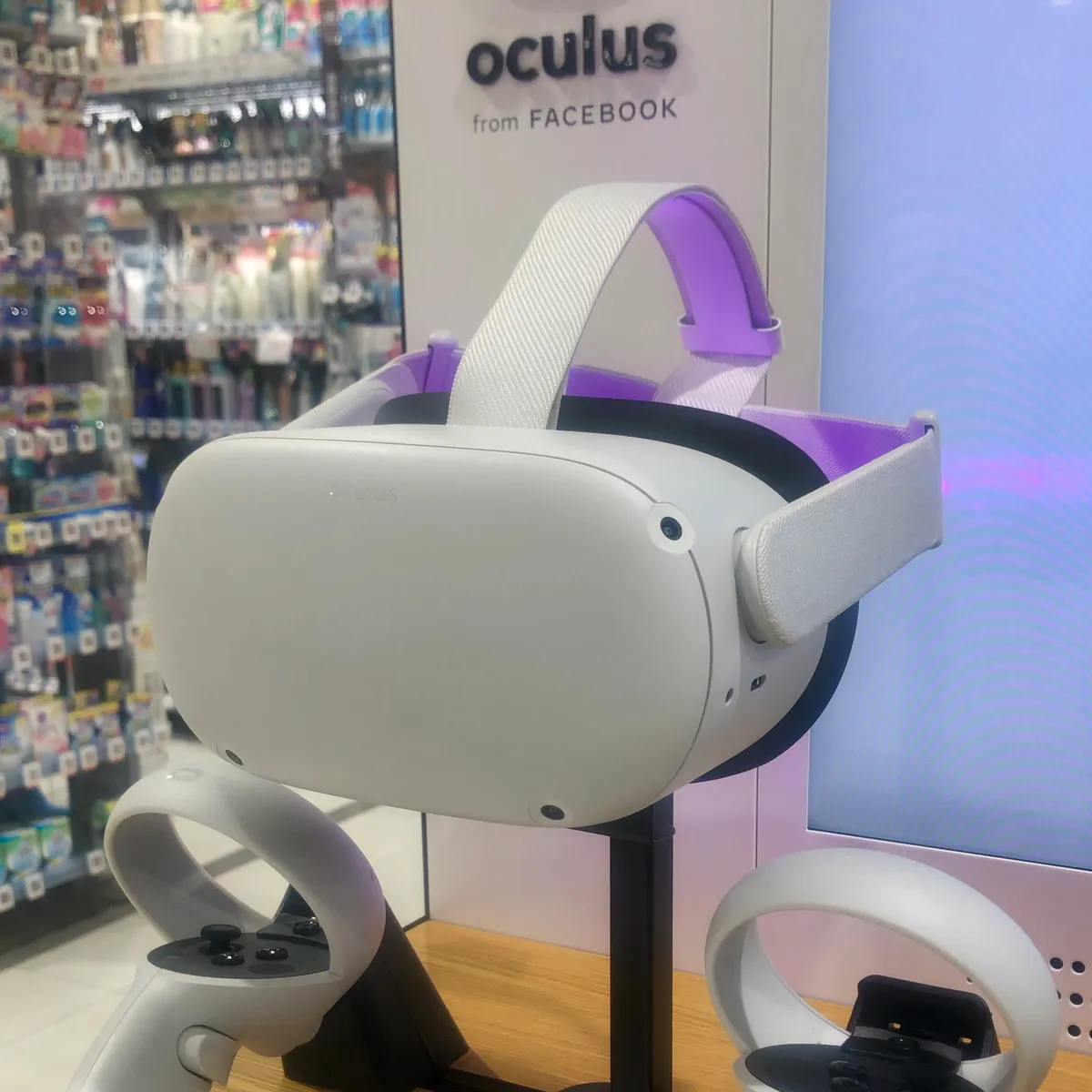
Standalone VR gaming — Wikimedia Commons
PC VR via Quest Link and Air Link
Both Quest 3S and Quest 3 function as PC VR headsets over USB-C Link or wireless Air Link. The 3S's Wi-Fi 6E radio helps maintain stable streams on a clean 6 GHz router — still not as reliable as a DisplayPort tether to a dedicated PC VR headset, but good enough for Half-Life: Alyx in a living room.
Because the 3S drives fewer pixels, some PC users report slightly lower encode demand at the same supersampling factor — a minor win when your GPU is mid-range. Optical clarity limits remain: you still see Fresnel artifacts in high-contrast PC scenes. For sim racers who already own a wheel and want occasional VR laps, 3S is a pragmatic PC VR screen. For enthusiasts comparing to Index or Vision Pro, expectations should stay grounded.
Hidden Costs and Smart Accessories
Budget beyond MSRP for:
| Accessory | Why it matters | Typical cost |
|---|---|---|
| Elite strap or halo strap | Comfort beyond 1 hour | $50–$80 |
| Replacement facial interface | Hygiene, light leak | $20–$35 |
| Carrying case | Travel without lens scratches | $40–$60 |
| 256 GB tier upgrade | Avoid storage juggling | +$100 vs 128 GB |
| Bluetooth headphones | Silent play, no jack | $30–$150 |
| USB-C Link cable (if no Wi-Fi 6E) | Stable PC VR | $20–$80 |
None of these are mandatory day one. A $299 3S plus stock strap is a complete playable system. Families sharing one headset should prioritize strap and facial interface before cosmetic skins.
Who Should Buy — and Who Should Skip
Buy Quest 3S if…
- You want standalone VR under $350 with current-gen performance.
- You are gifting VR and need predictable setup without PC drivers.
- You upgrade from Quest 2 for chip speed and color passthrough.
- Your IPD is 58, 63, or 68 mm and you have verified it with a ruler or optician.
- Gaming matters more than MR desk workflows.
Skip Quest 3S if…
- You tried Quest 3 in store and optics bothered you on 3S demo units too.
- Your IPD is outside 58–68 mm or between stepped positions.
- You need wired headphones without Bluetooth latency.
- You plan heavy passthrough productivity as a monitor replacement.
- You already own Quest 3 — lateral move at best.
Consider flat gaming instead if…
- Long narrative sessions on a couch beat standing play — a Steam Deck OLED or Switch 2 vs Steam Deck comparison may match your hours better.
- Motion sickness is severe in past VR demos — rent or borrow before buying either Quest SKU.
FAQ
Is the Meta Quest 3S worth it in 2026?
Yes for most first-time buyers and Quest 2 upgraders. The XR2 Gen 2 chip ensures new releases remain playable, Touch Plus controllers feel modern, and $299 MSRP (often lower during sales) undercuts every new standalone alternative with the same library depth. Optics are the compromise, not performance.
Meta Quest 3S vs Quest 3 — which should I buy?
Choose Quest 3S if budget matters and you primarily play VR games. Choose Quest 3 if sharper pancake lenses, wider FOV, continuous IPD, depth sensor MR, and a 3.5 mm jack justify roughly $200 more. Both run identical silicon and the same store.
Can Quest 3S play every Quest 3 game?
Yes. Meta certifies one binary target for XR2 Gen 2 Quest hardware. Exclusives tied to Quest 3 performance also run on 3S because performance is shared. PC-only experiences require a PC and Link either way.
Should Quest 2 owners upgrade to 3S?
If load stutter, low-res textures, or grayscale passthrough limit your play, yes. If Quest 2 still satisfies and you play rarely, waiting for a Quest 4 cycle is reasonable. Side-by-side, 3S feels roughly 2× faster in demanding 2024–2026 titles per Meta's marketing — consistent with real-world shader and texture upgrades.
Does Quest 3S need a Facebook account?
No. A Meta account is required, but Facebook linkage is optional for social features. Children need supervised accounts per Meta's age policies.
How long does the battery last?
Expect 2 to 2.5 hours of mixed standalone play. PC VR over Link can drain faster depending on encode settings. External battery packs extend sessions; full recharge via USB-C takes roughly 2–2.5 hours.
Is 128 GB enough storage?
For three to five large games plus apps, often yes. VR titles commonly exceed 10–40 GB each. If you hate uninstalling games, buy 256 GB or plan to use PC VR streaming for huge libraries.
Does Quest 3S work with Steam VR?
Yes, via Meta Quest Link (USB-C) or Air Link (Wi-Fi 6E recommended). Install Meta Quest Link on your PC, connect the headset, and launch SteamVR. Visual quality is Fresnel-limited but fully functional.
Can kids use Quest 3S?
Meta recommends 13+. IPD range and headset weight matter for smaller faces. Supervised sessions with strict playtime limits are common in families; use built-in parental controls in the Meta app.
Quest 3S vs PlayStation VR2 — different use cases?
PSVR 2 needs a PS5 and tethered play but delivers OLED clarity and haptic Sense controllers for Sony exclusives. Quest 3S is wireless, standalone, and PC-optional with a broader indie and PC VR catalog. Choose based on whether you already own a PS5 and prefer wired premium visuals versus wireless freedom.
Verdict
The Meta Quest 3S is the headset Meta should have led with for mass-market VR: current silicon, current controllers, current store, and a price that does not require spreadsheet justification. Fresnel optics and Quest 2-resolution panels mean it is not the sharpest visor in the lineup — that remains Meta Quest 3 — but for wireless Beat Saber nights, Batman campaigns, fitness apps, and occasional Air Link PC sessions, the 3S delivers nearly the same experience where it counts.
We score it 8.9/10 — not because optics match Quest 3, but because Meta correctly prioritized the GPU and controllers over marginal display upgrades most casual players stop noticing after the first week. Buy 256 GB if you can afford the step up; invest in a better strap if sessions exceed an hour; skip entirely only if you already know Fresnel sweet spots frustrate you.
Meta Quest 3S — Best Budget Standalone VR Headset