Pros
- Honest split between Nintendo-first and PC-first buyers
- Covers September 2026 Switch 2 and May Steam Deck price changes
- Library and backward-compatibility trade-offs explained without fan wars
- Docked play, battery, and screen differences framed for real households
Cons
- Street prices and stock shift weekly — verify carts before checkout
- Proton compatibility and Switch backward-compat lists evolve per title
- Does not replace our full single-device deep dives
Choosing between Switch 2 vs Steam Deck in 2026 is not a spec-sheet duel between two identical product categories. Nintendo’s Switch 2 is a dedicated hybrid console built around first-party franchises, Joy-Con 2, and a curated eShop. Valve’s Steam Deck OLED is a handheld PC running SteamOS — your existing Steam library, Proton translation, Desktop Mode, and optional tinkering. This switch 2 vs steam deck 2026 guide is for buyers standing at checkout in September 2026, after both companies raised prices citing global memory shortages, and wondering which portable actually fits their shelf, their backlog, and their tolerance for setup.
If you already read our Steam Deck OLED review or want a Windows-handheld alternative, see Steam Deck vs ROG Ally (2026) for the PC-only fight. Here we compare Nintendo’s console against Valve’s handheld — two real products from two real companies, not lookalike Android clones or random “handheld PC” rebadges.
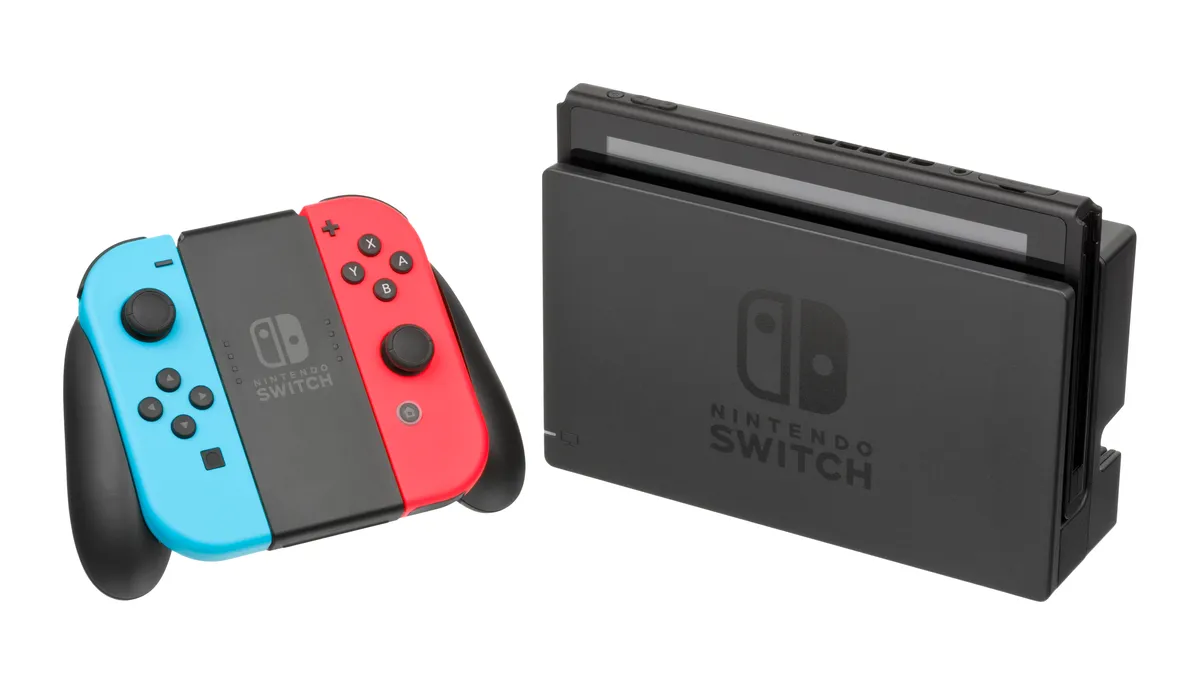
Nintendo Switch handheld — photo via Wikimedia Commons
Switch 2 vs Steam Deck Quick Picks (2026)
| If you want… | Buy | Why |
|---|---|---|
| Mario, Zelda, Pokémon, and Nintendo-only design | Switch 2 | Exclusives and hybrid TV/handheld flow no PC handheld replicates |
| Your existing Steam library portable | Steam Deck OLED | No rebuying; Verified/Playable labels and ProtonDB for edge cases |
| Simplest “turn on and play” experience | Switch 2 | Console OS, physical carts, family-friendly sharing |
| Mods, emulators, non-Steam launchers | Steam Deck OLED | Desktop Mode and PC openness within legal bounds |
| Sharpest handheld panel for HDR dark scenes | Steam Deck OLED | True OLED contrast, ~1000-nit HDR peak |
| Sharpest UI and 1080p native handheld | Switch 2 | 7.9-inch 1080p LCD at up to 120 Hz with VRR |
| Lowest MSRP between the two (Sept 2026) | Switch 2 | $499.99 vs $789 Deck OLED 512GB |
| Best docked 4K living-room output | Switch 2 | Official dock targets 4K at 60 fps; Deck is 1080p/1440p-class docked |
| Skip both if… | You hate handheld compromises | A PS5, Xbox, or desktop PC may serve you better |
NexReview editorial score for this comparison: 9.0/10 as a buying framework — not a single-device score.
What Each Device Actually Is (No Category Confusion)
Search traffic for switch 2 vs steam deck 2026 often treats them as interchangeable “handheld gaming machines.” They overlap in form factor — screen, sticks, battery, couch play — but not in platform economics.
Nintendo Switch 2 (codename Ounce) launched June 5, 2025 as Nintendo’s successor hybrid. It plays Switch 2-native titles, upgraded “Switch 2 Edition” releases, and compatible physical and digital Switch games carried forward through your Nintendo Account. It is not a Windows PC. You buy Nintendo eShop games, subscribe to Nintendo Switch Online for retro libraries and online play, and live inside Nintendo’s ecosystem.
Steam Deck OLED is Valve’s current retail handheld — LCD models discontinued in late 2025. It runs SteamOS 3 on a semi-custom AMD “Sephiroth” APU (Zen 2 CPU, RDNA 2 GPU, 4–15 W TDP). You log into Steam; Proton runs many Windows-only titles. Desktop Mode opens KDE Plasma for browsers, emulators, and experimental dual-boot. It is a PC that happens to be shaped like a console.
That distinction drives every row in the comparison tables below.
2026 Pricing — Memory Shortages Hit Both Sides
For most of 2025, the price story favored Valve on paper: Switch 2 at $449.99 launch MSRP versus Steam Deck OLED 512GB at $549. By September 2026, both lines moved upward — and the gap widened in Nintendo’s favor on sticker price, even as the Deck’s PC library remains the better long-term value for Steam owners.
Nintendo Switch 2 (September 2026)
Nintendo announced a global price revision on May 8, 2026, citing market conditions expected to persist medium-to-long term. In the United States:
| Configuration | Old MSRP | Sept 2026 MSRP | Change |
|---|---|---|---|
| Switch 2 (standard) | $449.99 | $499.99 | +$50 (~11%) |
| Effective date | — | September 1, 2026 | — |
Japan’s increase took effect earlier (May 25, 2026). Canada and most of Europe matched the September 1 date ($679.99 CAD / €499.99). Nintendo confirmed no spec changes alongside the hike — same 256 GB storage, same dock, same Joy-Con 2 pair.
Steam Deck OLED (May 2026)
Valve raised OLED pricing on May 27, 2026, also blaming memory and storage costs:
| Model | Old MSRP | May 2026 MSRP | Change |
|---|---|---|---|
| Steam Deck OLED 512GB | $549 | $789 | +43% |
| Steam Deck OLED 1TB | $649 | $949 | +46% |
Refurbished OLED units sometimes appear at $629 (512GB) or $759 (1TB) when stock returns — worth monitoring before paying full MSRP. LCD refurb tiers ($279–$359) still exist intermittently but are not the product Valve actively sells new.
What the Price Crossover Means
As of September 2026, a new Switch 2 costs $289 less than the cheapest new Steam Deck OLED — roughly 37% cheaper on MSRP alone. That reverses the old “Deck is the budget option” meme from the original Switch-vs-Deck era.
However, total cost of ownership depends on your library:
- Steam backlog owners: Deck reuses purchases; Switch 2 requires buying Nintendo titles at console prices.
- Nintendo Switch upgraders: Switch 2 carries compatible carts and digital licenses forward — a migration, not a full rebuy.
- Neither-library buyers: Switch 2’s lower hardware MSRP looks attractive until you price Mario Kart World, Zelda, and online subscriptions.
Do not assume cheaper hardware equals cheaper gaming. Do assume both companies will keep adjusting MSRP if component markets stay tight — verify live carts the day you buy.
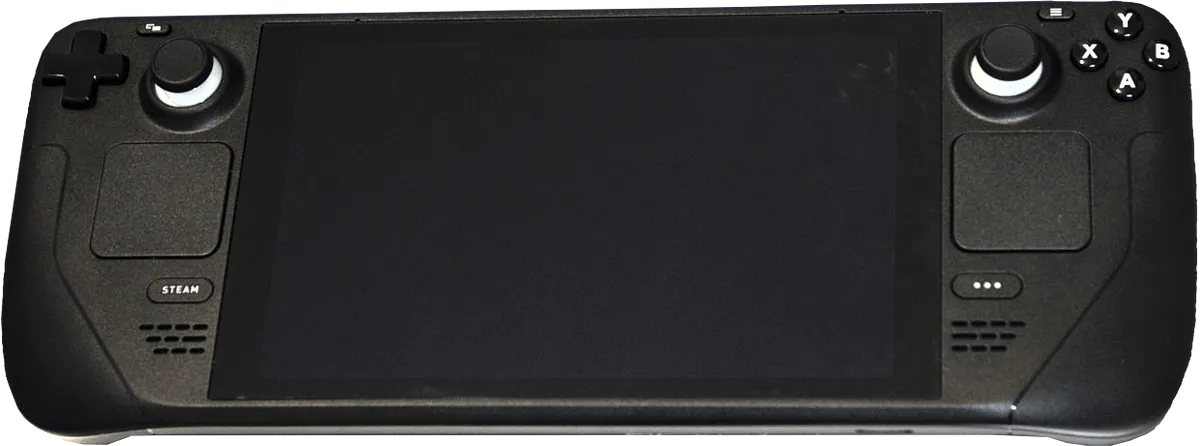
Valve Steam Deck handheld — photo via Wikimedia Commons
Full Specs — Switch 2 vs Steam Deck OLED
| Spec | Nintendo Switch 2 | Steam Deck OLED |
|---|---|---|
| Release | June 5, 2025 (global rollout through 2025–2026) | OLED revision; LCD discontinued late 2025 |
| Platform | Nintendo console (custom OS) | Handheld PC (SteamOS / Linux) |
| SoC | Nvidia Tegra T239 (custom) | AMD Sephiroth APU, 6 nm (Zen 2 + RDNA 2) |
| RAM | 12 GB LPDDR5X | 16 GB LPDDR5 @ 6400 MT/s |
| Storage | 256 GB UFS 3.1 + microSD Express | 512 GB or 1 TB NVMe + microSD UHS-I |
| Display | 7.9" LCD, 1920×1080, up to 120 Hz, HDR10, VRR | 7.4" OLED, 1280×800, up to 90 Hz, HDR |
| Peak brightness | HDR-capable LCD (Nintendo spec) | ~1000 nits HDR / ~600 nits SDR (Valve spec) |
| Handheld resolution | Native 1080p | Native 800p (1280×800) |
| Docked output | Up to 4K @ 60 fps (HDMI), HDR10 | Up to 1080p/1440p-class via DisplayPort over USB-C |
| Battery | Nintendo-rated (varies by title; larger cell vs Switch 1) | 50 Wh, Valve claims 3–12 hours gameplay |
| Weight | ~530 g (console with Joy-Con 2) | ~640 g |
| Networking | Wi-Fi, Bluetooth (Nintendo spec) | Wi-Fi 6E, Bluetooth 5.3 |
| Controls | Joy-Con 2 (magnetic, GameChat mic), HD Rumble | Dual sticks, trackpads, gyro, assignable rear buttons |
| Typical U.S. MSRP (Sept 2026) | $499.99 | $789 (512GB) / $949 (1TB) |
Reading the table honestly: Switch 2 wins on native handheld pixel count, docked 4K, weight, and upfront price. Steam Deck OLED wins on RAM, storage tiers, OLED contrast, PC software breadth, and — for Steam owners — zero marginal cost to access thousands of already-owned games.
Game Libraries — Where the Decision Actually Lives
Specs matter for an hour. Libraries matter for years. This is the core of any serious switch 2 vs steam deck 2026 analysis.
Nintendo Switch 2 Library
Switch 2 plays:
- Switch 2-native games — e.g. Mario Kart World, Donkey Kong Bananza, titles built for the new hardware.
- Switch 2 Edition upgrades — paid or free patches adding resolution, frame rate, or content when played on Switch 2.
- Compatible Nintendo Switch catalog — physical carts and digital purchases tied to your Nintendo Account, with Nintendo maintaining a public compatibility list.
Nintendo’s official guidance is clear: hardware differs from original Switch, so some Switch games may not be supported or fully compatible. Nintendo continues testing and patching; a handful of titles require original Joy-Con for IR or Labo-style accessories. For most mainstream Switch owners upgrading, the practical story is “almost everything you care about works, verify edge cases before selling your old console.”
Nintendo Switch Online adds GameCube classics, N64, SNES, and more behind subscription tiers — valuable if you want curated retro inside Nintendo’s app, irrelevant if you only buy new AAA releases.
You cannot natively run Steam, Epic, Game Pass installs, or arbitrary PC executables on Switch 2. Nintendo’s walled garden is the product.
Steam Deck Library
Log into Steam and your library appears. Valve labels titles Verified, Playable, Unsupported, or Unknown. Proton and community reports on ProtonDB cover anti-cheat edge cases and launch-option tweaks.
Beyond Steam:
- Desktop Mode supports other stores and launchers (with varying friction).
- Emulators are community-documented; legality depends on how you source ROMs — NexReview does not endorse piracy.
- Mods work when the underlying PC game supports them — a non-starter on Switch 2 for most titles.
Steam sales routinely drop AAA prices to $15–$30. Nintendo first-party games hold $59.99–$69.99 for years. If you measure “games per dollar,” Deck often wins even at $789 hardware — if you already live on PC.
Library Decision Matrix
| Buyer profile | Lean |
|---|---|
| “I must play the next Zelda / Mario day one” | Switch 2 |
| “I have 400 unplayed Steam games” | Steam Deck OLED |
| “Family couch multiplayer with one cartridge” | Switch 2 |
| “I want Cyberpunk, Elden Ring, and indies on a bus” | Steam Deck OLED (check Proton status) |
| “I own a gaming PC and a Switch already” | Maybe neither — Deck duplicates PC; Switch 2 upgrades Switch |
| “I own neither and hate subscriptions” | Deck avoids mandatory online for single-player Steam titles; Switch 2 may still want NSO for retro |
Performance and Fidelity — Different Games, Different Ceilings
Direct fps comparisons between Switch 2 and Steam Deck are misleading because they rarely run the same binary. Still, buyers ask — so here is a practical framing.
Switch 2 targets Nintendo-optimized titles at 1080p handheld and up to 120 Hz in supported games, with docked modes pushing toward 4K at 60 fps on a TV. First-party releases like Mario Kart World showcase the new baseline — stable frame rates, crisp UI, and art direction tuned for Nintendo’s fixed platform. Third-party ports vary; some ship as Switch 2 Editions with meaningful upgrades over original Switch versions.
Steam Deck OLED runs PC versions at 800p with adjustable TDP caps (4–15 W). Mature Proton support means Elden Ring, Hades, Baldur’s Gate 3, and thousands of indies are genuinely playable — not console-perfect, but remarkable for 15 W. Text-heavy UI can look soft at 800p; OLED contrast makes dark scenes pop regardless.
Who “wins” performance?
- Cross-platform AAA on PC settings: Deck, when Proton cooperates — you get PC options sliders.
- Nintendo-exclusive fidelity and art direction: Switch 2 — no Proton layer, no Windows overhead.
- Peak TV spectacle: Switch 2’s official 4K dock path beats Deck’s living-room output for most setups.
- Handheld sharpness: Switch 2’s 1080p LCD beats Deck’s 800p for menus and strategy games; Deck’s OLED wins for HDR horror and filmic grading.
Neither replaces a PlayStation 5 Pro or desktop RTX rig for raw living-room horsepower. Both are compromise machines you accept for portability.
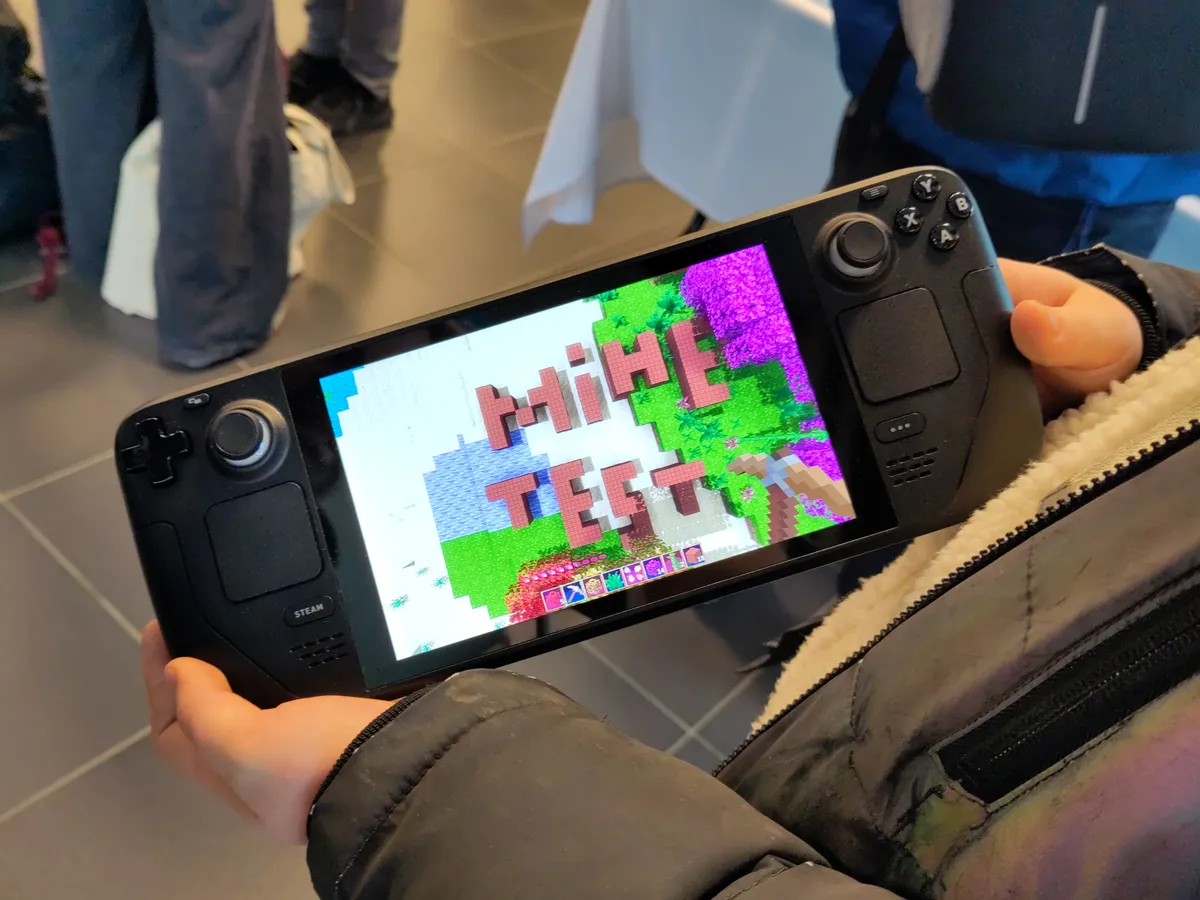
Portable gaming hardware — photo via Wikimedia Commons
Battery Life, Heat, and Travel Reality
Handheld gaming lives or dies on the couch, the commute, and the redeye flight.
Steam Deck OLED ships a 50 Wh battery. Valve claims 3–12 hours depending on title — accurate in spirit. Indie 2D games at 30 fps caps can stretch toward the high end; Cyberpunk or uncapped AAA drains in roughly two hours. The May 2026 OLED revision improved efficiency versus LCD Decks, but PC games remain unpredictable. USB-C PD 45 W charging hits 20–80% in as little as 45 minutes per Valve’s spec — good for airport layovers.
Switch 2 uses a larger cell than original Switch with a more efficient SoC and a 1080p/120 Hz panel that can scale refresh rate. Real-world reports on launch-window titles show meaningful gains over Switch 1 — enough for cross-country play on lighter games, shorter sessions on maximal first-party showcases. Exact hours vary by game; Nintendo historically under-promises and over-delivers on indies, while 3D Mario/Zelda-class titles land mid-range.
Weight and ergonomics: Switch 2 at ~530 g feels lighter than Deck’s ~640 g. Joy-Con 2 detach for tabletop multiplayer; Deck is a monolith best paired with a kickstand case. Kids often prefer Switch size; adult PC gamers often prefer Deck grips and trackpads for strategy and FPS mouse substitutes.
Fan noise: Both spin under load. Deck’s fan is audible in silent rooms at 15 W; Switch 2 is generally quieter but not fanless in docked play.
Docked Play, TV Mode, and Household Sharing
Switch 2 is a hybrid by identity. Drop it in the included dock and you get up to 4K at 60 fps on a TV with HDR10 — the living-room story Nintendo sells in every trailer. Joy-Con 2 detach for instant local multiplayer. GameShare and virtual game card features (Nintendo Account required) help families share compatible digital purchases across consoles in ways PC Steam licensing does not mirror.
Steam Deck supports USB-C DisplayPort alt-mode to monitors and TVs. Docked output is solid for 1080p or 1440p PC gaming but not a native 4K-first console experience. Steam’s family sharing rules differ from Nintendo’s cartridge handoff simplicity. For “one device for kids on the TV while parent plays handheld,” Switch 2 still wins on friction.
If your household already centers on a gaming PC or PS5, Deck docked play overlaps with existing hardware. Switch 2 justifies itself when Nintendo software is the shared language of the household.
Software Experience — Console Simplicity vs PC Power
Switch 2 boots to Nintendo’s UI. Sleep/resume is console-fast. Updates are rare system events, not weekly driver dances. Parental controls, play-time limits, and physical cartridges make it the lowest-support option for non-technical households.
Steam Deck is easier than Windows on a handheld — SteamOS Big Picture mode is excellent — but still a PC. Proton updates can fix or break titles. Desktop Mode expects literacy. Anti-cheat games may refuse to launch until ProtonDB posts a workaround. The reward is control: frame caps, shader caches, per-game profiles, emulation, and mod managers.
Ask yourself: Do you want to manage a device, or only play on it? Honest answers split buyers cleanly.
Backward Compatibility and Upgrades
From original Switch: Switch 2 accepts compatible game cards and digital licenses. Some titles offer Switch 2 Edition upgrades. Save data transfers through Nintendo’s systems — follow Nintendo’s transfer guide before wiping an old console. Accessories are mixed: Pro Controllers carry over; some Labo and Joy-Con IR games need original Joy-Con hardware.
From Steam PC: Deck is your library — no rebuy. Games you bought in 2014 still show up. Non-Steam PC purchases need separate work in Desktop Mode.
From neither ecosystem: Switch 2 is cheaper to enter but locks you into Nintendo pricing. Deck is pricier upfront but Steam sales reduce software cost over time.
Who Should Buy Which (September 2026)
Buy Nintendo Switch 2 if…
- Nintendo exclusives are non-negotiable in your household.
- You want 1080p handheld and 4K docked play without PC troubleshooting.
- You are upgrading from Switch 1 and want cartridge/digital continuity.
- Local multiplayer with detachable Joy-Con matters weekly.
- You prefer console sleep/wake and minimal maintenance.
Buy Steam Deck OLED if…
- You already own hundreds of Steam games.
- PC mods, emulators (legal sources), and non-Steam stores matter.
- OLED contrast for AAA and indie “dark scene” games is worth 800p resolution.
- You want the deepest handheld catalog even after the May 2026 price hike.
- You accept occasional Proton tinkering as part of the hobby.
Skip both if…
- You only play one platform (PS5/Xbox/PC) at a desk and never travel.
- You need the absolute cheapest entry — watch refurb Deck LCD or used Switch Lite for different use cases.
- You want maximum performance per dollar — a desktop GPU or PS5 still wins.
- You hate Nintendo online policies and hate PC maintenance — no handheld saves you.
Migration Tips If You Already Own One Side
Switch → Switch 2: Complete Nintendo’s system transfer before factory-resetting Switch 1. Test your top 10 games against Nintendo’s compatibility page. Budget for Switch 2 Edition upgrade fees where they exist. Keep one pair of original Joy-Con if you own Labo or IR-dependent titles.
PC → Deck: Enable Steam Cloud on supported saves before first handheld session. Start with Verified titles to learn Quick Access overlay (TDP, fps cap, battery gauge). Add non-Steam games only after checking Linux compatibility. A 65 W+ USB-C PD bank extends travel play.
Deck → Switch 2: Your Steam library does not transfer. Expect to rebuy Nintendo titles. Cloud saves do not cross platforms except where publishers offer separate cloud systems (rare).
NexReview Verdict — Switch 2 vs Steam Deck 2026
There is no universal winner — and for the first time since Deck launched, hardware MSRP favors Nintendo while software economics favor Valve. September 2026 pricing puts Switch 2 at $499.99 against $789 for Deck OLED 512GB, yet a Steam owner’s marginal game cost on Deck remains near zero.
| Priority | Winner |
|---|---|
| Nintendo exclusives + hybrid simplicity | Switch 2 |
| Steam/PC library + openness | Steam Deck OLED |
| Handheld screen sharpness (UI/text) | Switch 2 (1080p) |
| Handheld HDR/contrast | Steam Deck OLED |
| Docked 4K TV play | Switch 2 |
| Lowest September 2026 MSRP | Switch 2 |
| Long-term software value for PC gamers | Steam Deck OLED |
We score this comparison guide 9.0/10 — not either device alone. Personally, households that already argue about Mario Kart should buy Switch 2 and stop fighting ProtonDB threads. Households with Steam backlogs measured in years should buy Deck OLED even at $789 — but hunt refurb stock first.
Verify your cart the day you buy. Memory shortages moved both MSRPs in 2026; stock and refurb drops change weekly. Either legitimate choice beats paralysis: Nintendo Switch 2 and Valve Steam Deck OLED are real flagship products, not white-label impersonators.
For deeper single-device coverage, read our Nintendo Switch 2 review with pros and cons and Steam Deck OLED review. For Windows-handheld alternatives to Deck, see Steam Deck vs ROG Ally (2026).
FAQ — Switch 2 vs Steam Deck 2026
Is Switch 2 or Steam Deck better in 2026?
Switch 2 wins for Nintendo exclusives, hybrid TV play, and lower September 2026 MSRP ($499.99 vs $789). Steam Deck OLED wins for Steam library access, PC openness, and OLED HDR. Neither replaces the other — they serve different platforms.
Did Switch 2 get a price increase in 2026?
Yes. Nintendo raised U.S. MSRP from $449.99 to $499.99, effective September 1, 2026, citing market conditions including memory costs. Specs and included accessories unchanged.
How much does Steam Deck OLED cost after the 2026 hike?
$789 for 512GB and $949 for 1TB as of Valve’s May 27, 2026 revision. Refurb units sometimes cost less when in stock.
Can Steam Deck play Nintendo Switch games?
No natively. Switch games require Switch hardware (or emulators with legal ROM sources — unsupported and often impractical on Deck). Deck plays PC/Steam titles via Proton.
Can Switch 2 play my Steam library?
No. Switch 2 runs Nintendo-licensed software only. Steam purchases stay on PC platforms unless a game publishes a separate Switch port you buy again.
Which has better battery life — Switch 2 or Steam Deck?
Depends on the game. Deck claims 3–12 hours with a 50 Wh cell; indies last longer than uncapped AAA. Switch 2 generally improves on Switch 1 but heavy 1080p/120 Hz titles drain faster than 2D eShop games. Cap fps and brightness on either for travel.
Is Switch 2 worth it if I already own Steam Deck?
Only if Nintendo exclusives matter to you. Deck does not run Switch software; Switch 2 does not replace Steam. Many enthusiasts own both; budget-conscious PC gamers can skip Switch 2 unless Mario/Zelda/Pokémon are must-haves.
Which is easier for kids and non-technical family members?
Switch 2. Console UI, cartridges, and Joy-Con sharing beat Proton troubleshooting. Deck suits teens and adults comfortable with PC concepts.
Does Switch 2 support 4K gaming?
Docked, up to 4K at 60 fps per Nintendo’s specifications — game-dependent. Handheld mode is 1080p. Steam Deck docked output is typically 1080p/1440p-class, not 4K-first.
Will NexReview update this switch 2 vs steam deck 2026 page?
Yes when pricing, compatibility lists, or major firmware shifts materially change the buying math. Always confirm live MSRP on Nintendo.com and Steam before checkout.