Pros
- Asymmetric spirits create wildly different puzzles every session
- Simultaneous planning eliminates the classic co-op quarterback problem
- Fear track and adversary levels scale difficulty with precision
- Solo mode is best-in-class — not a tacked-on afterthought
- Base box alone supports years of mastery before expansions
Cons
- Steep learning curve — first two sessions often feel like homework
- Dense 36-page rulebook rewards prep, not casual unboxing
- Publishing transition in 2026 creates retail uncertainty
- Four-player table time can stretch past two hours on higher levels
- Component sprawl and card sorting tax setup on small tables
Spirit Island is R. Eric Reuss’s landmark cooperative board game — a tabletop experience where players embody island spirits pushing back against colonizing Invaders through fear, blight, and asymmetric power cards. This Spirit Island board game review (updated September 2026) covers how the Invader phase works, why the game solves co-op quarterbacking better than almost any rival, which spirits suit beginners, how adversary levels scale difficulty, and whether the base box still belongs on a modern hobby shelf amid the publisher transition.
If you searched for a spirit island board game review because BoardGameGeek keeps ranking it in the global top fifteen, you are in the right place. This is Spirit Island (2017) from Greater Than Games — not the unrelated mobile game Island Spirit, not the video game Spiritfarer, and not a generic “spirit” fantasy title. Same name collisions exist online; this review covers Reuss’s island-defense co-op only.
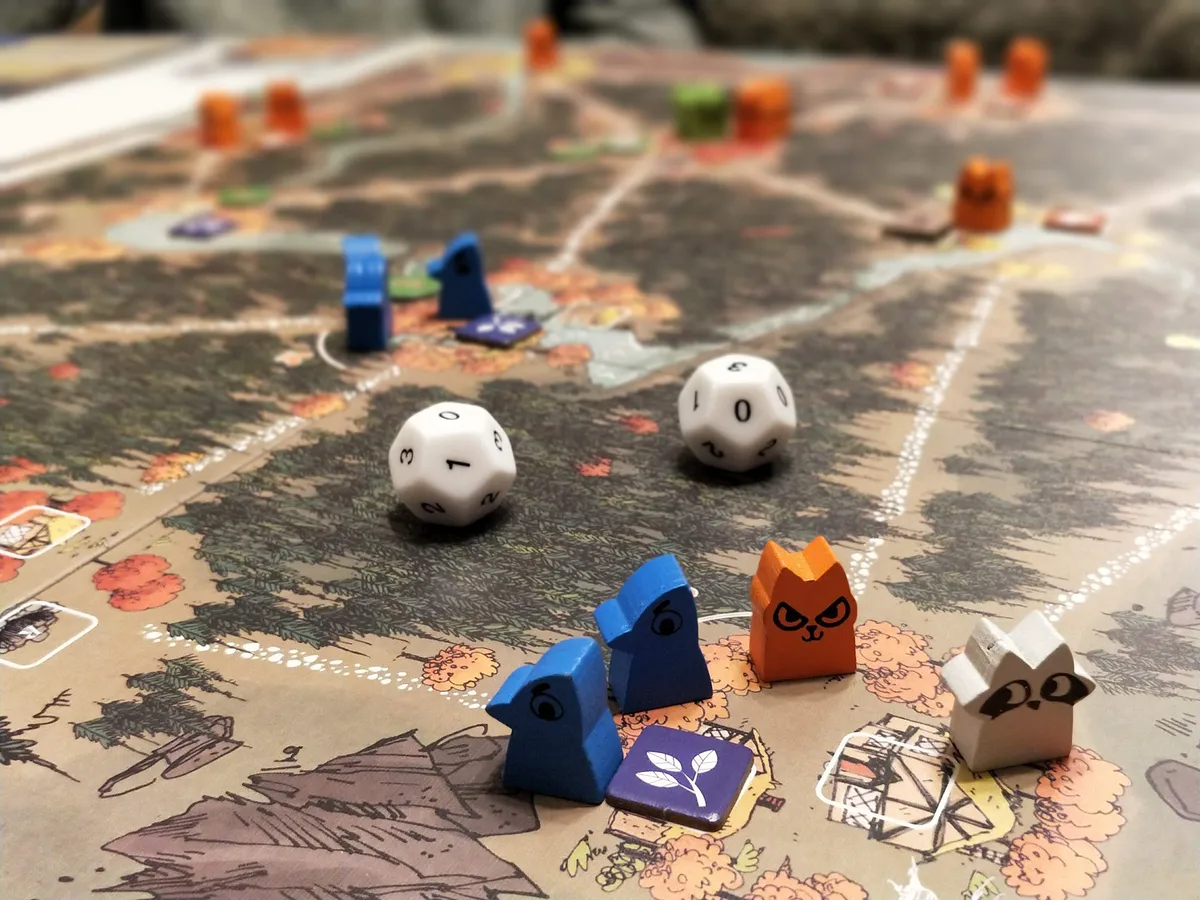
Cooperative tabletop atmosphere — photo via Wikimedia Commons
Quick Verdict (For Skimmers)
| Field | Detail |
|---|---|
| Designer | R. Eric Reuss |
| Publisher | Greater Than Games / Flat River Group (transitioning in 2026) |
| Players | 1–4 (up to 6 with Jagged Earth) |
| Play time | ~90–120 minutes (teach games run longer) |
| Age | 13+ |
| Type | Heavy cooperative strategy with asymmetric roles |
| Standout feature | Simultaneous spirit planning + fear-driven Invader disruption |
| NexReview score | 9.1/10 |
Buy it if your group craves the deepest cooperative strategy available and can invest two or three sessions before the systems click. Skip it if you want a light weeknight filler, hate rules-heavy first plays, or need guaranteed in-stock retail availability during the 2026 publishing handoff.
What Is Spirit Island?
Spirit Island inverts the colonization fantasy that dominates so many hobby games. Instead of exploring and claiming land, you are the land — spirits of volcano, river, lightning, and shadow defending an island and its Dahan inhabitants against Invaders who explore, build towns and cities, and ravage the environment for resources.
Reuss spent years developing the design before its 2017 release. The result won the Golden Geek Award for Best Cooperative Game that year and has remained a BoardGameGeek top-fifteen title ever since — a rare achievement for a small-publisher co-op with a 36-page rulebook. Players choose spirits with completely different power decks, presence tracks, and growth options, then coordinate (without controlling each other) to generate Fear, destroy Invader pieces, and prevent Blight from cascading across the island.
Components in the base box are functional rather than miniature-heavy: modular island boards, spirit panels, power cards split into Minor and Major, fear cards, blight tokens, Dahan huts and figures, Invader explorers/towns/cities, and adversary panels that tune difficulty. Art by Nolan Nasser and others sells mythic ecology without turning the table into a grim lecture — though the anti-colonial theme is inseparable from the mechanics, which is the point.
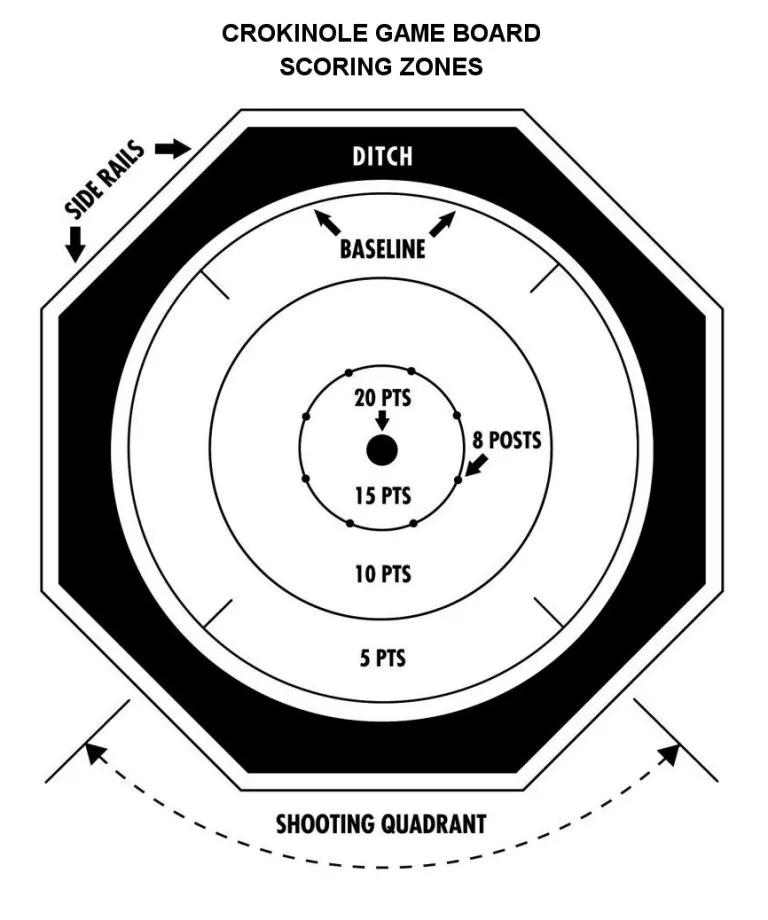
Board game map and tokens — Wikimedia Commons
How a Round Feels (Core Loop)
Understanding Spirit Island requires holding two phases in mind: what the Invaders do automatically, and what spirits choose simultaneously. A typical round cycles through:
- Fast Invader Phase — Invaders explore into new lands, build structures where explorers gather, then ravage lands for blight and damage unless spirits have already cleared them.
- Spirit Phase — each spirit chooses Growth (expanding presence on the map), gains Energy based on presence, then plays Power cards from hand by spending Energy.
- Slow Invader Phase — depending on the Invader deck, additional explore/build/ravage steps may fire, often the moment when a winning plan collapses if you mis-timed fear.
That structure is why so many first sessions stumble. You cannot evaluate a single rule in isolation — Blight connects to the Blight card, which connects to adversary setup, which connects to whether a given spirit can afford to clear a ravaged land before the cascade wipes three adjacent jungles. The game teaches holistically or not at all.
The Invader Phase: Explore, Build, Ravage
Invaders follow deterministic rules on card-driven timing. When an Explore action resolves, Invaders place explorers in the land type shown on the current Invader card (mountain, jungle, sands, etc.). When Build fires, explorers become towns; existing towns may upgrade to cities. When Ravage fires, Invaders destroy the land — adding blight, harming Dahan, and advancing the loss condition if blight spreads too far.
Spirits disrupt this pipeline by destroying explorers before they build, replacing towns with Dahan or wilds, or generating enough Fear to trigger powerful fear effects that skip Invader actions entirely. A well-timed fear card that prevents a Build step can save an entire coastline; missing it by one energy is the kind of wound Spirit Island players remember for months.
The Spirit Phase: Growth, Energy, Powers
During Growth, spirits add presence to the map — usually choosing between options printed on their spirit panel (gain energy vs. reach farther vs. reclaim used power cards). Energy pays for Power cards. Minor Powers cost less and flex often; Major Powers hit harder but can whiff if elements do not match.
Elements (sun, moon, fire, air, water, plant, animal) matter because many spirits gain bonuses when played powers match their elemental thresholds. A lightning spirit chaining fire and air for extra damage plays nothing like a shadow spirit who wins through fear and strife. That asymmetry is the replay engine.
Fear, Blight, and Win Conditions
Spirit Island’s emotional arc runs on two tracks: Fear (offense) and Blight (defense failure).
Fear Track
When spirits destroy Invader pieces or certain powers resolve, they gain Fear tokens. Crossing fear thresholds lets the table reveal fear cards — narrative-flavored effects that can remove Invaders, heal blight, or rearrange the board state. Higher adversary levels require more fear to win, pushing veterans toward efficient fear-generating spirits and powers rather than brute-force destruction.
Winning typically requires clearing the island of Invaders and maxing the fear track (exact thresholds depend on adversary and scenario). Some spirits accelerate fear; others stall Invaders while teammates catch up on the track. Table talk focuses on sequencing: “If I take this town this turn, we hit fear level two — can you hold ravage on wetland?”
Blight and Losing
Blight represents environmental collapse. When ravaging adds blight to a land that already has blight, excess blight cascades to adjacent lands — the moment novice groups lose their first game. Certain spirits specialize in blight removal; others accept blight as the cost of aggressive pushes. Adversaries like Brandenburg-Prussia or Sweden punish blight mistakes harshly.
You lose immediately if blight cascades off the island beyond the Blight card limit, if too many Invaders remain at the wrong time, or if specific scenario/adversary conditions trigger. Losses feel earned because the Invader deck telegraphs pressure two turns ahead — if you ignore the warning, the game does not cheat; it executes.
Why Spirit Island Fixes Co-op Quarterbacking
The classic cooperative problem is one experienced player commanding everyone else’s turns. Spirit Island reduces that through simultaneous planning and information limits. Spirits have unique hands and energy economies; the optimal play for Lightning’s Swift Strike differs from Bringer of Dreams and Nightmares. During the spirit phase, groups discuss strategy, but each player ultimately controls their own spirit’s growth and power selection.
Reuss also designed powers with targeting restrictions and timing windows that reward specialization. The shadow spirit is not just “the fear guy” — it is a timing puzzle about when to escalate dread versus when to reclaim majors. The river spirit floods and pushes pieces; the volcano spirit clears with destruction thresholds. Veterans can advise; they cannot legally play your cards for you.
For groups burned by Pandemic alpha-gaming, this Spirit Island board game review highlights the design as the primary reason to climb the learning curve. The table becomes a council of specialists, not a single brain with four hands.
Table tension during cooperative play — Wikimedia Commons
Spirits: Asymmetry That Lasts Hundreds of Plays
The base game includes eight spirits spanning complexity tiers from low (River Surges in Sunlight, Lightning’s Swift Strike) to very high (Shadows Flicker Like Flame, Bringer of Dreams and Nightmares). Each spirit panel lists growth options, energy income, special rules, and innate powers — permanent effects that shape every turn.
Beginner-Friendly Spirits
| Spirit | Why start here |
|---|---|
| River Surges in Sunlight | Straightforward map control; teaches reclaim timing |
| Lightning’s Swift Strike | Fast damage; satisfying Invader removal |
| Vital Strength of the Earth | Defensive blight management; forgiving presence |
Groups should pick one low-complexity spirit per new player and pair them with veterans on medium spirits — not the other way around. Introductory adversary level zero (no adversary) plus these spirits makes a teach game survivable.
Advanced Spirits That Reward Mastery
Shadows Flicker Like Flame, Thunderspeaker, and Bringer of Dreams and Nightmares demand rules fluency before they shine. Shadow manipulates fear and strife; Thunderspeaker interacts with Dahan aggression; Bringer generates fear through nightmares but struggles with direct destruction. Playing them in game one is a recipe for shelf rejection — the Dice Drop “second chance” review narrative exists because so many groups quit after one overwhelming session.
Adversaries and Difficulty Scaling
Adversaries represent colonial powers with escalating rules. The base box includes Brandenburg-Prussia and Sweden at multiple difficulty levels. Higher levels add effects: extra builds, harsher blight, fear requirements, or Invader card twists. Level zero (no adversary) is the teaching space; level three and above is where Spirit Island earns its 4.07 BGG weight rating.
Difficulty tuning is one of the game’s smartest systems. Instead of opaque “hard mode” switches, each adversary level adds a printed rule module you can read before setup. Want more exploration pressure? Raise Sweden. Want blight punishment? Prussia at level two waits. Scenarios (Kingdom of England, France, etc. in expansions) stack on top for bespoke puzzles.
Recommendation path:
- Game 1–2: No adversary, intro blight card, low-complexity spirits
- Game 3–5: Adversary level 1–2, mix complexity
- Veterans: Adversary level 3+, scenarios, events (Branch & Claw)
Solo Mode: Genuinely Best-in-Class
Spirit Island solo is not a compromised Automa — it is the same game with one spirit (or multiple spirits across “multi-spirit solo” variants many players adopt). BoardGameGeek polls consistently rank solo as best/recommended. One player controls the full spirit phase without quarterbacking friction, learns one spirit deeply, and can pause mid-round to study power combinations.
Solo also solves the scheduling problem for a 90–120 minute heavy co-op. You can run two spirits with simplified rules for learning, or play true single-spirit challenges against high adversaries. If your group disbands mid-campaign, solo keeps the box off the trade pile.
Expansions and Where to Start
Spirit Island: Branch & Claw
Branch & Claw (~$35 MSRP) adds Events during the Invader phase, new token types (beasts, wilds, disease, strife), spirits Sharp Fangs Behind the Leaves and Keeper of the Forbidden Wilds, and adversary France. Events inject narrative variance — sometimes helping spirits, sometimes catastrophically aiding Invaders. It is the first expansion most owners buy after base mastery, though it adds complexity; wait until the core loop feels automatic.
Spirit Island: Jagged Earth
Jagged Earth (~$70 MSRP) is the large expansion: ten new spirits, adversaries Hapsburg Monarchy and Russia, new scenarios, and support for up to six players. It is essential for groups who want maximum variety and higher player counts, but it is not a day-one purchase. The base box alone supports dozens of unique spirit/adversary pairings.
Horizons of Spirit Island
Horizons (~$30 MSRP) is a standalone entry product with five low-complexity spirits, simplified boards for one to three players, and updated power text. Target carried US exclusivity initially; wider retail followed. It is an excellent on-ramp if the full base box intimidates, though veterans treat it as a teaching tool rather than a replacement. Components overlap conceptually but Horizons does not require the original — and the original does not require Horizons.
Publishing Status in 2026
Any honest spirit island board game review in September 2026 must mention the publishing transition. Designer R. Eric Reuss announced in June 2026 that he declined to renew Spirit Island’s publishing agreement with Flat River Group (which acquired Greater Than Games around 2021–2022) after staff layoffs and project suspensions in April 2025. Reuss is negotiating with a new publisher, has stated Spirit Island will continue, and plans a full art recommission — same gameplay, new visual interpretation.
Practical impact for buyers:
- Existing inventory from Flat River / Greater Than Games remains valid product
- Reprint timing and MSRP may shift under a new license holder
- The long-awaited Dahan-centric expansion remains in design but may be delayed by art work
- Self-publishing is Reuss’s stated fallback if negotiations fail
None of this changes the gameplay quality on your table today; it affects shopping patience and resale speculation. Do not pay scalper prices unless you accept the risk.
Spirit Island vs Similar Games
| Game | Vibe | Choose it instead when… |
|---|---|---|
| Spirit Island | Heavy co-op island defense | You want asymmetric roles and anti-quarterbacking |
| Pandemic | Accessible disease-fighting co-op | You need a 45-minute gateway with simpler roles |
| Gloomhaven | Legacy dungeon crawler | You prefer tactical combat and campaign unlocks |
| Mage Knight | Solo-heavy fantasy conquest | You want one brain-burner hero, not team coordination |
| Forbidden Island / Desert | Light family co-op | You are playing with children or absolute beginners |
| Undaunted: Normandy | Wargame-deck hybrid | You want competitive or two-player tactical cards |
Spirit Island occupies the “expert co-op” shelf next to Gloomhaven in reputation but plays faster per session than a full Gloomhaven scenario and scales better at four cooperative minds than most dungeon crawlers.
Who Should Buy It in 2026?
Perfect For
- Groups that outgrew Pandemic and want a co-op they cannot solve in three plays
- Solo enthusiasts who treat board games as puzzles, not parties
- Players who enjoy asymmetric roles in Root but prefer pure cooperation
- Hobbyists who measure value in hundreds of hours before expansions
Not Ideal For
- Casual game nights expecting rules in ten minutes and finish in sixty
- Groups without one patient rules reader willing to prep before session one
- Tables allergic to losing streaks while learning (expect early losses)
- Buyers who need guaranteed immediate retail restocks during publisher transition
Pros and Cons
| Pros | Cons |
|---|---|
| Unmatched co-op depth and replay | Brutal first-play learning curve |
| Asymmetric spirits stay fresh for years | Long playtime at full player counts |
| Solo mode is genuinely excellent | Setup and card sorting overhead |
| Fear/blight systems tell a coherent story | 2026 publishing uncertainty |
| Scales difficulty with precision | Requires dedicated table space |
Strategy Tips (Without Spoiling Specific Powers)
- Read the Invader deck two turns ahead. Explore-build-ravage order is predictable; plan fear and destruction around upcoming cards, not today’s board only.
- Protect one land from blight cascade religiously. One careless ravage can end the game faster than Invader armies.
- Match spirit complexity to player experience. One overwhelmed newcomer sinks the whole island.
- Generate fear before you need it. Fear cards win games; destruction alone often does not.
- Use presence aggressively, then reclaim. Spirits are not area-control games — presence is ammunition, not territory pride.
- Do not chase every Invader explorer. Opportunity cost loses more games than missed removals.
- Watch Dahan positioning. They are not decoration; many spirits and fear effects depend on hut placement and population.
Teaching the Game Without Killing the Mood
Spirit Island rewards prep over cold reads. Before game one:
- Watch the official “learn to play” video on Greater Than Games’ YouTube channel (far clearer than raw rulebook order)
- Assign one player as rules reference, not director
- Run adversary level zero with intro blight card
- Limit spirits to low-complexity picks
- Accept that game one is a tutorial you might lose — schedule game two the same week
Do not dump all expansion content into teach night. Do not start with adversary level three to “make it interesting.” Interesting comes after competence.
Mobile-Friendly Buying & Play Notes
Reading this spirit island board game review on a phone? Condensed checklist:
- Confirm your group wants 90–120+ minute co-op, not a filler
- Base box first; Branch & Claw after ~10 plays; Jagged Earth when you want six-player variety
- Horizons is a $30 on-ramp for one to three players, not mandatory if you commit to the full game
- Sleeve major/minor power cards if you play weekly — shuffling wear is real
- Check retail stock and publisher updates before paying secondary-market premiums in 2026
FAQ — Spirit Island Board Game Review
Is Spirit Island a board game or a video game?
This review covers R. Eric Reuss’s board game (2017). Mobile and Steam digital adaptations exist, but search intent for spirit island board game review almost always means the tabletop original.
Is Spirit Island worth it in 2026?
Yes — if your group wants expert-level cooperative strategy and will play at least three sessions to learn. It remains one of the highest-rated co-ops ever published. Skip if you need light games or instant rules clarity.
How long does Spirit Island take?
Most groups report 90–120 minutes once fluent. First teaches and high adversary levels can exceed two hours, especially at four players.
How hard is Spirit Island to learn?
Objectively heavy. BGG weight ~4.07/5. Expect two or three full games before systems feel natural. The rulebook is thorough, not beginner-friendly.
Can you play Spirit Island solo?
Yes, and solo is widely considered excellent — among the best solo modes in modern hobby gaming.
Spirit Island vs Horizons — which to buy first?
Buy the base game if your group is committed to the full experience. Buy Horizons if you want a lower-price, lower-complexity trial for one to three players before upgrading.
Which expansion should I buy first?
Branch & Claw adds events and variety at moderate complexity. Jagged Earth is the big box for spirit-hungry veterans. Neither is required for dozens of base-game hours.
What is happening with the publisher in 2026?
Reuss declined to renew with Flat River Group and is negotiating new publishing. Gameplay continues unchanged; future print runs may feature new art. See Reuss’s June 2026 update on rericreuss.com for current status.
Does Spirit Island have a quarterback problem?
Far less than most co-ops. Simultaneous spirit phases and asymmetric information reduce alpha gaming, though experienced players may still advise — they cannot legally play your powers for you.
What player count is best?
Solo and two-player are strong. Three to four player is the standard cooperative experience. Five to six requires Jagged Earth and adds planning overhead.
Final Verdict
Spirit Island earns its BoardGameGeek pedestal the hard way: it demands patience, punishes early mistakes, and refuses to simplify its anti-colonial premise into flavor text. Once the Invader rhythm clicks, though, few co-ops offer this combination of asymmetric mastery, tactical timing, and genuinely shared victory. Fear racing up the track while blight teeters on cascade is tension most lighter co-ops never attempt.
In 2026 the hobby has no shortage of app-assisted campaigns and miniature-heavy dungeon crawlers. Spirit Island still stands out by trusting cardboard, simultaneous brains, and a theme that matches its mechanics beat for beat. Teach it carefully, start on intro difficulty, and schedule a second session before you judge it. Do that, and this Spirit Island board game review ends where most great tables arrive: with a narrow win that everyone earned, and immediate talk about which spirits to try next.
Score: 9.1/10 — Best Deep Co-op Strategy With Anti-Quarterbacking Design
Related on NexReview
Want more tabletop coverage after this deep dive? Browse our Game Reviews hub, narrative tension in Dead of Winter, and engine-building elegance in Wingspan. For PC performance tools when you switch back to digital titles, open NexCheck and NexPass.