Pros
- Both are full AI-native IDEs — not plugins bolted onto a legacy editor
- Entry paid tiers align at roughly $20/month with real agent quotas
- Clear split — Cursor for composer-first depth; Windsurf lineage for Devin Cloud handoff
- VS Code extension habits transfer to either fork with modest migration work
Cons
- Windsurf rebranded to Devin Desktop — docs and YouTube tutorials lag reality
- Neither replaces human review on security-sensitive diffs
- Team pricing structures diverge — spreadsheet before you standardize
- Usage metering changed on both sides in 2025–2026; verify live quotas
Cursor vs Windsurf 2026 is the comparison developers reach for when they have already rejected "just add an extension" and want a dedicated AI code editor as the daily driver. Cursor is the standalone IDE from Anysphere — a VS Code fork centered on Tab completion, Composer agents, and repository indexing. Windsurf was the agentic IDE that grew out of Codeium; after Cognition acquired the product in 2025, the desktop app was renamed Devin Desktop in 2026, with Devin Local replacing the earlier Cascade agent. Searches still say Windsurf, but checkout and billing live on devin.ai — this guide uses both names so you land on the right product, not a lookalike.
We compare Cursor vs Windsurf in 2026 with pricing pulled from cursor.com and devin.ai, workflow differences that matter in real repos, and honest guidance on when Cognition's unified Devin stack beats Anysphere's editor-first independence. For adjacent picks, read our Cursor vs GitHub Copilot 2026 guide (extension-first vs IDE-first) and the standalone Cursor IDE review.
Product check: Cursor means Anysphere's AI code editor — not unrelated Cursor hardware. Windsurf means the Codeium-origin IDE now sold as Devin Desktop — not the Windsurf data or analytics vendors that share the word. We do not compare generic "AI autocomplete plugins" unless noted.
AI code editor on laptop — Wikimedia Commons
Cursor vs Windsurf 2026 Snapshot
| Question | Cursor (Anysphere) | Windsurf → Devin Desktop (Cognition) |
|---|---|---|
| What it is | AI-native VS Code fork | AI-native VS Code fork (ex-Windsurf) |
| Who makes it | Anysphere | Cognition (acquired Windsurf / Codeium IP) |
| Brand in 2026 | Unchanged Cursor | Desktop app: Devin Desktop; keyword Windsurf still common |
| Default local agent | Composer (plus Agent / chat surfaces) | Devin Local (replaced Cascade mid-2026) |
| Cloud agent sibling | Cloud Agents, automations, Bugbot | Devin Cloud on shared Cognition account |
| Signature context feature | Semantic codebase indexing, .cursorignore | Codemaps dependency graph for cross-file edits |
| Entry paid (self-serve) | Pro ~$20/mo (legacy); new Premium $30/mo tier on current price card | Pro $20/mo on devin.ai |
| Power individual tier | Pro+ $60/mo or Ultra $200/mo (legacy); Super $100 / Ultra $200 on new lineup | Max $200/mo |
| Team shape | Teams per-seat (e.g. $40/user/mo on legacy Standard) | $80/mo base + $40/mo per full dev seat |
| Enterprise differentiator | Pooled usage, SCIM, MCP/repo controls | VPC deployment, federal tracks, DeepWiki |
| NexReview lean | Independent roadmap, Composer depth | Tighter local ↔ cloud agent story |
Bottom line: You are choosing between two full editors, not between an editor and an extension. Price at the Pro tier is similar; the split is product philosophy — Anysphere bets on the best in-editor agent loop, while Cognition bets on Devin as a family (Desktop, Cloud, Review) with the IDE as one pane in a larger command center.
What Happened to Windsurf? (Names Matter for Buying)
If you last evaluated Windsurf in 2024 or early 2025, the shopping path looked like codeium.com → Windsurf IDE → Cascade agent. That lineage is real; the signage changed.
- Codeium (2022) — free autocomplete extension; developer-friendly onboarding.
- Windsurf (late 2024) — full VS Code-class IDE with Cascade as the in-editor agent and Codemaps for structural codebase context.
- Cognition acquisition (July 2025) — Cognition bought Windsurf's IP, brand, and team while continuing to sell the autonomous Devin cloud agent separately.
- Devin Desktop (June 2026) — over-the-air rebrand of the Windsurf app; accounts and keybindings largely persisted.
- Cascade end-of-life → Devin Local — Cascade-specific memories and workflows did not all port one-to-one; Cognition documented migration toward skills,
.devin/config, and AGENTS.md.
For cursor vs windsurf 2026 research, treat Devin Desktop as the shipping product and Windsurf as the keyword and community history. Download links and quotas on devin.ai/pricing supersede old Windsurf marketing pages.
Why developers still say "Windsurf"
Forum posts, comparison videos, and internal wiki pages update slowly. Procurement may still have "Windsurf" on a trial approval form. Cognition kept enough UI continuity that the app feels like the Windsurf you remember — but agent names, settings paths, and cloud integration points now say Devin. Budget conversations should reference Devin Desktop seats to avoid finance approving a vendor name that no longer matches the invoice.
What Each Editor Actually Is
Cursor — Anysphere's editor-first AI stack
Cursor is not a layer on VS Code — it is the editor. Anysphere forked the open-source VS Code core, preserved most extension compatibility, and built the product around AI surfaces:
- Tab — multi-line, project-aware completion
- Cmd+K / Ctrl+K — selection-scoped transforms
- Chat with
@file,@folder, and@codebaseanchors - Composer / Agent — multi-file plans, diffs, and apply-with-review
- Background / cloud agents and Bugbot on higher tiers (per cursor.com feature table)
Cursor's differentiation in 2026 remains indexing: it builds a semantic map of your repo (honoring .cursorignore) so prompts understand import graphs and folder conventions without pasting half the tree into chat. Teams adopt rules, shared commands, and (on business plans) analytics and SSO.
The tradeoff is vendor concentration in one editor. You are betting Anysphere's roadmap stays ahead on Composer quality and that their pricing model fits your agent hours. That is a different risk profile than Cognition's "whole Devin platform" bet.
Windsurf / Devin Desktop — agent IDE inside the Devin family
The former Windsurf IDE is now Devin Desktop: same broad shape (VS Code derivative, sidebar agent, tab completion), but the default local agent is Devin Local, and the account also unlocks Devin Cloud sessions on paid tiers per devin.ai.
Standout Windsurf-era capabilities that still define the product:
- Codemaps — persistent graph of functions, modules, and call relationships; the agent uses it to trace blast radius on refactors
- DeepWiki — documentation / codebase Q&A surface inside the Devin ecosystem
- Agent Command Center — Kanban-style view of local and cloud agent work
- Agent Client Protocol (ACP) — run external agents (Codex, Claude Agent, Gemini CLI, etc.) inside the same shell on supported builds
Where Cursor feels like "the best VS Code you'd ship if you restarted in 2023," Devin Desktop feels like "the IDE pane of Cognition's Devin OS." That helps if you already delegate long tasks to Devin Cloud; it hurts if you wanted a standalone indie editor without platform baggage.
Developer IDE dark theme — Wikimedia Commons
Cursor vs Windsurf 2026 — Core Workflow Comparison
Feature checklists lie when both products tick "multi-file agent." Day-to-day feel differs.
Tab completion and inline edits
Both products ship unlimited Tab-style completion on meaningful free tiers (Devin Free documents unlimited Tab and inline edits; Cursor Hobby offers limited agent access with Tab-style flows on paid paths). On Pro, both assume you accept suggestions hundreds of times per week.
Cursor Tab is tuned for jump edits — predicting the next line, the next file touch, or a small refactor chain when indexing confidence is high. Developers who live in TypeScript React or Python services often describe it as "learning" repository idioms after the index warms up.
Devin Desktop Tab inherits Codeium's completion heritage — strong on latency and acceptable on tricky generics; the marketing emphasis moved toward agents, but completion remains the low-friction entry drug. If 90% of your value is gray-text acceptance, either Pro plan can suffice; run a two-week A/B on your repo before caring about agents.
Edge: Slight Cursor lean on monorepo pattern stickiness; Devin Desktop lean if you also want identical Tab behavior when bouncing between Desktop and Cloud sessions.
Chat, explain, debug
Single-file explanation parity is high. Both answer "why is this test flaky?" and "convert this callback to async" in-sidebar.
Cursor wins marginal time on @codebase retrieval — less manual tagging once indexing completes. Devin Desktop pairs chat with Codemaps so the model's plan often cites graph edges ("this API is imported in 14 files") that raw text search might miss.
For debugging, neither replaces a debugger. Both can misread runtime state. Treat chat as a junior engineer: fast hypotheses, mandatory reproduction steps.
Multi-file agents — Composer vs Devin Local
This is why you are reading cursor vs windsurf 2026 instead of another Copilot article.
Cursor Composer / Agent plans steps, shows unified diffs, and applies across files with a review gate power users treat like an internal PR. Background Agents and cloud runs extend work beyond the active session on Premium-class plans. Maturity shows in predictable diff chunking and .cursor/rules steering — teams document "never touch /infra/prod without human sign-off."
Devin Local (post-Cascade) adds Plan modes, subagents, worktree sessions, and sandbox permissions with explicit allow/deny precedence — closer to how Cognition runs cloud Devin, but localized. Parallel subagents are the headline versus older Cascade behavior.
| Task type | Practical winner |
|---|---|
| Rename symbol across 40 files with tests | Tie — both handle; verify with your test suite |
| Scaffold a feature slice from a spec | Cursor slightly — Composer UX is polished |
| Refactor using dependency blast radius | Devin Desktop — Codemaps context |
| Hand off long job to cloud while you sleep | Devin Desktop — Devin Cloud on same plan ecosystem |
| Air-gapped edit-only session | Cursor — less pressure to route into cloud SKUs |
Trust model: Reject bad diffs early. Both agents loop poorly when the first fix is wrong; one-sentence correction beats raging in chat.
Cloud agents and review bots
Cursor pushes Cloud Agents, automations, and Bugbot code review on higher individual and Teams tiers — attractive if GitHub PR review is the bottleneck.
Cognition sells Devin Cloud as the flagship autonomous worker and Devin Review for review workflows. Devin Desktop is the local console for the same account. If your fantasy workflow is "spin five cloud sessions on five tickets," Cognition's packaging is native; Cursor can approximate with cloud agents but is not the same SKU narrative.
Extensions and editor compatibility
Both are VS Code-class forks — most VS Code extensions work; some Microsoft marketplace restrictions apply to forks. Cursor maintains its own extension channel with documented security notices. Devin Desktop has shifted toward Open VSX on several builds with published security policy.
JetBrains holdouts: Cognition still offers Windsurf-branded JetBrains plugins in places, but this comparison focuses on the desktop IDE competitive set against Cursor — not IntelliJ-only workflows.
Cursor vs Windsurf 2026 — Pricing and Usage (Verify Before Renewals)
Vendors re-metered in 2025–2026. Numbers below reflect public pages checked for this article (November 2026); confirm before purchase.
Individual tiers
| Tier | Cursor (public card) | Devin Desktop (devin.ai) |
|---|---|---|
| Free | Limited agent/chat; entry Tab | Light agent quota; unlimited Tab + inline edits |
| Entry paid | Pro $20/mo legacy; Premium $30/mo on current consumer lineup | Pro $20/mo — higher quotas, frontier models, Devin Cloud access |
| Mid paid | Pro+ $60/mo legacy; Super $100/mo | No separate mid tier — jump to Max |
| Top individual | Ultra $200/mo | Max $200/mo — significantly higher quotas |
Cursor nuance: Long-term subscribers may still be on legacy Pro / Pro+ / Ultra with dual pools (Cursor Models vs third-party API usage). New customers see Plus / Premium / Super / Ultra with weekly pools that include Cursor agents and Grok-family features on the merged price card. Translation: comparing "$20 Pro" blog posts from 2025 to a 2026 checkout can confuse — read the invoice line items.
Devin nuance: Paid quotas refresh on daily and weekly cadences per Cognition's FAQ; heavy cloud + local sessions burn faster than Tab-only usage. SWE-2 and other in-house models have promotional free windows — check devin.ai for current SWE-2 pricing.
Team tiers
| Item | Cursor Teams | Devin Teams |
|---|---|---|
| Structure | Per-seat | $80/mo platform + $40/mo per full dev seat |
| Headcount | Flexible enterprise sales | Up to 200 users on self-serve Teams |
| Admin | SSO, analytics, privacy mode, marketplace rules | Central billing, analytics dashboard |
| Best for | Flat per-seat budgeting | Shops already buying Devin Cloud seats |
Cursor vs Windsurf 2026 team math example — eight developers:
- Cursor legacy Teams Standard at $40/seat → $320/mo (before usage overage)
- Devin Teams → $80 + 8×$40 = $400/mo base (each full seat includes desktop + quota story per vendor docs)
Neither is universally cheaper; Devin bundles platform fee explicitly, Cursor historically priced flat per seat.
Hidden costs to model
- On-demand API usage when included pools empty (both vendors)
- Double-paying if you keep GitHub Copilot Business org-wide and roll out one of these IDEs — see GitHub Copilot review for overlap
- Migration time — two weeks of reduced velocity during indexer tuning and rules authoring
- Compliance review — enterprise VPC (Devin) vs Cursor Enterprise controls; not a line item on marketing pages but real in regulated industries
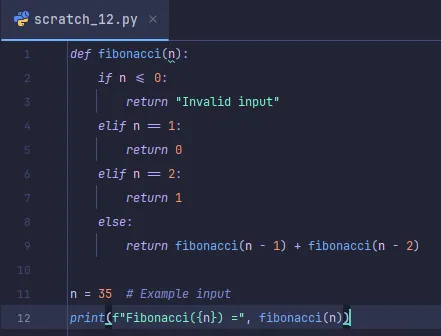
Programming and autocomplete on screen — Wikimedia Commons
Security, Privacy, and Enterprise Fit
Both vendors pitch privacy modes and enterprise SSO. Neither removes your obligation to run secrets scanning, dependency review, and human merge gates.
Cursor emphasizes Privacy Mode (no training on code when enabled), SOC / ISO certifications on security pages, and enterprise controls for MCP, repository access, and audit logs on upper tiers.
Cognition pitches SOC 2 Type 2, VPC deployment for Enterprise, teamspace isolation, and federal deployment tracks on some Devin builds — aligned with buyers who already run Devin Cloud in regulated environments.
Indemnity and data residency vary by contract tier; blog comparisons cannot replace legal review. If source code cannot leave a VPC, Devin Enterprise's deployment story often enters the RFP before Composer quality does.
Who Should Choose Cursor
Pick Cursor if you:
- Want an independent editor company without tying IDE renewal to cloud-agent platform upsells
- Live in Composer and indexing daily; Cursor's
@codebaseflow is load-bearing - Already invested in Cursor rules, team marketplace plugins, or Bugbot review on Teams
- Compare against Copilot and need the clearest "agent-first IDE" story — pair with our Cursor vs GitHub Copilot notes
- Prefer per-seat Teams math without a separate $80/mo platform line
Cursor is the safer default when your org wants one excellent local agent and optional cloud add-ons, not a mandate to restructure work around cloud Devin sessions.
Who Should Choose Windsurf / Devin Desktop
Pick Devin Desktop (Windsurf successor) if you:
- Already pay for or pilot Devin Cloud and want local ↔ cloud continuity in one account
- Rely on Codemaps-style dependency tracing for large refactors
- Plan to use ACP to host multiple agent backends in one IDE shell
- Need VPC / dedicated deployment paths Cognition advertises for Enterprise
- Accept the 2026 rebrand tax (retraining, updating internal docs from Windsurf → Devin naming)
Devin Desktop wins when the Devin platform is the center of gravity, not when you only wanted a sleek fork with zero cloud narrative.
Who Should Skip Both (For Now)
Skip a mandated IDE migration if:
- Your stack is mostly low-code or IT ops — IDE assistants will not ROI
- Policy forbids external LLM inference on production code paths without a signed BAA/DPA — fix compliance first
- Developers refuse to leave JetBrains or Visual Studio native tooling — consider Copilot-in-place instead
- You expected hardware "Cursor" peripherals — wrong category entirely
- You need a single non-VS-Code editor (e.g. Xcode-only iOS shop) with no secondary IDE tolerance
Also skip if you have not measured baseline velocity — run a timed benchmark issue (refactor + tests) on Hobby/Free tiers before Pro renewals.
Migration Tips — Switching Between Forks
From VS Code to either: Export settings, install fork, open repo, wait for indexing, configure ignore files (.cursorignore vs .devin/ / legacy .windsurf/ paths). Run a pilot service before org-wide mandate.
From Windsurf to Devin Desktop: Usually automatic OTA; rebuild Cascade workflows as skills; verify CI scripts that invoked Cascade by name now target Devin Local.
From Cursor to Devin Desktop (or reverse): No Git lock-in. You lose tuned rules, index caches, and prompt history — budget a week to rewrite team guardrails.
Coexistence: Paying Pro on both is for evaluators, not teams. Pick one primary for 30 days, log agent minutes and reverted commits, then cut the loser.
Cursor vs Windsurf 2026 — Scorecard (NexReview)
| Dimension | Cursor | Devin Desktop (Windsurf) |
|---|---|---|
| Local agent UX | 9.1 | 8.7 |
| Codebase context | 8.9 (indexing) | 9.0 (Codemaps) |
| Cloud agent integration | 8.5 | 9.2 |
| Free tier generosity | 7.8 | 8.6 |
| Team pricing clarity | 8.4 | 7.9 |
| Roadmap stability | 9.0 | 8.0 (post-acquisition) |
| Weighted overall | 8.7 | 8.5 |
These are editorial workflow scores, not synthetic benchmarks. Your repo's language mix and test discipline matter more than a tenth of a point.
FAQ — Cursor vs Windsurf 2026
Is Windsurf the same as Devin Desktop in 2026?
The Windsurf IDE was rebranded Devin Desktop in 2026 under Cognition. Features and accounts largely continued; naming, agent branding (Devin Local), and cloud integration points changed. Search cursor vs windsurf 2026 for history; buy Devin Desktop on devin.ai.
Cursor vs Windsurf 2026 — which is cheaper for one developer?
Both anchor around $20/month Pro with higher $200/month power tiers. Cursor's 2026 consumer lineup also lists Premium $30/mo for new subscribers. Real cost depends on agent hours and overage — not sticker price alone.
Did Cascade still exist in 2026?
Cascade was Windsurf's original local agent. Cognition retired it in favor of Devin Local by mid-2026. Tutorials referencing Cascade need updating.
Which has better multi-file refactors?
Tie on many repos. Cursor Composer has a slight UX edge for in-editor apply loops; Codemaps gives Devin Desktop an edge when dependency tracing drives the plan. Run both on the same refactor ticket before deciding.
Can I use Cursor and Windsurf at the same company?
Yes in pilots; rarely yes in budgets. Standardize on one fork per team unless telemetry proves seat overlap.
How does Cursor vs Windsurf compare to Cursor vs Copilot?
Copilot is an extension across many IDEs; Cursor and Windsurf/Devin Desktop require switching to their forks. Copilot wins friction; these two win when the AI surface is the editor. See Cursor vs GitHub Copilot 2026.
Which is better for startups vs enterprise?
Startups often pick Cursor for speed and independent roadmap vibes. Enterprises already on Devin Cloud or needing VPC deploy often lean Devin Desktop despite rebrand churn.
What about Codeium autocomplete extensions?
Codeium's extension path fed into the company that built Windsurf. Tab completion in Devin Desktop Free carries that DNA; it is not the same product as installing a random "Codeium" lookalike from an unverified marketplace.
Does either replace code review?
No. Use human review, static analysis, and tests. Bugbot (Cursor) and Devin Review (Cognition) assist; they do not sign releases.
Cursor vs Windsurf 2026 — what changed most recently?
Rebrand and agent rename on the Windsurf side; pricing tier reshuffle (Cursor consumer plans; dual legacy pools) on the Cursor side. Both doubled down on usage quotas instead of pure request counting.
Verdict — Cursor vs Windsurf 2026
Cursor vs Windsurf 2026 is a fork-on-fork decision: two VS Code descendants fighting for the same professional developers, with GitHub Copilot looming as the cheaper extension alternative.
Cursor wins when you want the most polished local agent editor from a company focused on that single mission — Composer, indexing, rules, and a Teams story that still reads cleanly on a spreadsheet. It is the default NexReview pick for indie developers and product-engineering teams that do not already standardize on Devin Cloud.
Devin Desktop (the Windsurf successor) wins when Cognition's platform is already in your evaluation set — Codemaps, Devin Cloud handoffs, VPC enterprise paths, and ACP multi-agent hosting matter more than Anysphere's independence.
Run a two-week proof on the same real ticket: one refactor, one greenfield feature, one bug hunt. Count reverted lines and wall time. Then buy Pro on the winner, not on YouTube hype.
For deeper single-product scoring, continue with the Cursor IDE review. For the extension-first alternative, read GitHub Copilot review.
Comparison score: 8.7/10 — Cursor for Stability, Devin Desktop for Unified Agents