Pros
- Unusually open, speaker-like imaging for a closed-back dynamic headphone
- 150Ω impedance and 110 dB/V sensitivity play nicely with modest desktop DAC/amps
- Strong isolation without the boxy, claustrophobic feel many closed cans have
- Detachable cable, replaceable pads, and steel-reinforced cups built for years of use
- Extended, controlled bass compared with classic HD 600 — less sub-bass roll-off when seal is good
Cons
- US MSRP climbed to $399.95; value depends heavily on street discounts
- Initial clamp force can feel firm until the headband settles
- Bass extension varies with seal — glasses, hair, and hoodies matter
- Not a plug-and-play winner for bassheads or listeners who hate EQ tweaking
- No balanced cable in the box; mic-free cable only (streamers need a separate solution)
Searching for a Sennheiser HD 620S review usually means you already respect the HD 600 family — and you need closed-back isolation without giving up that airy, mid-forward Sennheiser character. This NexReview guide confirms the real product (Sennheiser HD 620 S, SKU 700401, sold through Sennheiser Consumer Hearing / Sonova — not a lookalike “Sennheiser-style” marketplace clone), walks through how the angled 42 mm drivers actually behave, compares the HD 620S to open siblings and closed rivals, and gives a clear buy/skip call for September 2026.
The short version: the Sennheiser HD 620S is a wired, over-ear, closed-back dynamic headphone launched in June 2024 as the isolation-minded member of the HD 600 line. It trades the open mesh of an HD 600 for steel-reinforced ear cups and vented faux-leather pads, yet Sennheiser’s marketing pitch — “open sound in a closed chassis” — is closer to reality here than on most closed competitors. It is an excellent desk and home-office headphone for listeners who leak sound into microphones or annoy roommates. It is not the simplest pick if you want maximum slam out of the box or a sub-$200 impulse buy.
Headphones on desk — Wikimedia Commons
Sennheiser HD 620S Review Snapshot (2026)
| Field | Detail |
|---|---|
| Manufacturer | Sennheiser (Consumer Hearing — Sonova) |
| Model | HD 620 S (often written HD 620S) |
| Type | Wired over-ear, closed-back dynamic |
| Launch | June 2024 |
| US MSRP (verify live) | $399.95 on Sennheiser US as of late 2026; launch MSRP was often cited at $349.95 |
| UK / AU launch refs | ~£300 / ~AU$650 at introduction (third-party reviews) |
| Impedance | 150 Ω |
| Sensitivity | 110 dB / 1 V RMS |
| Drivers | 42 mm angled dynamic, 38 mm effective diaphragm |
| Frequency response | 6 Hz–30 kHz (manufacturer) |
| THD | < 0.05% @ 1 kHz / 90 dB SPL |
| Weight | ~350 g on-head (reviewers; package ~670 g) |
| Cable | 1.8 m detachable, 3.5 mm + 6.35 mm screw-on adapter |
| Features | No Bluetooth, no ANC, no in-line mic |
| NexReview score | 8.2/10 — standout closed-back imaging; MSRP sensitivity hurts value |
Buy if you want HD 600-series tonality with real isolation for office work, late-night listening, or streaming without mic bleed. Skip if you can use open-backs freely (an HD 560S or HD 600 is simpler and often cheaper), you need wireless/ANC, or you refuse to deal with seal-dependent bass and optional EQ.
What Is the Sennheiser HD 620S? (Real Product Check)
Sennheiser’s HD 600 series has been the audiophile yardstick since the late 1990s: neutral-leaning, mid-rich, easy to listen to for hours. Every model until 2024 was open-back, which means sound leaks out and ambient noise leaks in — fine in a treated room, terrible beside a sleeping partner or a live microphone.
The HD 620S closes the cup. Sennheiser describes it as blending HD 600 tonal DNA with HD 500-series spaciousness, using:
- Angled transducers aimed at the ear canal (same philosophical layout as HD 600 / HD 560S)
- A remarkably open inner baffle with mesh fabric instead of a fully sealed plastic wall
- Stainless-steel reinforced ear cup covers to control reflections and improve isolation
- Artificial leather ear pads with internal venting for long-session comfort
This is not the Sennheiser HD 620 (that model does not exist in Sennheiser’s current lineup — watch for typo listings). It is also not the HD 820, which is the premium closed sibling of the HD 800 flagships at a much higher price tier. The HD 620S sits in the same “sensibly premium” bracket as the HD 560S and HD 600: serious wired listening without flagship money.
In the box you get the headphones, a drawstring bag (not a hard case), the detachable cable, and a 6.35 mm adapter. Packaging is paper-based with reduced plastic versus older Sennheiser SKUs — a minor but real sustainability shift called out on the official product page.
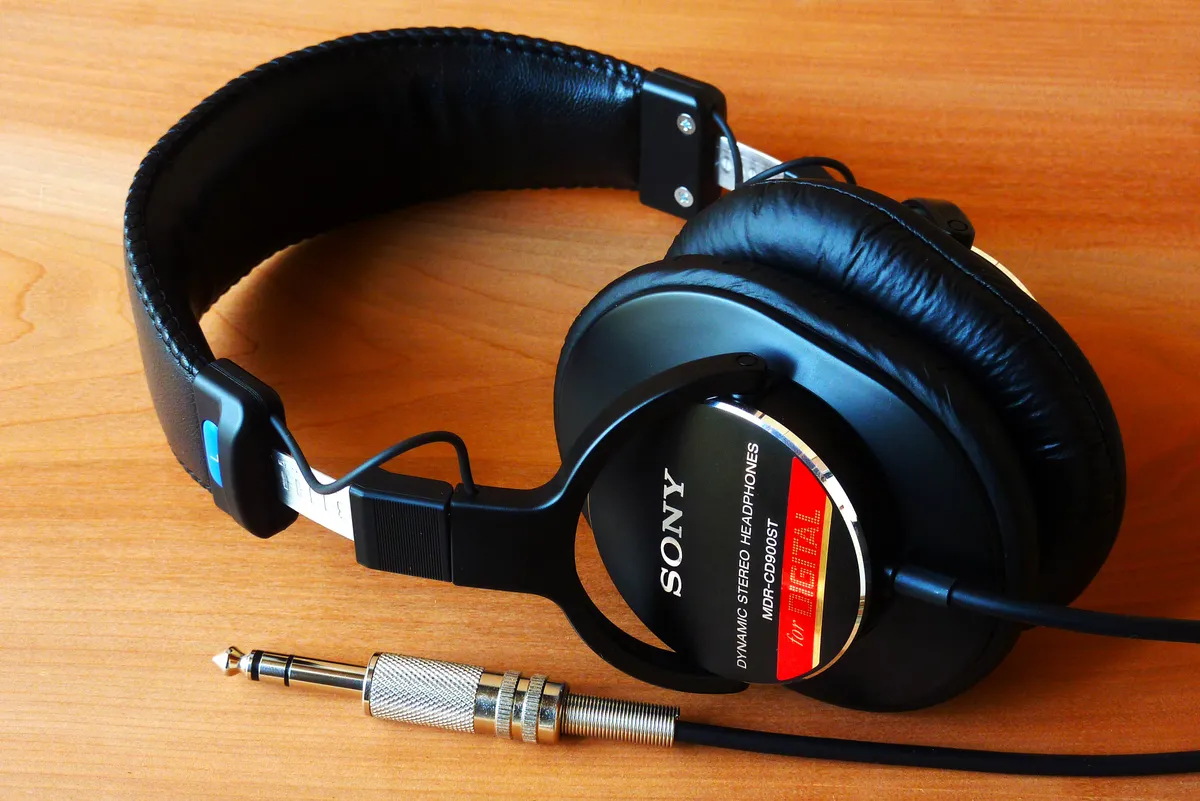
Closed-back studio headphones — Wikimedia Commons
Build, Comfort, and Daily Usability
Materials and construction
The HD 620S chassis is mostly plastic with steel-reinforced headband sliders and steel-backed ear cups. That combination keeps weight reasonable while avoiding the hollow, creaky feel of all-plastic budget cans. Ear pads are artificial leather on a polyurethane base — replaceable, and Sennheiser sells spares for long-term ownership.
Orientation cues: three raised dots on the left hinge help you put the headphones on correctly in dim light. The cable attaches via a locking connector on the ear cup (commonly the left side in owner reports; always verify your unit). The 1.8 m cable twists and locks so accidental tugs are less likely to snap a driver lead.
Comfort and clamp
Review consensus in 2024–2026 splits on initial clamp force. What Hi-Fi? and HomeTheaterHiFi praise long-session comfort once the headband settles; SoundGuys notes a wonky fit for some head shapes and recommends trying before you buy if possible. The pads are spacious (roughly 70 × 50 mm inner opening per SoundGuys measurements) and the venting reduces the sweaty “vacuum seal” feeling common on cheap closed-backs.
Glasses wearers: like most closed over-ears, glasses arms break the pad seal. That affects bass extension more than midrange clarity — a recurring theme in measurement databases such as DIY-Audio-Heaven’s HD 620S plots.
Portability and features
These are desktop headphones, not travel cans. No folding hinge, no Bluetooth, no app, no EQ presets. The drawstring bag protects against dust, not airline abuse. For a feature-rich alternative at a similar desk, see our Nothing Ear Open review — a different category entirely, but a reminder that the HD 620S is deliberately old-school wired.
Sound Signature: What the HD 620S Actually Does
Marketing copy promises “speaker-like imaging.” Independent listening largely agrees on the headline: the HD 620S sounds wider and less boxy than typical closed-backs in the $200–400 range.
Tonality vs HD 600 and HD 560S
Measurement-focused reviewers (including DIY-Audio-Heaven) note:
- Versus HD 600: overall balance is similarly neutral, but the HD 620S delivers more sub-bass and bass extension when seal is good — addressing the classic HD 600 “missing lowest octave” complaint. Treble is slightly smoother in the brightness region for many units, which reduces fatigue.
- Versus HD 560S: tonal cousins. The closed 620S can reach deeper lows with a perfect seal; the open 560S still wins on effortless air and simplicity (no seal anxiety).
What Hi-Fi?’s June 2024 review emphasizes smooth, detailed, easy listening with an unusually open presentation. HomeTheaterHiFi goes further, calling them “very musical” and competitive with older Sennheisers and Beyerdynamic references at the price. SoundGuys is more skeptical, describing odd default tuning that rewards EQ — useful counterbalance so you do not expect perfection straight out of the box.
Bass, mids, and treble in plain language
Bass is extended and controlled, not nightclub exaggerated. Electronic tracks with fast sub lines (think modern drum-and-bass) stay articulate rather than boomy — Stuff’s 2024 review highlighted controlled low-end on bass-heavy tracks. If you want visceral skull-rattle, a V-shaped closed-back or a planar like the FiiO FT3 (often compared in UK roundups) may satisfy more immediately.
Mids carry the Sennheiser hallmark: vocals and acoustic instruments feel forward and natural. Podcasts, jazz vocals, and orchestral midrange have room to breathe. This is where the HD 620S earns its “600-series” badge.
Treble is detailed without always being sparkly. Some units show energy peaks in the upper mids / lower treble that show up on graphs; your tolerance depends on source quality and volume. A clean DAC matters — feeding the HD 620S from a noisy laptop jack wastes what the drivers can resolve.
Imaging and soundstage (closed-back context)
Closed headphones usually collapse soundstage toward “inside your head.” The HD 620S is the exception that proves marketing can be partially true: instruments separate left-right and front-back better than DT 770 Pro–class rivals, approaching the spatial looseness of open Sennheisers at moderate volume. It will not fully match a well-driven HD 600 in a quiet room — physics still applies — but for shared living spaces, the trade is sensible.
Isolation and leakage
SoundGuys measured roughly 65% average noise attenuation — strong for home and office, excellent at blocking high-frequency chatter (keyboard clacks, distant speech), weaker on rumble (HVAC, traffic). Leakage is low enough that streamers and voice-over artists can monitor without open-back bleed into condenser mics — a core use case Sennheiser explicitly targets.
Power Requirements and Pairing Gear
Published specs: 150 Ω, 110 dB/V RMS. That is easier to drive than vintage 300 Ω HD 600s but not as trivial as 32 Ω studio cans.
| Source | What to expect |
|---|---|
| Laptop headphone jack | Often loud enough; quality varies — hiss and channel imbalance show up on thin Realtek outputs |
| Phone / tablet | Usable for travel desk setups; dongle DAC recommended for serious listening |
| Desktop DAC/amp ($100–200) | Sweet spot — see our best DAC/amp under $200 roundup |
| Stack examples | FiiO K11, Topping DX3 Pro Plus, Schiit Magni Unity — all sensible pairings with headroom to spare |
You do not need a kilowatt bench amp. You do benefit from a low-noise DAC and, if you EQ, a bit of digital headroom (SoundGuys suggests roughly −2.5 to −3 dB preamp before applying filters).
Sennheiser has discussed optional balanced cables (4.4 mm pentaconn) in launch coverage; the retail box is single-ended 3.5 mm only. Balanced buyers should budget aftermarket or official spare cables.
Audiophile listening setup — Wikimedia Commons
EQ: Should You Touch the Tuning?
Out of the box, many listeners are happy — HomeTheaterHiFi and What Hi-Fi? largely praise stock tuning. Measurement-first readers may still want parametric EQ:
- Tame a mid-bass / upper-bass bump if your seal boosts energy
- Gentle cuts around 2–4 kHz if vocals feel forward on bright recordings
- Narrow dips in 8–12 kHz if sibilance appears on poor masters
SoundGuys published an aggressive multi-band EQ recipe for enthusiasts who want to flatten measured peaks. Treat that as a starting laboratory, not gospel — ear shape and seal change the optimal filters. Tools like AutoEQ profiles (community-maintained) can save time, but always level-match and A/B at moderate volume to protect hearing.
NexReview stance: the HD 620S is listenable without EQ for most HD 600 fans. If you are coming from Beats, consumer Sony, or V-shaped gaming headsets, expect a leaner, more honest presentation unless you boost lows digitally.
How the HD 620S Compares to Key Alternatives
| Model | Back type | Why compare | HD 620S angle |
|---|---|---|---|
| Sennheiser HD 560S | Open | Same era, lower MSRP | Open wins on air and simplicity; 620S wins on isolation |
| Sennheiser HD 600 | Open | Tonal reference | 600 is the purity choice in quiet rooms; 620S adds bass extension + privacy |
| Beyerdynamic DT 770 Pro (80Ω) | Closed | Studio classic | DT 770 is punchier/V-shaped; 620S is more neutral and wider |
| Beyerdynamic DT 700 Pro X | Closed | Modern studio | Stiffer clamp, different tuning — try both if you mix and listen |
| FiiO FT3 | Open planar | Same price chatter (UK) | FT3 is open — different use case; more exotic treble behavior |
| Audio-Technica ATH-M50x | Closed | Budget tracking | M50x is cheaper, narrower, more hyped — not a tonal match |
If you do not need closed isolation, the HD 560S or HD 600 (often discounted used) remains the rational Sennheiser pick. The HD 620S justifies itself when open-back leakage is a practical problem, not an audiophile fantasy.
Who Should Buy — and Who Should Skip
Buy the HD 620S if you…
- Work or game in a shared space and need low leakage
- Stream, podcast, or produce voice content and want monitoring without mic bleed
- Love HD 600-style mids but want more low-end extension without leaving the Sennheiser ecosystem
- Already own a decent desktop DAC/amp and prefer wired simplicity over Bluetooth latency
Skip or defer if you…
- Can listen on open-backs most of the time — save money and complexity
- Need wireless, ANC, or a headset mic in one package
- Want maximum bass impact without EQ
- Are price-sensitive at $399 MSRP — wait for sales (third-party trackers in 2025–2026 have shown dips toward $230–250 USD on major retailers; verify live before you assume)
- Have a very large or very small head and cannot try before buying — clamp reports vary
Pricing and Value in 2026
Launch pricing centered on $349.95 USD / £300 with AU pricing around $650 AUD in reviewer materials. By late 2026, Sennheiser’s US storefront lists $399.95 — a $50 increase that makes street discounts matter more.
Value math:
- At $399 MSRP, the HD 620S is good but not automatic — open HD 560S sales and used HD 600s compete hard.
- At $250–280 street, it becomes easy to recommend for closed-back specialists.
- Factor no hard case and single cable into total cost if you travel or want balanced.
Always confirm the seller is authorized if warranty matters — Sennheiser advertises 2-year manufacturer warranty on US purchases.
Pros and Cons (Summary Table)
| Pros | Cons |
|---|---|
| Open-like imaging for a closed dynamic | MSRP rose to $399.95 in US store |
| Strong isolation for office / streaming | Seal-dependent bass — glasses hurt extension |
| Comfortable vented pads for long sessions | Firm initial clamp for some head shapes |
| 150 Ω / 110 dB/V — friendly to modest amps | No mic, no wireless, no ANC |
| Detachable cable + replaceable pads | Bassheads may want EQ or a different signature |
NexReview Verdict
Sennheiser HD 620S review searches in 2026 converge on one question: can a closed-back really feel like a 600-series Sennheiser? Mostly yes — with caveats. The HD 620S delivers natural mids, wide imaging for its class, and isolation that open siblings cannot match. It does not erase the laws of physics, it does not include modern smart features, and its value swings with the price you actually pay.
We score it 8.2/10: a category standout for listeners who genuinely need closed cups, slightly held back by MSRP creep and seal-sensitive bass.
Buy on sale or if isolation is non-negotiable. Skip if you can run open-backs and want the simplest, cheapest path into Sennheiser’s reference tuning.
FAQ — Sennheiser HD 620S Review
Is the Sennheiser HD 620S the same as the HD 600 but closed?
Not exactly. It shares 600-series design philosophy (angled drivers, neutral-leaning tuning) but uses a different 42 mm closed-chassis driver, steel-backed cups, and vented pads. Measurements show more bass extension than HD 600 when seal is good, with similar overall neutrality.
What impedance is the HD 620S — do I need an amp?
150 Ω with 110 dB/V RMS sensitivity. Many laptops and phones reach satisfying volume, but a dedicated DAC/amp improves noise floor and dynamics. It is easier to drive than 300 Ω HD 600, harder than 32 Ω consumer cans.
Does the HD 620S have Bluetooth or noise cancelling?
No. It is a wired-only headphone with passive isolation from the closed cups and pads. There is no ANC, no app, and no built-in microphone on the stock cable.
HD 620S vs HD 560S — which should I buy?
Choose HD 560S (open) if you listen alone in a quiet space and want the best price-to-air ratio. Choose HD 620S (closed) if you need privacy, less leakage, and office isolation without giving up Sennheiser midrange character.
HD 620S vs Beyerdynamic DT 770 Pro?
The DT 770 is a studio workhorse with a punchier, often V-shaped signature (depending on impedance version). The HD 620S is more neutral and wider-sounding, better for critical listening and long analytical sessions, less about exaggerated slam.
Why did reviewers disagree on the HD 620S?
Outlets weight different priorities. What Hi-Fi? and HomeTheaterHiFi emphasize musicality and soundstage. SoundGuys emphasizes measurements and EQ correction. Both can be right — stock tuning is good but not perfect for every ear and seal.
Can I use the HD 620S for gaming and streaming?
Yes, for positional awareness and detail — especially if you already have a separate mic. The closed design reduces bleed into condenser mics compared with open HD 600s. You still need your own mic and interface; this is not a headset.
What comes in the box?
Headphones, 1.8 m detachable 3.5 mm cable, 6.35 mm adapter, and a drawstring bag. No hard case, no balanced cable, no extra pads.
Should I EQ the HD 620S?
Optional. Many owners enjoy stock tuning. If you use EQ, start with small broad changes and level-match. Community AutoEQ profiles exist; aggressive narrow cuts are for enthusiasts who enjoy tuning, not requirements for casual listening.
Does NexReview use affiliate links on this Sennheiser HD 620S review?
This is an editorial review for readers searching sennheiser hd 620s review. Verify live pricing, warranty, and regional SKUs on Sennheiser’s official store or authorized dealers before purchase — MSRP and bundles change.