Pros
- LDAC Bluetooth routes through ES9038Q2M — not the cheap onboard BT DAC
- Included remote, four output modes, and variable RCA preamp for active speakers
- NFCA amp with dual gain handles sensitive IEMs and most desktop dynamics cleanly
- USB PCM to 768 kHz and native DSD512 on a compact metal chassis
- Strong measured performance (122 dB SNR class) at a street price often under $170
Cons
- Single-ended 3.5 mm only — no 4.4 mm balanced for balanced headphone cables
- 250 mW into 300 Ω is adequate, not authoritative, for high-impedance flagships
- Demanding planars and low-sensitivity over-ears may want more wattage or a stack
- Plastic remote feels budget next to the metal box; no app control
Searching for a Topping DX3 Pro Plus review usually means you want a compact desktop box that does more than USB-C dongle duty: LDAC from your phone, optical from a TV, coax from a transport, and a headphone jack that does not hiss on sensitive IEMs. This NexReview guide confirms the real product — Topping’s DX3 Pro+ integrated DAC/headphone amp/preamp (sometimes written “DX3 Pro Plus” in English listings), not a lookalike brand — walks through specs that matter for pairing, compares it to wired rivals like the FiiO K7, and gives a clear buy/skip call for September 2026.
The short version: the Topping DX3 Pro+ centers on an ESS ES9038Q2M DAC, XMOS XU208 USB decoding, a Qualcomm QCC5125 Bluetooth stage that feeds the same ESS chip (LDAC, aptX HD, aptX LL, aptX, AAC, SBC), and Topping’s NFCA headphone amplifier with dual gain. It adds an RCA preamp output, four routing modes, and a physical remote — a feature set that is rare together under $200. It is not the power king of the category, and it will not drive every planar flagship to its best, but for desk listeners who actually use Bluetooth and want one knob for headphones and powered speakers, it remains one of the most complete packages Topping sells at this tier.
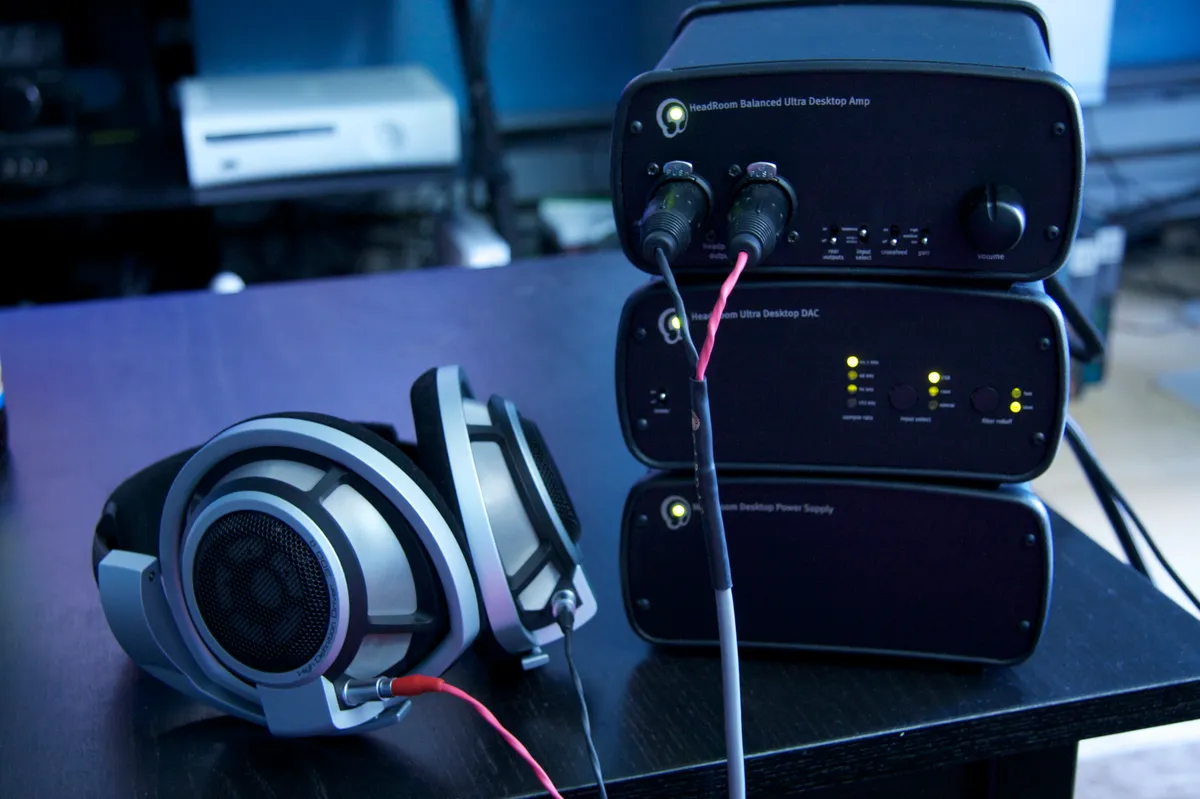
Desktop DAC and headphone listening — Wikimedia Commons
Topping DX3 Pro Plus Review Snapshot (2026)
| Field | Detail |
|---|---|
| Manufacturer | Topping (Guangzhou, China — established desktop/portable hi-fi brand) |
| Product name | DX3 Pro+ (marketed as DX3 Pro Plus in some English copy) |
| Product type | Desktop integrated DAC + headphone amplifier + preamp |
| Launch / status | Successor to DX3 Pro LDAC; still current in 2026 alongside DX5-class siblings |
| MSRP | ~$199 USD at launch; street often $149–179 depending on retailer and promos |
| DAC | ESS Sabre ES9038Q2M (quad-channel ESS chip common in mid-tier desktop units) |
| USB decoder | XMOS XU208 — PCM up to 32-bit / 768 kHz, native DSD512 |
| S/PDIF | Optical + coax — PCM to 24-bit / 192 kHz, DSD64 DoP |
| Bluetooth | Bluetooth 5.0, QCC5125 — LDAC, aptX HD, aptX LL, aptX, AAC, SBC |
| Headphone amp | NFCA (Nested Feedback Composite Amplifier) circuit, two gain steps |
| Headphone output | 3.5 mm single-ended only (no 4.4 mm balanced) |
| Line output | RCA — fixed line level or variable preamp mode |
| Remote | Included — input select, gain, filter, output mode, volume |
| Power (published) | 1,800 mW × 2 @ 32 Ω; 900 mW × 2 @ 64 Ω; 250 mW × 2 @ 300 Ω (THD+N < 0.1%) |
| Measurements (USB @ 96 kHz, manufacturer) | THD+N < 0.00015%, SNR 122 dB, noise < 1.8 µVrms |
| NexReview score | 8.5/10 — excellent wireless desktop value; not the balanced power champ |
Buy if you stream from an LDAC-capable phone, want optical/coax/USB on one desk, and run IEMs to moderate-efficiency dynamics or active speakers from the RCA preamp. Skip if you need 4.4 mm balanced headphones, maximum wattage into hungry planars, or you never touch Bluetooth — wired-only rivals may give you more amp for the money. For tier context, see our Amp Reviews hub and best DAC amp under 200 roundup.
What Is the Topping DX3 Pro+? (Real Product Check)
Topping is a Chinese audio manufacturer best known for measured-transparent DACs, headphone amps, and compact stacks sold globally through Topping’s own store, Amazon partners, HiFiGo, and regional distributors. The DX3 Pro+ is a desktop DAC/amp combo in the “DX3” product line — not a guitar processor, not a car DSP, and not to be confused with unrelated “DX3” SKUs in pro lighting or DJ gear.
The unit you are researching is specifically the Plus revision that replaced the earlier DX3 Pro LDAC generation. Topping’s own marketing and retailer spec sheets describe meaningful upgrades over that predecessor:
- Bluetooth chipset moved from CSR8675 to QCC5125
- Headphone amplifier redesigned around NFCA instead of the older TI-based stage
- Output power roughly doubled into common loads (about 700 mW → 1,800 mW class at 32 Ω)
- Distortion and output impedance improved on paper (Topping cites ~60% lower DAC THD+N and ~85% lower amp THD+N versus the LDAC version)
If a listing shows “DX3 Pro” without the Plus and without NFCA/LDAC/QCC5125 language, verify the exact SKU before buying — the DX family has had several revisions, and used-market photos alone are easy to misread.
The DX3 Pro+ remains a small metal box meant to live on a desk or shelf: front volume knob, 3.5 mm headphone jack, status display; rear USB-B, optical Toslink, coaxial RCA, Bluetooth antenna, and RCA outputs. A 15 V external adapter powers the unit — typical for Topping desktop gear and preferable to noisy USB bus power for sensitive IEM listening, though it adds another cable to route.
Wired headphones and desk audio setup — Wikimedia Commons
Key Specs That Actually Affect Pairing
Chip names sell boxes; power, noise, gain, and outputs decide whether your headphones sound clean. Topping publishes detailed benches on its product page and manual. The figures below are manufacturer claims — always re-check before purchase — but they align with third-party measurement culture around Topping’s ES9038Q2M implementations.
DAC Stage (USB Input @ 96 kHz)
| Spec | DX3 Pro+ (manufacturer) |
|---|---|
| THD+N @ 1 kHz (A-wt) | < 0.00015% |
| SNR @ 1 kHz (A-wt) | 122 dB |
| Dynamic range @ 1 kHz (A-wt) | 122 dB |
| Frequency response | 20 Hz–40 kHz (±0.7 dB) |
| Output level | 2.1 Vrms @ 0 dBFS |
| Noise (A-wt) | < 1.8 µVrms |
| Channel crosstalk @ 1 kHz | -137 dB |
| Line output impedance | 20 Ω (RCA) |
How to read this: the ES9038Q2M implementation here is measurement-strong, which matters if you use the DX3 Pro+ as a DAC feeding an external amp or powered monitors. The RCA output can run fixed (DAC mode) or variable (preamp mode) — a genuine lifestyle feature when you want one remote-controlled volume for both headphones and speakers.
Headphone Amplifier
| Spec | Low gain | High gain |
|---|---|---|
| Voltage swing (published) | 5.5 Vpp | 21.5 Vpp |
| Noise (A-wt) | < 2.1 µVrms | < 7.0 µVrms |
| Output impedance | < 0.1 Ω | < 0.1 Ω |
| Power @ 32 Ω | 1,800 mW × 2 | (same class; gain changes voltage delivery) |
| Power @ 300 Ω | 250 mW × 2 | adequate for many dynamics, not authoritative |
Gain philosophy: Topping lists roughly +6 dB (low) and +19 dB (high) gain steps. That wide spread is the right idea for a combo unit: low gain for sensitive IEMs and easy portable-tuned dynamics; high gain for higher-impedance headphones that need voltage. If you hear hiss on IEMs, drop to low gain and reduce digital volume upstream — the NFCA stage is designed for a low noise floor, but no amp rewards unnecessary gain.
Digital Input Limits (Practical, Not Trophy Hunting)
| Input | Max resolution (published) |
|---|---|
| USB | PCM 32-bit / 768 kHz, DSD512 native |
| Optical / coax | PCM 24-bit / 192 kHz, DSD64 DoP |
| Bluetooth | Codec-dependent; LDAC up to 990 kbps on supported phones |
Unless your library is mostly DSD or you obsess over filter settings, USB at 44.1/48 kHz or optical from a TV at 48 kHz is where most owners live. The DX3 Pro+ oversamples competently; the win is clean conversion and usable analog stages, not chasing exotic sample rates for their own sake.
Inputs, Outputs, and the Four Mode System
Where cheaper dongles stop at USB-C, the DX3 Pro+ behaves like a mini AV hub for a desk:
- USB-B — primary PC/Mac connection; driverless UAC2 on modern OS builds; handles hi-res PCM/DSD as advertised.
- Optical Toslink — ideal for TVs, consoles, or older disc transports without USB audio.
- Coaxial RCA — same use case as optical with a different cable ecosystem; handy if your streamer or CD player already runs coax.
- Bluetooth 5.0 — the headline for many buyers; see the LDAC section below.
On the output side:
- 3.5 mm headphone out — convenient for IEMs and many over-ears; less robust than 6.35 mm for heavy cables, but Topping targets home desk users here.
- RCA line/preamp out — switch between fixed DAC output and volume-follows-knob preamp to drive active speakers or a power amp.
Topping documents four output modes (wording varies slightly by manual revision):
| Mode | Behavior |
|---|---|
| Headphone amp only | RCA muted; phones active |
| Headphone amp + line out | Both active — useful if you split zones |
| DAC (fixed line) | RCA at fixed level; headphones may be muted depending on setting |
| Preamp | Variable RCA — remote volume controls powered speakers |
That flexibility is why the DX3 Pro+ shows up in “one-box desktop” recommendations: it can be headphone rig today, TV optical preamp tomorrow, without buying a separate preamp immediately.
Bluetooth and LDAC: Why the DX3 Pro+ Exists
Plenty of sub-$200 DACs are wired only. Plenty of Bluetooth receivers sound fine for podcasts and mediocre for critical listening. The DX3 Pro+ tries to split the difference by treating Bluetooth as another digital input, not a separate audio product bolted on.
The important engineering detail — repeated in Topping’s manual and Hi-Res Wireless marketing — is that the QCC5125’s internal DAC is bypassed. Bluetooth packets decode to a digital stream that passes through the same ES9038Q2M used for USB and S/PDIF. That is materially different from all-in-one BT speakers or cheap BT dongles where a mediocre onboard DAC is the bottleneck.
LDAC (when your phone supports it and you enable high-quality streaming in developer or Sony settings) can reach 990 kbps — close enough to wired transparency for many listeners, especially with EQ disabled and volume sane. aptX HD and aptX LL matter if you game or edit on Bluetooth with lower latency needs. AAC is the iPhone path; it will not match LDAC bitrate, but routing through ESS still beats most standalone BT adapters.
Honest limits:
- Bluetooth introduces codec negotiation, RF interference, and recompression on non-LDAC paths — manage expectations on crowded Wi-Fi desks.
- You will still prefer USB for maximum transparency and zero dropouts during long sessions.
- The included remote becomes essential here — switching inputs and volume from the couch is the daily quality-of-life win that wired-only rivals like the base FiiO K7 do not include at the same price.
If you never use wireless, you are paying for a radio you will disable. That is the core fork in this Topping DX3 Pro Plus review: wireless convenience versus wired-only value.
Sound Character and Listening Impressions
Topping’s house tuning on ES9038Q2M implementations tends toward neutral, detail-forward, low-coloration reproduction — closer to “transparent source” than “tube warmth.” The NFCA amp stage is similarly clean and controlled, with low output impedance that keeps bass tight on variable-impedance dynamic drivers.
What that means in practice:
- Sensitive IEMs (Campfire, Moondrop, Etymotic-class) on low gain usually present a black background and stable imaging, provided your USB port and cables are not noisy.
- Mid-tier dynamics (HD 600/650/660S class, many closed-back studio models) are the sweet spot — enough voltage and current without pushing the amp into stress metrics.
- Easy planars (many Dan Clark Aeon / older Hifiman efficiency tiers) often work, but low-sensitivity flagships may sound loud enough yet dynamically constrained compared with a FiiO K7-class balanced amp.
- 300 Ω classics get serviceable, not heroic, drive — 250 mW into 300 Ω is mathematically fine for moderate listening levels, but transients on orchestral swells may feel less authoritative than on a dedicated high-voltage amp.
The DX3 Pro+ is not trying to be a euphonic box. If you want Burr-Brown smoothness or XBass+ analog shaping, the iFi ZEN DAC 3 is the philosophical opposite — see our iFi ZEN DAC 3 review for that tuning conversation.
For preamp duty into active speakers, the variable RCA mode is musically neutral with enough gain for typical powered desktop monitors. Match RCA fixed vs variable to your speaker’s input sensitivity — if your monitors expect line level only, avoid accidentally slamming them with preamp gain maxed.
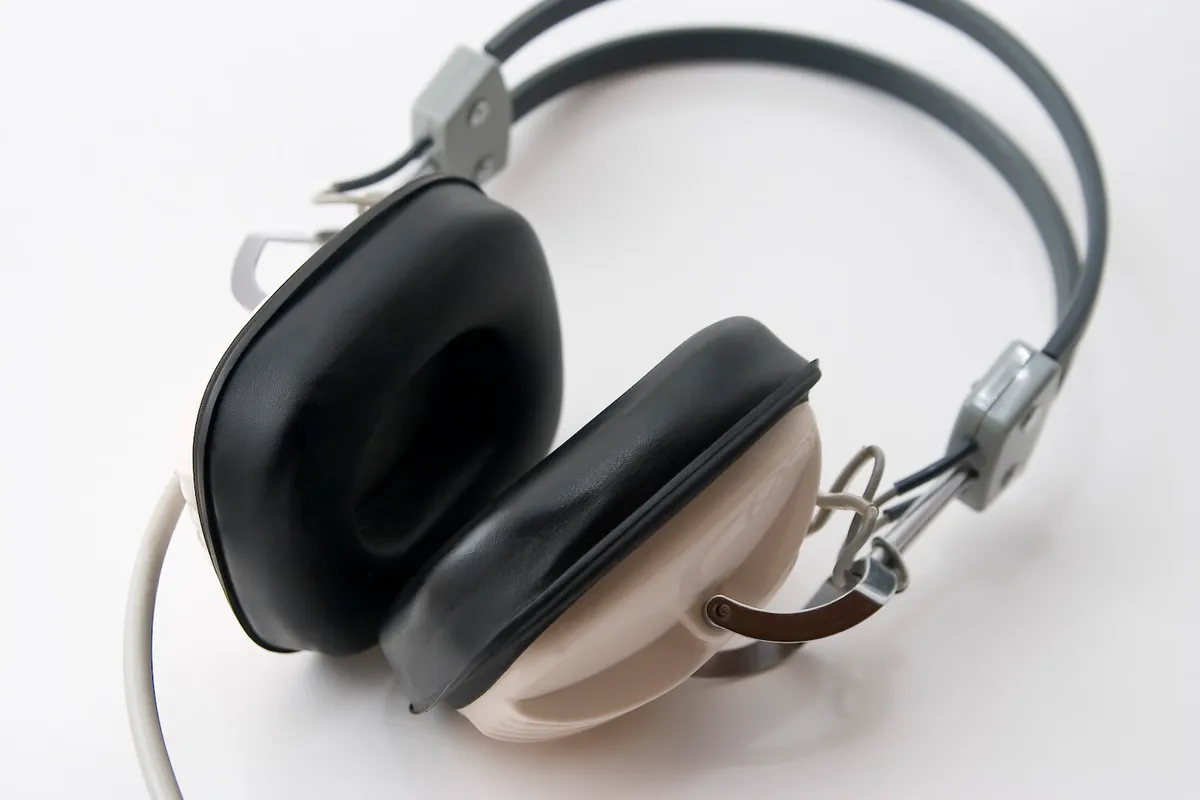
Headphone amplifier and wired listening — Wikimedia Commons
Topping DX3 Pro Plus vs Rivals (2026)
| Model | Street (typical) | DAC | BT / remote | Balanced HP | Power @ 32 Ω (published) | Best for |
|---|---|---|---|---|---|---|
| Topping DX3 Pro+ | ~$149–179 | ES9038Q2M | LDAC + remote | No (3.5 mm) | 1,800 mW | Wireless desk + preamp |
| FiiO K7 | ~$199–230 | Dual AK4493SEQ | No / no | 4.4 mm + 6.35 mm | 2,000 mW balanced | Balanced wired headphones |
| FiiO K7 BT | ~$249+ | Dual AK4493SEQ | LDAC / app | 4.4 mm + 6.35 mm | Similar K7 class | Wireless + balanced |
| iFi ZEN DAC 3 | ~$229 | Burr-Brown | No / no | 4.4 mm + 6.35 mm | ~300 mW class | Musical USB DAC/preamp |
| SMSL M300 MKIII (class) | ~$150–170 | CS43198 variants | Often no | Varies by SKU | Varies | S/PDIF-centric wired DAC |
Versus FiiO K7: The K7 wins balanced termination, higher 32 Ω power, and dual THX AAA modules for wired headroom. The DX3 Pro+ wins included remote, LDAC at base SKU, and stronger “living-room adjacent” ergonomics when you switch TV optical and phone BT. If your headphones are 4.4 mm balanced-only, the K7 is the cleaner buy — our FiiO K7 review walks through that path.
Versus older DX3 Pro LDAC: Do not buy the old CSR8675 generation expecting NFCA power. The Plus revision is the one worth hunting in 2026 unless you find a steep discount and accept half the wattage.
Versus stacking separate DAC + amp: The DX3 Pro+ makes sense when space, budget, and remote matter. Enthusiasts with Sundara / HE6se-class planars should plan a DX3 Pro+ as DAC + external amp or skip straight to a higher-watt integrated.
Who Should Buy — and Who Should Skip
Buy the DX3 Pro+ if…
- You regularly stream from an Android phone with LDAC and want one desktop endpoint.
- Your desk doubles as a TV audio upgrade via optical, and you want a remote.
- You run powered speakers alongside headphones and need a preamp volume that tracks the same knob.
- Your headphones are IEMs, efficient closed-backs, or mid-efficiency dynamics already happy on moderate power.
- You value measurement-strong ES9038Q2M performance without building a separate stack yet.
Skip or upgrade elsewhere if…
- You require 4.4 mm balanced for your cable investment — choose K7/ZEN DAC 3 class instead.
- You own hard-to-drive planars and refuse to add a separate amp — get more watts upstream.
- You only listen wired from a PC and never touch Bluetooth — wired-only units may allocate cost to amplification instead of radios and remotes.
- You need USB-C directly on the chassis without adapters — the DX3 Pro+ still uses USB-B.
- You want app EQ and BT codec toggles — consider FiiO K7 BT or phone-side EQ instead.
Setup Tips That Prevent “Bad Review” Experiences
Most negative forum posts about desktop DACs trace to gain staging, not broken hardware.
- Match gain to sensitivity. Start low gain for IEMs; only use high gain if volume runs out before 12 o’clock on the knob.
- Set phone LDAC properly. On supported Android builds, enable HD / 990 kbps options where available; re-pair after OS updates.
- Pick the right output mode. If RCA hiss appears on powered speakers, confirm you are not in headphone + line mode accidentally with empty headphones unplugged — read the manual for your firmware revision.
- Use optical for TV lip-sync sanity. Many TVs output 48 kHz PCM; that is fine — do not force exotic rates on the TV side.
- Consider the DX3 Pro+ as DAC only later. If you upgrade headphones to something hungry, run fixed RCA out into a L50 / Magnius / PA5 class amp and keep the ES9038Q2M stage you already paid for.
FAQ
Is the Topping DX3 Pro+ the same as “DX3 Pro Plus”?
Yes. Retailers and SEO pages often write DX3 Pro Plus; Topping’s official SKU is DX3 Pro+. Confirm ES9038Q2M, QCC5125, and NFCA on the spec sheet to avoid older LDAC-only generations without the Plus upgrades.
Does the Topping DX3 Pro Plus review well for IEMs?
Generally, yes — low gain, < 0.1 Ω output impedance, and a low noise floor suit sensitive in-ear monitors better than many entry amps from a decade ago. Still avoid unnecessary high gain and noisy USB ports.
How much power does the DX3 Pro+ really deliver?
Topping publishes 1,800 mW per channel into 32 Ω and 250 mW into 300 Ω at THD+N < 0.1%. That is real desktop headroom for most common headphones, but not league-leading for the hardest planars.
Is LDAC on the DX3 Pro+ actually hi-res?
It can be, when your source supports LDAC 990 kbps and the connection is stable. Bluetooth remains lossy relative to wired USB, but routing BT through ES9038Q2M is a meaningful step up from standalone BT adapters.
Can I use the DX3 Pro+ as a preamp for active speakers?
Yes — enable variable RCA / preamp mode and match levels carefully to your monitors’ input sensitivity. The remote makes this a common desk-and-couch use case.
Topping DX3 Pro Plus vs FiiO K7 — which wins?
DX3 Pro+ for LDAC, remote, and optical/coax living-room duty on single-ended headphones. FiiO K7 for 4.4 mm balanced power and higher wattage if you never use Bluetooth. Many households own one of each archetype for different rooms.
Does it support MQA?
The DX3 Pro+ is marketed around PCM/DSD hi-res via USB and LDAC wireless — not as an MQA decoder. If Tidal MQA unfolding matters to you, look at MQA-capable DACs explicitly (for example iFi’s ZEN line decodes MQA on USB).
Will it drive HD 600 / HD 650 headphones?
Yes for most listeners. High gain provides enough voltage for 300 Ω Sennheiser-class dynamics at moderate to loud levels. Absolute peak dynamics may feel softer than on a K7 balanced stack — audition if you listen very loud on classical or metal.
Should I buy DX3 Pro+ or wait for a newer Topping DX5?
If you need Bluetooth and a remote today, the DX3 Pro+ remains rational at ~$150 street. DX5-class siblings add features and price — evaluate whether balanced outputs or newer UI matter more than saving money on a proven combo.
What is NexReview’s final Topping DX3 Pro Plus review score?
8.5/10 — an excellent wireless-forward desktop DAC/amp with preamp flexibility and strong ES9038Q2M measurements, held back mainly by single-ended-only headphones and merely good—not great—wattage into the hardest loads.
Verdict
The Topping DX3 Pro+ earns its place in 2026 by doing something unglamorous but rare: it combines credible wired hi-res, LDAC that feeds the main DAC, optical/coax for TVs, RCA preamp flexibility, and a remote without jumping to flagship pricing. It is not the amp you buy to tame HE6-class planars, and balanced-cable collectors should aim at the FiiO K7 or iFi ZEN DAC 3 instead.
For the target listener — desk + couch, phone BT + PC USB, headphones + powered speakers — this Topping DX3 Pro Plus review lands on a clear recommendation: buy the Plus revision at a fair street price, set gain conservatively, and treat USB as your transparency baseline while enjoying LDAC for convenience. That is exactly the niche Topping designed this box to own, and in 2026 it still owns it convincingly.