
Pros
- Burr-Brown True Native path keeps PCM and DSD separate until analog conversion
- Dual 4.4mm balanced outputs — headphones and line/preamp — rare at this price
- USB-C with overvoltage protection; fixed/variable line modes for active speakers
- PowerMatch and XBass+ are useful analog tools, not gimmicky DSP
- Smooth, slightly warm tuning suits long listening sessions and mid-tier dynamics
Cons
- Modest upgrade over ZEN DAC V2 for owners who already have enough power
- Headphone output weaker than FiiO K7-class rivals into hungry planars
- USB-C only — no optical/coax for TV or disc transport without another box
- $229 MSRP sits above the sub-$200 sweet spot in many regions
Searching for an iFi ZEN DAC 3 review usually means you saw the turquoise ZEN line at a retailer, read about WHAT Hi-Fi? awards, or already own iFi headphones and want a matching desktop source. This NexReview guide confirms the real product — iFi Audio’s third-generation ZEN desktop DAC/headphone amp, not a lookalike brand — walks through specs that matter for pairing, compares the ZEN DAC 3 to the outgoing ZEN DAC V2 and balanced rivals like the FiiO K7, and gives a clear buy/skip call for 2026.
The short version: the iFi ZEN DAC 3 is a USB-C desktop DAC and headphone amplifier built around iFi’s Burr-Brown True Native conversion, with 768 kHz PCM, native DSD512, full MQA decoding, 6.3 mm and 4.4 mm headphone outputs, and RCA plus balanced 4.4 mm line outputs that can run fixed or variable for preamp duty. It sounds smooth, musical, and slightly warm compared with sharper ESS-forward rivals. It is not the most powerful box in its class — planars and low-sensitivity flagships may want a separate amp — but for IEMs, easy dynamics, and active speakers from a laptop, it is one of the most versatile ~$229 desktop units iFi sells.
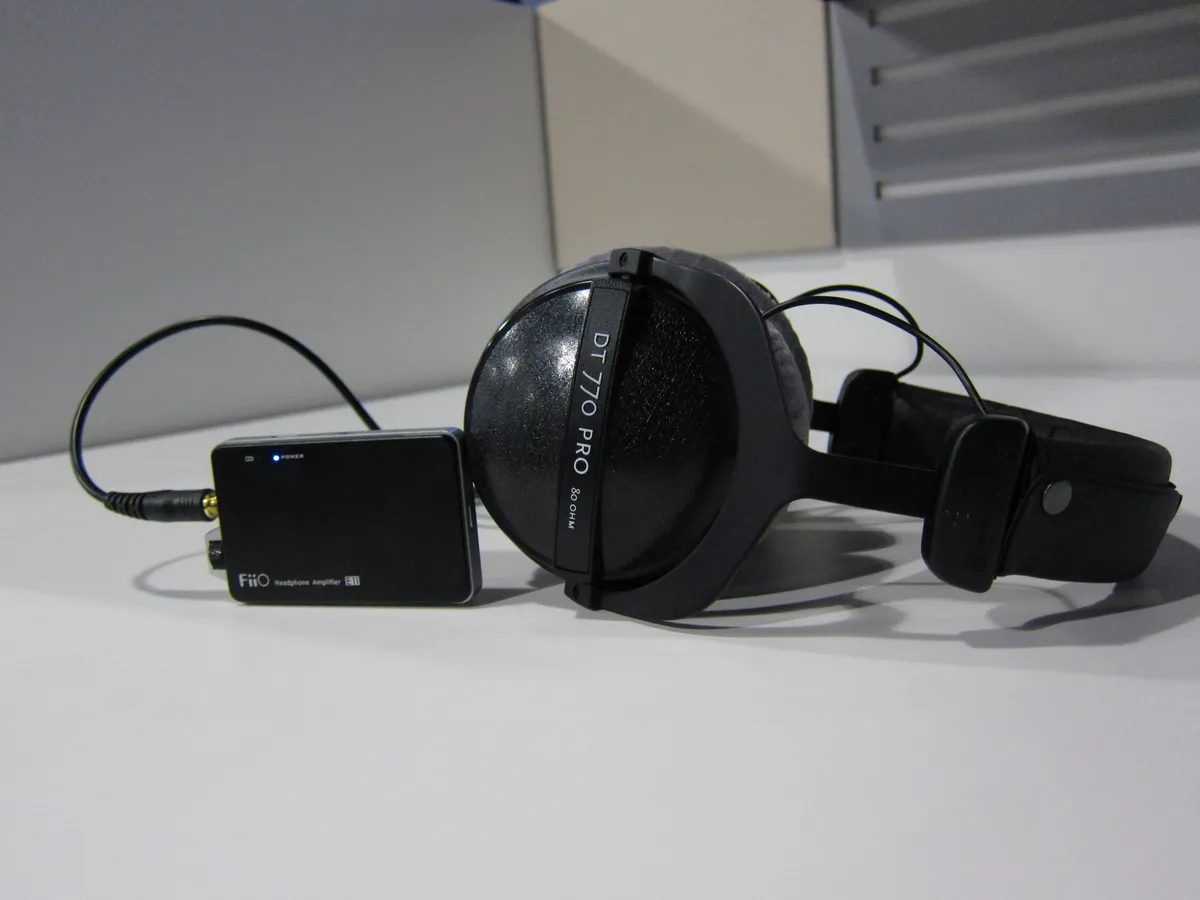
Desktop USB DAC and headphone listening — Wikimedia Commons
iFi ZEN DAC 3 Review Snapshot (2026)
| Field | Detail |
|---|---|
| Manufacturer | iFi Audio (Southport, England — established hi-fi accessory brand) |
| Product type | Desktop integrated DAC + headphone amplifier + preamp |
| Launch | April 2024 (successor to ZEN DAC V2) |
| MSRP | $229 USD / £229 / CA$229 on iFi’s store (EU store often €249 — verify region) |
| DAC | Burr-Brown bit-perfect DSD & DXD chip — True Native separate PCM/DSD paths |
| USB decoder | 16-core XMOS — PCM to 768 kHz / 32-bit, DSD512, DXD, MQA full decoder |
| Headphone outputs | 6.35 mm single-ended + 4.4 mm balanced (Pentaconn) |
| Line outputs | RCA single-ended + 4.4 mm balanced (fixed or variable gain) |
| Analog features | PowerMatch gain switching, XBass+ analog bass enhancement |
| Power (headphones) | >210 mW @ 32 Ω SE; >390 mW @ 64 Ω balanced RMS; >300 mW @ 32 Ω balanced max |
| Output impedance (HP) | ≤ 1 Ω balanced and single-ended |
| Dimensions / weight | 158 × 115 × 35 mm; 456 g |
| Power supply | USB-C bus power or optional 5 V DC input (centre positive) |
| Console notes | iFi lists PS5 and Nintendo Switch compatibility via USB |
| NexReview score | 8.4/10 — excellent musical DAC/preamp; not the power king |
Buy if you want a USB-only desktop source with balanced headphone and line outputs, like iFi’s Burr-Brown tuning, and run IEMs to moderate-efficiency over-ears or active speakers from one knob. Skip if you need optical/coax, maximum wattage into planars, or already own a ZEN DAC V2 that drives your cans cleanly — the generational jump is real but not transformative. For tier context, see our Amp Reviews hub and best DAC amp under 200 roundup.
What Is the iFi ZEN DAC 3? (Real Product Check)
iFi Audio is a British hi-fi brand (part of the AMR/iFi group) known for portable DACs, desktop ZEN boxes, network streamers, and power conditioners — not to be confused with unrelated “Zen” consumer electronics or generic “iFi” accessories on marketplaces. The ZEN DAC 3 is the 2024 refresh of iFi’s bestselling desktop ZEN DAC line, which WHAT Hi-Fi? and other outlets have repeatedly placed in best DAC under £200 lists.
The ZEN DAC 3 is not:
- A guitar interface or car audio product
- The iFi GO portable dongle series
- The ZEN CAN standalone headphone amplifier (though the two stack well)
- The older ZEN DAC (original) or ZEN DAC V2 — those remain distinct SKUs with lower hi-res ceilings and USB-B inputs
What changed from ZEN DAC V2 ($199 at launch) to ZEN DAC 3 ($229):
| Feature | ZEN DAC 3 | ZEN DAC V2 |
|---|---|---|
| Max PCM | 768 kHz | 384 kHz |
| Max DSD | DSD512 | DSD256 |
| MQA | Full decoder | Full decoder |
| USB input | USB-C + overvoltage protection | USB-B 3.0 |
| DC offset | Improved (less click on mode changes) | Standard |
| Bass analog mode | XBass+ | TrueBass |
| Clocking | Upgraded GMT | Upgraded GMT |
| Headphone power @ 32 Ω SE | ~210 mW (similar class) | ~210 mW |
iFi’s own tech comparison sheet makes the story clear: the DAC 3 is an evolution, not a revolution. You get higher sample-rate headroom, safer USB-C, cleaner mode switching, and refined analog voicing — not a doubling of amplifier power. That honesty matters when deciding whether to upgrade from V2 or jump from a laptop jack.

Headphone DAC desk setup — Wikimedia Commons
Key Specs That Actually Affect Pairing
Chip names on the box do not tell you whether your headphones will sound controlled or merely loud enough. These are the ZEN DAC 3 figures that change listening outcomes (confirm on iFi’s product page before purchase):
Headphone amplifier power
| Output | Published power | Practical read |
|---|---|---|
| 6.35 mm SE | >210 mW @ 32 Ω; >18 mW @ 600 Ω | Fine for IEMs and most 32–80 Ω dynamics; soft on 600 Ω without balanced |
| 4.4 mm balanced | >390 mW @ 64 Ω RMS; >300 mW @ 32 Ω max; >70 mW @ 600 Ω | Preferred port for harder loads — more voltage swing |
Compare to the FiiO K7 in our FiiO K7 review: the K7 advertises ≥2,000 mW @ 32 Ω balanced — an entirely different power class. The ZEN DAC 3 is not trying to win a wattage war. It targets noise floor, tuning, and preamp flexibility instead.
Noise, distortion, and output impedance
- Headphone output impedance: ≤ 1 Ω — good for sensitive IEMs and multi-driver designs when PowerMatch is on low gain.
- THD+N (headphones): < 0.005% balanced @ 2 V into 600 Ω; < 0.013% SE @ 1.27 V into 32 Ω — respectable, not lab-hero numbers, but audibly clean in normal use.
- SNR / DNR: ≥ 109 dB(A) on the headphone section — quiet backgrounds on low gain with IEMs.
Line output section (often overlooked)
The rear RCA and 4.4 mm balanced line outputs matter if you feed active speakers, a receiver, or a separate power amp:
| Mode | Behavior |
|---|---|
| Fixed | Line-level output; volume knob does not affect line — use when downstream has its own volume |
| Variable | Volume knob controls line level — preamp mode for powered monitors |
Balanced line out at up to 6.2 V variable / 4.2 V fixed (4.4 mm) is a genuine differentiator versus many sub-$200 combos that only offer RCA. Pair with iFi’s 4.4 mm to XLR cable if your speakers expect XLR.
Digital formats — what matters beyond the brochure
The ZEN DAC 3 accepts PCM 44.1 kHz through 768 kHz, DSD64–DSD512, DXD, and acts as a full MQA decoder. In 2026:
- Spotify / YouTube / most games — 44.1 or 48 kHz PCM; any decent DAC handles this; the ZEN’s value is analog quality, not format badges.
- Tidal Masters / Qobuz hi-res / local FLAC — 96–192 kHz PCM is common; 768 kHz support is future-proofing and bragging rights more than daily necessity.
- DSD — iFi’s True Native path keeps DSD in native form until conversion; relevant if your library or player outputs DSD.
- MQA — only matters if your streaming service still serves MQA-encoded titles you decode locally; otherwise ignore.
The 16-core XMOS USB stage handles the bitstream before the Burr-Brown chip. USB-C plug-and-play works on macOS, Windows, Linux, and iFi documents PS5 and Switch use — handy for console desk setups without a separate HDMI extractor.
Build, Design, and Desk Ergonomics
The ZEN DAC 3 keeps iFi’s turquoise-and-silver ZEN aesthetic — a rounded desktop slab about 6.2 × 4.6 × 1.4 inches and one pound, small enough to sit under a monitor arm but heavier than plastic dongle-class gear. The top-mounted volume knob feels solid; the front panel groups PowerMatch, XBass+, Fixed/Variable, and input/power indicators without the RGB circus some rivals use.
Rear panel layout:
- USB-C digital input (primary power source)
- 5 V DC barrel input for optional iFi iPower / iPower2 linear-style supplies — iFi claims cleaner noise than generic USB ports; sensible if you hear ground-related hum on sensitive IEMs, not mandatory day one
- RCA line out (single-ended)
- 4.4 mm balanced line out (second balanced port — headphone balanced is separate on the front)
Front panel:
- 6.35 mm headphone jack (includes 3.5 mm adapter in box)
- 4.4 mm balanced headphone jack
In the box: ZEN DAC 3, RCA cable, 3.5-to-6.35 mm adapter, manual. No balanced headphone cable — budget for a 4.4 mm Pentaconn cable if your cans ship single-ended only.
Tradeoffs are honest: one digital input (USB-C only), no remote, no Bluetooth, and no optical/coax for TV or disc players. If your desk is TV-plus-PC, a FiiO K7-class unit with SPDIF may fit better — covered in our best DAC amp under 200 guide.
PowerMatch, XBass+, and iFi’s Analog Philosophy
iFi distinguishes itself from “measurements-only” rivals with analog-domain switches that change how the amp interacts with headphones — not EQ presets buried in a Windows app.
PowerMatch
PowerMatch adjusts gain/output voltage to match headphone sensitivity:
- Low / normal gain — start here for IEMs and sensitive on-ears; minimizes noise and channel imbalance risk.
- High gain — for 300 Ω dynamics and harder loads when the knob runs out of travel on low gain.
This is simpler than three-step gain ladders on some FiiO units but effective if you actually read the manual and stop leaving high gain on with sensitive gear.
XBass+
XBass+ is an analog bass enhancement circuit — not a digital loudness hack. It adds sub-bass weight without the bloated mid-bass some “bass boost” modes create. Useful when:
- Running open-back headphones that roll off sub-bass on a lean source
- Listening at moderate volume where Fletcher-Munson curves make bass feel thin
- Using IEMs with a lighter low end on acoustic or classical recordings
Turn it off for neutral monitoring or if your headphones are already warm — HD 650-class cans plus XBass+ can get cozy fast.
True Native and why iFi keeps talking about it
True Native means separate digital paths for PCM and DSD through the Burr-Brown converter so each format stays in native form until analog conversion. Whether you hear that as “more natural DSD” depends on your library and level-matched comparisons — but it is a real architectural choice, not marketing fluff layered on a generic delta-sigma part.
Sound Character — What Changes vs Your Laptop Jack
The ZEN DAC 3 is not a sterile reference ruler. Community impressions from Trusted Reviews, Prime Audio Reviews, Head-Fi, and owner threads converge on a few themes:
Tuning: musical, smooth, slightly warm
Expect rounded transients, full midrange, and non-fatiguing treble compared with sharper ESS-tuned rivals at similar prices. The ZEN DAC 3 is the desktop box you leave on for three-hour sessions — not the one that exposes every sibilant flaw in bad masters (though it will not hide truly harsh recordings).
Noise floor and IEM use
On PowerMatch low gain, backgrounds stay quiet versus noisy motherboard 3.5 mm jacks — a primary reason to buy any desktop DAC in this tier. If you hear hiss, check Windows volume, source app gain, and high gain before blaming the unit.
Dynamics on harder headphones
HD 600 / HD 650 at 300 Ω benefit from the 4.4 mm balanced port and PowerMatch high gain — you get enough voltage for listening levels, though macro-dynamics may still feel softer than on a FiiO K7 or a ZEN CAN stack. Planars like HiFiMAN Sundara or Edition XS often work on balanced but leave headroom on the table versus 2 W-class amps.
What the DAC will not fix
The ZEN DAC 3 removes USB noise and power bottlenecks and adds iFi’s analog voicing. It will not make $80 headphones sound like electrostatics, fix Bluetooth headphones (use wired), or replace room treatment for speakers.
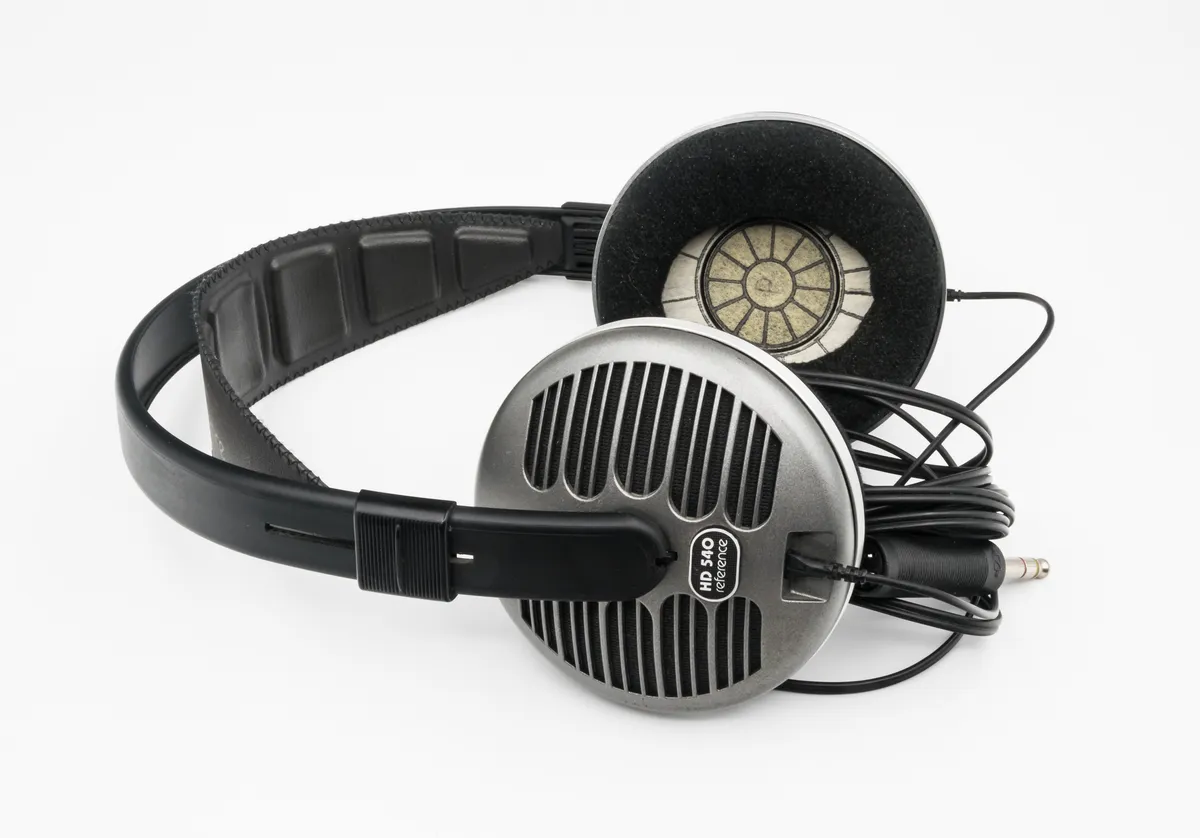
Audiophile headphones and amplifier context — Wikimedia Commons
Who Should Buy the iFi ZEN DAC 3?
Strong fits
- First desktop upgrade from laptop/phone — USB-C one-cable simplicity, preamp modes, and balanced future-proofing.
- iFi ecosystem fans — stacks cleanly with ZEN CAN via 4.4 mm balanced link when you outgrow the internal amp.
- Active speaker desks — variable balanced line out to powered monitors from the same volume knob as headphones.
- MQA/Tidal holdouts — full decoder still matters for libraries encoded that way.
- Taste-aligned buyers — you prefer musical warmth over clinical brightness; you read our Amp Reviews guide and want Burr-Brown character specifically.
Who should skip (or buy something else)
| Profile | Better direction |
|---|---|
| Maximum power into planars | FiiO K7 — see our FiiO K7 review |
| TV optical / coax without extra boxes | Topping DX3 Pro+ or FiiO K7 with SPDIF |
| Already own ZEN DAC V2 that sounds fine | Save unless you need USB-C protection or 768 kHz/DSD512 |
| Travel / phone-only listening | iFi GO dongle or similar portable |
| Wireless ANC as primary cans | Skip desktop amps — Sony WH-1000XM5 class |
| Strict sub-$200 budget | ZEN DAC V2 (if still stocked) or FiiO K5 Pro ESS |
iFi ZEN DAC 3 vs ZEN DAC V2 — Upgrade or Save?
If you own V2, ask one question: does anything feel broken today?
- Quiet enough? V2 already hits similar ~210 mW @ 32 Ω single-ended territory.
- USB-B fine? V2 lacks USB-C overvoltage protection — relevant if you hot-plug cheap hubs or sketchy cables.
- Formats? V2 caps at 384 kHz / DSD256 — enough for virtually all commercial hi-res.
- Clicks on mode change? DAC 3’s improved DC offset reduces pop when toggling XBass+ or PowerMatch.
Verdict: New buyers should get the ZEN DAC 3 if the ~$30 premium is trivial in your region. V2 owners should upgrade only with a concrete pain point — not because the DAC 3 scores higher in a chart.
iFi ZEN DAC 3 vs FiiO K7 vs Topping DX1 II
These three anchor our best DAC amp under 200 cluster — different desks, not a single “winner.”
| iFi ZEN DAC 3 | FiiO K7 | Topping DX1 II | |
|---|---|---|---|
| Typical street | ~$229 | ~$150–200 | ~$119 |
| DAC flavor | Burr-Brown — warm/musical | Dual AK4493SEQ — neutral | CS43198 — clean/feature-rich |
| Balanced HP out | Yes (4.4 mm) | Yes (4.4 mm) | Yes (4.4 mm) |
| Balanced line out | Yes (4.4 mm) | No | Yes |
| Digital inputs | USB-C only | USB + optical + coax | USB + optical |
| HP power @ 32 Ω (balanced) | ~300 mW class | ~2,000 mW class | ~1,400 mW class |
| Analog extras | XBass+, PowerMatch | RGB rate ring, PRE/LO/HP | PEQ, mic input |
| Best for | Musical tuning + preamp flexibility | Power-hungry planars + multi-input | Features per dollar |
Rule: Choose ZEN DAC 3 for iFi tuning and balanced preamp duty. Choose K7 when watts and SPDIF matter more than Burr-Brown romance. Choose DX1 II when price and PEQ beat brand loyalty.
Stacking with ZEN CAN and Active Speakers
iFi sells the ZEN CAN as a dedicated headphone amplifier. Connect ZEN DAC 3 balanced line out → ZEN CAN balanced in with a 4.4 mm cable and you split roles: DAC/preamp in the DAC 3, current delivery in the CAN. That path makes sense when you buy the DAC 3 for its conversion and line features but later acquire hard-to-drive planars — cleaner than throwing away the DAC 3 entirely.
For active speakers:
- Set Fixed/Variable to Variable.
- Run 4.4 mm balanced to XLR (iFi cable) or RCA to RCA depending on speaker inputs.
- Match PowerMatch to headphone session when you switch back — avoid leaving high gain on by habit.
Setup Tips (Windows, macOS, Gain Discipline)
- Start PowerMatch on low gain with IEMs; switch high only when volume exceeds ~2 o’clock on 300 Ω cans.
- macOS — USB-C audio is plug-and-play; use Audio MIDI Setup for bit-perfect rates if you care.
- Windows — Class-compliant UAC2 usually works without drivers; set exclusive mode in your player if chasing bit-perfect.
- Console use — PS5/Switch over USB works per iFi; use Fixed line out into an amp or speakers that expect line level.
- Optional 5 V DC — try iFi iPower2 only after ruling out USB port noise and cable quality — not a day-one requirement.
- XBass+ — A/B with it off weekly so you do not drift into permanent bass bloom.
Pros and Cons (Owner-Realistic)
| Pros | Cons |
|---|---|
| True Native Burr-Brown path with high-res headroom | USB-C only — no optical/coax |
| Dual balanced outputs (HP + line) | Less HP power than K7-class rivals |
| Fixed/variable preamp modes for active speakers | $229 stretches past strict sub-$200 budgets |
| PowerMatch + XBass+ are useful analog tools | Generational jump from V2 is modest |
| Smooth tuning for long sessions | No remote or wireless |
| PS5/Switch documented compatibility | MQA relevance shrinking for many streamers |
FAQ
Is the iFi ZEN DAC 3 the same as the ZEN DAC V2?
No. The ZEN DAC 3 (2024) adds 768 kHz PCM, DSD512, USB-C with overvoltage protection, XBass+, and improved DC offset behavior. V2 uses USB-B and caps at 384 kHz / DSD256. Both share the Burr-Brown True Native concept.
Does the iFi ZEN DAC 3 need a separate power supply?
USB-C bus power is enough for normal use. An optional 5 V / 0.5 A centre-positive input accepts iFi iPower supplies if you want to experiment with cleaner DC.
Is the iFi ZEN DAC 3 worth it for HD 600 / HD 650?
Yes on 4.4 mm balanced with PowerMatch high gain for comfortable levels. For maximum headroom and dynamics, a FiiO K7 or ZEN CAN stack still wins — see our FiiO K7 review.
Can the iFi ZEN DAC 3 power planar magnetic headphones?
Moderate planars (many ~32 Ω designs) often work on balanced. Low-sensitivity flagships may sound fine but lack slam versus higher-watt amps — match expectations to the ~300 mW @ 32 Ω balanced class.
iFi ZEN DAC 3 vs FiiO K7 — which should I buy?
ZEN DAC 3 for musical tuning, MQA, balanced preamp out, and USB-only simplicity. K7 for multi-input desks and maximum balanced power into demanding loads.
What is XBass+ on the ZEN DAC 3?
An analog bass enhancement switch — adds sub-bass weight without a digital EQ app. Turn it off for neutral listening or already-warm headphones.
What is PowerMatch?
iFi’s gain matching switch — lower gain for IEMs, higher for harder headphones. Always start on the lower setting.
Does balanced always sound better on the ZEN DAC 3?
Balanced offers more voltage swing on this design — the port to prefer for 300 Ω and harder loads. It is not automatic magic on easy 32 Ω dynamics if level-matched single-ended already sounds clean.
Can I use the ZEN DAC 3 with powered speakers?
Yes. Set Variable output and connect RCA or 4.4 mm balanced line out to your speakers’ analog input.
Does the ZEN DAC 3 work with PlayStation 5 and Nintendo Switch?
iFi documents PS5 and Switch compatibility over USB. Use Fixed line out when feeding an external amp or speakers expecting line level.
Will the ZEN DAC 3 fix quiet Bluetooth headphones?
No. Bluetooth headphones use internal electronics. The ZEN DAC 3 is for wired analog headphones or line-level routing.
Is this medical or financial advice?
No — this is audio gear guidance. Prices, firmware, and regional SKUs change; confirm on iFi’s official store and authorized retailers before buying.
Verdict
The iFi ZEN DAC 3 is a credible, musical desktop DAC/amp for listeners who want USB-C simplicity, Burr-Brown True Native conversion, and unusually flexible outputs — balanced headphones, balanced line, RCA preamp — in a ~$229 package that continues iFi’s award-winning ZEN line. It sounds smooth and slightly warm, stays quiet with IEMs on PowerMatch low gain, and doubles as a preamp for active speakers better than many rivals that stop at a headphone jack.
It is not the wattage champion of its class: planar owners and multi-input desks should cross-shop the FiiO K7 and read our best DAC amp under 200 comparisons before checkout. ZEN DAC V2 owners should upgrade only with a concrete need, not hype. Within its lane — first serious wired desktop, iFi tuning preference, balanced preamp flexibility — the ZEN DAC 3 earns a strong recommendation in our Amp Reviews cluster.
Score: 8.4/10 — Musical Desktop DAC/Amp — Know the Power Limits